Large turnout at a Beirut funeral becomes a political flashpoint between Hezbollah-aligned media and Lebanon's Aoun government
Three Iranian-aligned wires reported heavy attendance at a funeral procession in Lebanon on 6 July 2026, blaming the Aoun government for obstructing mourners. The framing is itself the story.
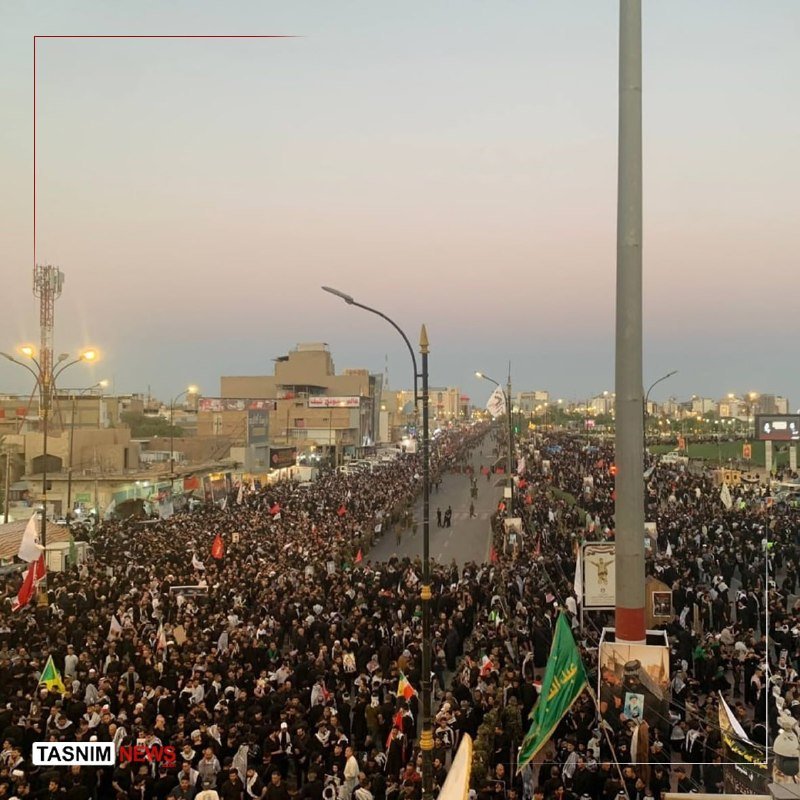
On the morning of 6 July 2026, three Iranian state-aligned wires — Tasnim, Fars, and the Jahan-Tasnim channel — published near-identical dispatches claiming that a funeral held in Lebanon drew a large crowd despite what they described as "obstructions" imposed by the government of President Joseph Aoun. The reports, circulated between 04:53 and 04:55 UTC, frame the Lebanese state as the active impediment and the mourners as the protagonists, and they do not specify which funeral is at issue or which city hosted it. The framing, more than the procession itself, is the news.
What the wire bundles describe is a turnout-shaped story. The news value, on the reading these outlets advance, is that a Lebanese community — implicitly tied to Hezbollah's social base, given the channels that chose to cover the event — produced a public display of grief and defiance that bypassed state attempts to constrain it. The dispatches read like a chorus: same claim, same verb, same villain.
What the three wires actually say
The texts from Tasnim News, Fars News International, and the Jahan-Tasnim Telegram channel are shorter than wire reports and read more like talking-points bulletins. Each asserts that Lebanese citizens attended the funeral of a "martyred leader" in significant numbers. Each attributes logistical obstacles to the Aoun government. None names the deceased, the location, the religious community, the family, or the security forces allegedly involved in the "obstructions."
The "martyred leader" phrasing is itself a tell. In the vocabulary of these outlets, shahid ("martyr") frames a death as a political-military sacrifice inside an Iranian-aligned resistance narrative; it is not a neutral descriptor. Aoun's Beirut government — installed in early 2025 after a long political vacuum — has taken a notably harder line than its predecessors on Hezbollah's post-war arsenal and on Iranian diplomatic influence inside Lebanon, so the choice to blame "the Aoun government" for friction at a Hezbollah-adjacent funeral is consistent with a long-running information campaign rather than a fresh news item.
What the bulletins do not establish: the size of the crowd by any external measure, the specific obstructions alleged, or whether any government official actually commented. The reports are anchored to "news sources reported" — passive attribution that does not name a single Lebanese outlet, photographer, or security service.
Why the framing matters more than the procession
Reporting from places like Lebanon, Iraq, and Yemen frequently arrives at international readers pre-shaped by outlets whose editorial line aligns with the Iranian axis. In this case, three outlets that share an editorial parent put out the same angle within two minutes — a discipline that suggests coordinated messaging rather than three independent newsrooms stumbling onto the same facts. The coordination is the data point. When the same headline appears from Tehran, the IRCG-aligned Fars network, and Tasnim's English channel in the same window, it is reasonable to read the bundle as a political broadcast in news clothing.
The structural pattern this sits inside is one Western wire reporting tends to under-weight: that the information environment around Hezbollah is itself a contested space. Beirut's Iranian-aligned outlets, the party's al-Manar channel, and sympathetic diaspora accounts publish in Arabic at a tempo that rarely surfaces in English-language desks. When English-language state-affiliated Iranian outlets aggregate those accounts for a wider audience, the result is a news object that looks like reporting but operates as broadcast.
What is not in the record
A Lebanese wire — whether NNA, the state-run National News Agency, L'Orient Today, or the local desks of Al Jazeera English and Reuters — does not appear in the thread under any framing of this funeral. The same is true of Hezbollah's al-Manar, which would normally carry its own coverage of a senior figure's funeral. The absence is informative: the event, as described, has so far surfaced only in the Iranian-aligned English-language feed.
The sources also do not establish whether the deceased was a Hezbollah official, a wounded survivor from the 2024 war being laid to rest later, a political figure from the Aoun-aligned Free Patriotic Movement, or a community leader from a different confession. The word "leader" in English-language Iranian wire usage usually denotes someone treated inside that network's resistance canon as politically significant; it does not always mean a senior military commander. Without a name, the story remains a frame without a face.
Stakes and what to watch next
If this funeral is real and politically significant — an "if" the open record cannot yet resolve — it lands on top of a Lebanese state that is already stretched. Aoun's government has spent the past year trying to consolidate a monopoly on arms inside state institutions while managing the post-war south, and it has done so under continuous pressure from Hezbollah's political wing and from Iran's allies in the region. A large mourning crowd that the state tried to manage but failed to suppress is, on the Iranian-aligned reading of the day's events, evidence that the government's writ is thinner than its rhetoric.
For Monexus readers, the practical takeaway is twofold. First, until a Lebanese or independent wire carries the same event with a name, a place, and a verified crowd estimate, the "large attendance" claim is a single-source report from three accounts that share an editorial line — factually thin, even if politically real. Second, the choreography of the bulletins — same minute, same wording, same target — is itself the kind of detail that rarely matters in a Reuters ticker but matters a great deal in the information environment around Lebanon and Hezbollah. Source provenance is not a footnote here; it is the lead.
Desk note: Monexus treats Iranian state and state-aligned media as legitimate primary sources for their own framing, weighted equally with Western wires in the byline ledger, but does not adopt their framing as the article's frame. This piece separates the funeral claim from the political broadcast and names the absence of independent Lebanese sourcing.
Wire provenance
This editorial synthesis draws on the following public wire/social posts:
- https://t.me/tasnimnews_en/
- https://t.me/FarsNewsInt/
- https://t.me/JahanTasnim/