Belgorod in the dark: what a single night of strikes reveals about Russia’s war footing
Moscow is selling normalcy while its border regions lose power. The gap between the two tells you most of what you need to know about the war’s next phase.
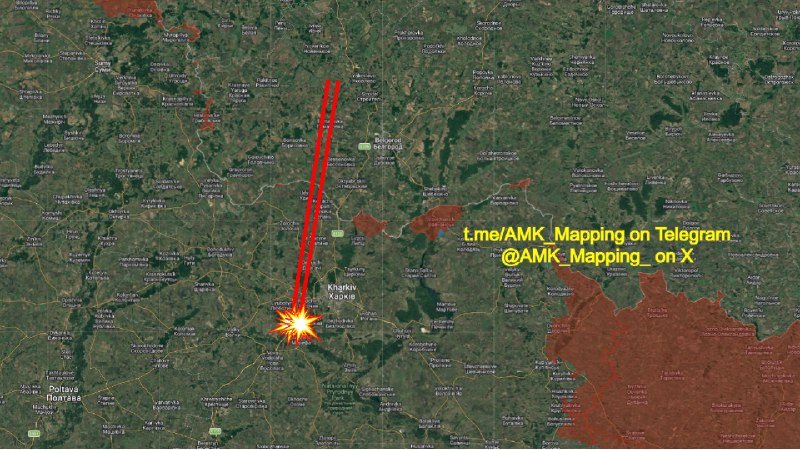
Parts of Belgorod were without electricity late on 6 July 2026 after a missile strike hit a thermal power plant, lighting a fire at the site and, according to field-channel reports, knocking out power across wide swathes of the city. The messages went out within minutes of one another — first a strike report at 20:23 UTC, then the fires, then the blackout at 20:26 UTC, with corroborating footage still arriving past 20:31 UTC. For a Russian border region that has lived under near-daily drone pressure since the war began, the pattern is no longer novel. What is novel is the speed: a thermal plant, hit and burning, before the local governor’s office had a line ready.
Moscow’s war is at once total and invisible inside Russia. That contradiction is the most useful starting point for reading what happened on Monday night, and what is likely to come.
The frame Russia wants you to hold
Inside Russia, the strike becomes a story about civilian resilience. Regional officials are expected to issue boilerplate assurances — repairs underway, services restored, life continuing — and the federal press will print them. That has been the rhythm for three and a half years. A plant burns, an oblast head promises a timetable, the federal wires move on to the next item. There is no energy ministry press conference; there is no parliamentary debate about air defence gaps in Belgorod, Bryansk, or Kursk. The cost of the war, in Russian domestic currency, is hidden by design.
The frame holds because it has to. The political premise of the war at home rests on the appearance that ordinary life goes on — that the fighting is somewhere else, that the people paying for it are doing so willingly and temporarily. Every successful strike on a thermal plant complicates that script. Blackouts in Belgorod do not bleed into Moscow, but they bleed into Telegram, and Telegram is where most Russians now watch their own war.
What a single blackout actually reveals
A thermal plant is not a military target in the narrow sense. It is the kind of infrastructure that wars — even wars the invader claims to be winning — start to grind down, precisely because it is expensive to replace, slow to repair, and politically awkward to admit has been hit. Strike packages that include thermal generation force a choice on the defender: spend interceptor missiles on civilian grid sites, or accept that the regional buffer will run dark on cold nights.
That is the asymmetry Ukraine has been quietly exploiting since 2024. Long-range strikes on oil refineries made headlines; strikes on thermal and substation infrastructure were less reported but cumulatively more consequential, because every winter blackout compounds the political cost of the war on the side that launched it. If Monday’s strike landed at meaningful scale, it should be read as a continuation of that logic, not an escalation outside it.
The counter-read, and why it does not hold
The plausible alternate read is that Belgorod is simply unlucky — a border city absorbing the spillover of a war Moscow insists is defensive. Local governors can frame it that way: civilians targeted by Ukrainian vengeance, heroism in the rubble, requests for federal air-defence reinforcement.
There is something to that. Belgorod genuinely is on the front line of reciprocal fire, and civilian infrastructure on border territories is a legitimate military problem for any country at war. But the framing collapses under one question: why is the Russian information system structurally incapable of acknowledging that these strikes are degrading the same grid Moscow uses to power the war effort? A country confident in the righteousness of its campaign does not need to hide its infrastructure losses from its own citizens. The blackout in Belgorod is newsworthy precisely because it makes the war suddenly visible to people who were not supposed to see it.
What remains contested
The sources available at the time of writing do not specify the weapon used, the precise plant, the casualty count, or the scale of the outage. The Telegram channels circulating the footage — wfwitness and noel_reports, both posting within an eight-minute window — are useful as timing markers, not as authoritative damage assessments. Confirmation of the plant’s identity, the restoration timeline, and any Russian official statement will need to come from the regional governor’s office and from wire services in the coming hours. Until then, the most we can say is what the night itself said: a thermal plant burned, a city went dark, and the Russian information system began its familiar containment drill.
The stakes are straightforward. Every successful strike on Russian energy infrastructure is a tax levied on the political viability of the war at home. Whether that tax is collected — or whether it is amortised into a longer, harder campaign the Kremlin hopes to outlast — is the only question left that actually matters.
Desk note: Monexus treats the strike as reported by field channels and waits for governor-office confirmation before assigning casualty or restoration figures. Russian state framing is treated as a frame to be examined, not a voice to be relayed.
Wire provenance
This editorial synthesis draws on the following public wire/social posts:
- https://t.me/wfwitness
- https://t.me/noel_reports