Clooney's Venice Lion signals a festival still betting on the American star system
Venice's 2026 Golden Lion for Lifetime Achievement goes to George Clooney — a reminder that the Lido still anchors its prestige around a handful of A-list American careers.
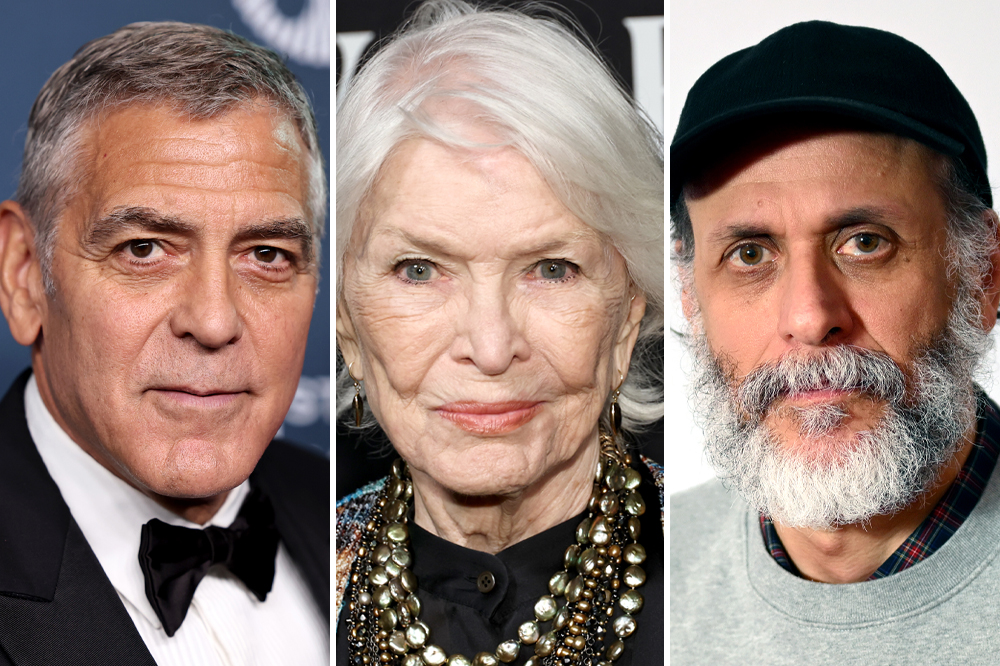
The Venice Film Festival will award its 2026 Golden Lion for Lifetime Achievement to George Clooney, organisers confirmed on 6 July 2026, elevating a 25-year career of acting, directing and producing into the festival's most established honour.
Clooney sits inside a small club of performers recognised across multiple Academy Award categories — six nominations spanning acting, writing, directing and producing — and the Lido has spent the past two decades building its late-summer identity around exactly that kind of cross-discipline résumé. The award lands a week before the festival's programme is unveiled and months before the September opening on the Lido, giving Venice a marquee name to anchor the early press cycle.
A career shaped by, and shaping, the festival circuit
Clooney's relationship with Venice runs deeper than a single opening-night appearance. He premiered the political drama The Ides of March on the Lido in 2011, returning to the festival years after establishing himself as both a leading man and a director-provocateur. That 2011 film, written and directed by Clooney and adapted from Beau Willimon's play Farragut North, opened the festival and signalled a continuity between his studio work and the auteur-leaning circuit.
The Golden Lion for Lifetime Achievement — distinct from the competition's main prize, awarded annually to the best film — has, in recent years, doubled as a soft-laureling mechanism for careers that the Academy has honoured intermittently. Tilda Swinton received the award in 2020, followed by Roberto Benigni in 2021, Catherine Deneuve in 2022, and the 2023 honour went to Liliana Cavani alongside Tony Leung Chiu-wai. The 2024 prize was shared between Sigourney Weaver and Peter Weir; in 2025 the festival honoured Werner Herzog and Kim Novak.
The pattern is clear: Venice uses the lifetime award to place a global-auteur stamp on names that may or may not win the competition's main prize in a given year. For a performer whose recent directing credits include The Midnight Sky (2020) and The Tender Bar (2021), the Lido's imprimatur matters commercially as much as critically.
What the award says about the 2026 slate
Festival director Alberto Barbera has used the lifetime prize to telegraph editorial priorities. The 2025 pairing of Werner Herzog — a figure associated with the New German Cinema tradition — alongside Kim Novak, a 1950s and 1960s Hollywood icon, signalled a year interested in retrospective reassessment. The 2026 selection, by contrast, is a statement about the present: an American actor-director still in mid-career, still taking directing jobs, and still bankable enough to anchor a Venice press conference.
In practical terms, the announcement lands while the festival's competition lineup remains unconfirmed. Clooney's presence guarantees a red-carpet event with the press pull of a Hollywood opening weekend. For distributors holding autumn titles, the optics matter: a Clooney premiere on the Lido is a release-calendar event in its own right.
The structural read: star capital and festival prestige
Clooney's award fits a broader pattern in which major European festivals have, over the past decade, recalibrated their lifetime honours to capture Hollywood names that might otherwise default to Toronto or Telluride. Venice, Cannes and Berlin have all leaned harder on career tributes in years when the competition slate leans arthouse. The mechanism is editorial — but it is also commercial. Lifetime-honour press cycles generate as much column inches as competition premieres, and the festival's media footprint is partly funded by the brand recognition of the recipient.
There is also a quieter argument underneath the announcement. Clooney's career, from ER in the 1990s through Syriana, The Descendants and the 2013 Best Picture win for Argo, traces an arc in which American actors have increasingly become producer-financiers of their own vehicles. The Golden Lion for Lifetime Achievement lands on someone whose political work — Sudan, the satellite-surveillance project, the Sentry — is woven into his industry standing. Venice has decided to honour the package, not just the filmography.
Counter-reads and what remains unsettled
The award is uncontroversial by the standards of recent lifetime-honour debates, which have included petitions and protest cycles around recipients whose political positions drew scrutiny. Clooney's public profile carries little of that friction. The plausible counter-read is narrower: that a festival positioning itself as a global cinema arbiter might have used the slot to elevate a non-American or non-English-language career at a moment when European and Asian arthouse production is producing some of its strongest work. The festival's 2024 recognition of Sigourney Weaver — and 2025's pairing of Werner Herzog with Kim Novak — suggests Venice is comfortable mixing registers; the 2026 choice simply tilts back toward Hollywood.
What the announcement does not yet say is whether Clooney will bring a new project to compete in September, or whether the lifetime honour stands alone. The festival's official programme is expected later in July; until then, the award is best read as an opening move rather than a verdict on the 2026 slate.
Desk note: Monexus frames this as an editorial-cum-industry signal — the Lido using a Hollywood name to set the press tone before the competition lineup drops — rather than as a tribute piece. Wire coverage will focus on the honour; this publication is interested in what the choice tells us about festival economics.