Diljit Dosanjh, a banned Punjabi film, and the slow erosion of India’s informal censorship regime
A singer-turned-actor has turned a state obstruction order into a marketing campaign. The pattern — content blocked, audience courted, regulators caught flat-footed — is now the most reliable engine of cultural politics in India.
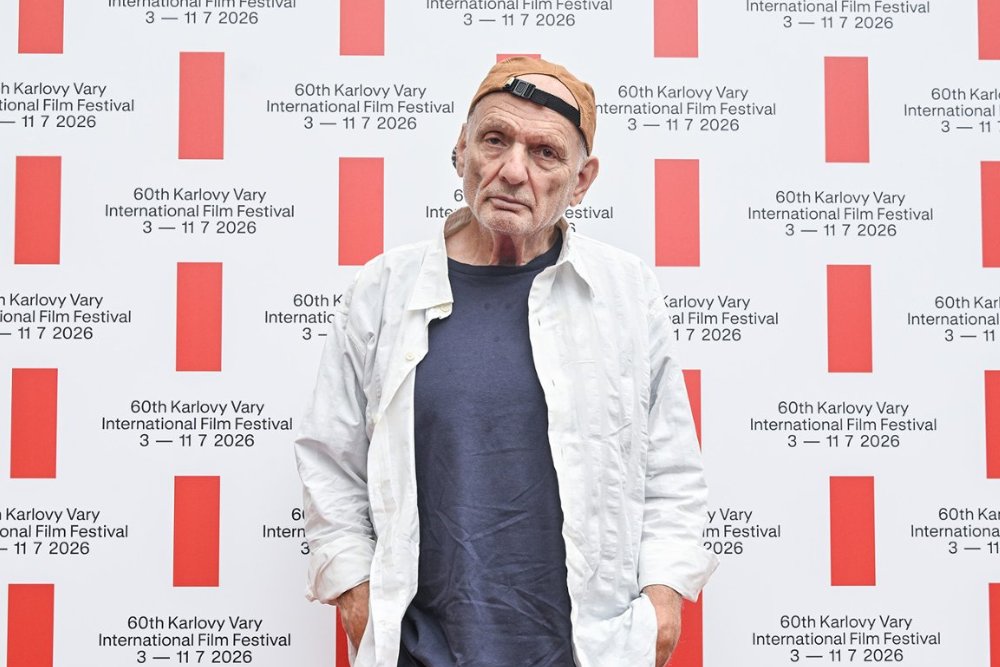
On 6 July 2026, the actor-singer Diljit Dosanjh publicly told his audience to "lo kar lo block" — translatable, roughly, as "go ahead and block it" — in response to a government instruction that cinemas across Punjab stop screening his new film Satluj. The film, by his account, has been released in a "guerrilla" fashion outside the state: a defiance he framed as the only option once informal censorship had foreclosed a normal one. The remark, carried on 6 July 2026 by The Indian Express, marks one of the clearest recent moments in which a celebrity has openly named, and then walked around, the unofficial censorship architecture that has grown around Punjabi-language cinema.
This is not a story about a single film. It is a story about how India’s regulators — official, quasi-official, and entirely informal — have lost the ability to make an obstruction stick when the audience for the blocked work is large, mobile, and digitally organised. Satluj’s production house is now selling the film as a release that beat a ban; the audience is buying tickets as a political gesture. The result is a slow inversion: what was meant as a quiet punishment has become a marketing campaign.
The mechanism of the block
The Indian Express reported on 6 July 2026 that Dosanjh accused the government of orchestrating the ban on Satluj through informal pressure on exhibitors in Punjab, rather than through any formal censorship order from the Central Board of Film Certification or a state-level regulatory body. The "guerrilla release," in his telling, refers to the film being shown outside the Punjabi theatrical circuit — in cities, multiplex chains, and diaspora-friendly screening zones where exhibitors had not received the same pressure. The exact legal instrument behind the instruction was not named in the available reporting; the article describes the obstruction as de facto rather than de jure.
That distinction matters. India’s censorship regime is formally codified in the Cinematograph Act of 1952, administered through a board that issues certifications, modifications, and refusals. Most contested films in recent memory — Udta Punjab in 2016, Padmaavat in 2018, The Kerala Story in 2023 — were fought out through that formal channel, with producers appealing cuts, board orders being challenged in court, and verdicts eventually landing in the public record. What Dosanjh is describing is different: no order on paper, no appealable ruling, no nameable official. Pressure applied, screens go dark, the film becomes unbookable.
The opacity is the point. Informal bans leave no signature, no office to petition, no judge to address. They also, crucially, leave no formal defendant if a producer tries to litigate.
Counter-narrative: why the state pushes back
The Indian Express report does not specify the substantive grounds on which the Punjabi government sought the obstruction. The most plausible reading — and the one that fits the political economy of regional cinema — is that Punjabi films dealing with Sikh religious identity, agrarian distress, the 2020–21 farmer movement, or post-1984 trauma have, for at least a decade, attracted quiet political scrutiny from the state government in Chandigarh and, at times, from the central government in New Delhi. Productions touching those subjects have faced cuts, certification delays, and pressure on distributors to soft-pedal marketing. None of that formal infrastructure is novel; what is novel is the explicit, named, on-camera defiance.
Dosanjh’s framing — block the film, watch it travel anyway — also places the state in an uncomfortable position. If the obstruction is acknowledged, the state admits to acting outside the censorship board’s authority. If the obstruction is denied, the empty Punjabi cinema slots become evidence of something informal. Either way, the film’s release becomes the story.
What this looks like at scale
The pattern that Satluj now sits inside is not unique to cinema. India’s regulators — across broadcasting, news television, streaming, and telecommunications — have spent the last decade building out an informal enforcement layer that sits on top of formal law. The pattern: a regulator issues no order; a ministry holds a closed-door meeting; an industry body "advises" platforms; a state home department writes a "request" to multiplex chains; OTT platforms quietly delist a title. Each step is deniable. The cumulative effect is a curated cultural marketplace in which controversial work simply fails to find a shelf.
This is the architecture Dosanjh has chosen to call out by name. The bet — and it is a tested bet in Indian celebrity politics — is that going public turns a quiet obstruction into a louder, more defensible spectacle. The actor who gets arrested for a speech gets a longer stage than the actor whose speech is simply unbooked. The film that gets banned in Punjab gets more screens outside Punjab than the film that released without incident.
Stakes, and what remains unresolved
The short-term stake is the film itself: whether Satluj recoups its production cost through a diaspora-led release, whether exhibitors in other states hold the line, and whether any formal legal action follows once the obstruction has been named in public. The medium-term stake is larger. India’s informal censorship regime survives precisely because it leaves no paper trail. Each time a celebrity forces the informal into the open — and survives — the regime loses a little of that deniability.
What the available reporting does not establish is whether the government of Punjab, the central Ministry of Information and Broadcasting, or any named regulator has, as of 6 July 2026, publicly responded to Dosanjh’s accusation. The Indian Express piece carries Dosanjh’s side and the production team’s framing; the state’s response, if any, has not surfaced in the source material this desk has read. That asymmetry — a named accuser, an unnamed respondent — is itself part of the story. The mechanism works because the state rarely has to defend, on the record, what it does not admit to doing.
Until it does.
Desk note: Monexus has led this piece on the named actor and the named outlet, and has declined to speculate on the substantive political content of the film beyond what the source material establishes. Where the Indian Express report identifies informal pressure rather than a formal order, this piece reflects that — informal censorship is the story, not a stand-in for it.
Wire provenance
This editorial synthesis draws on the following public wire/social posts:
- https://en.wikipedia.org/wiki/Cinematograph_Act,_1952
- https://en.wikipedia.org/wiki/Diljit_Dosanjh