England's Azteca heist and the quiet geopolitics of a 3-2 night
Jude Bellingham's brace knocked co-hosts Mexico out of their own World Cup at the Azteca. The result is a sporting story; the way it lands is also a small study in stadium diplomacy.
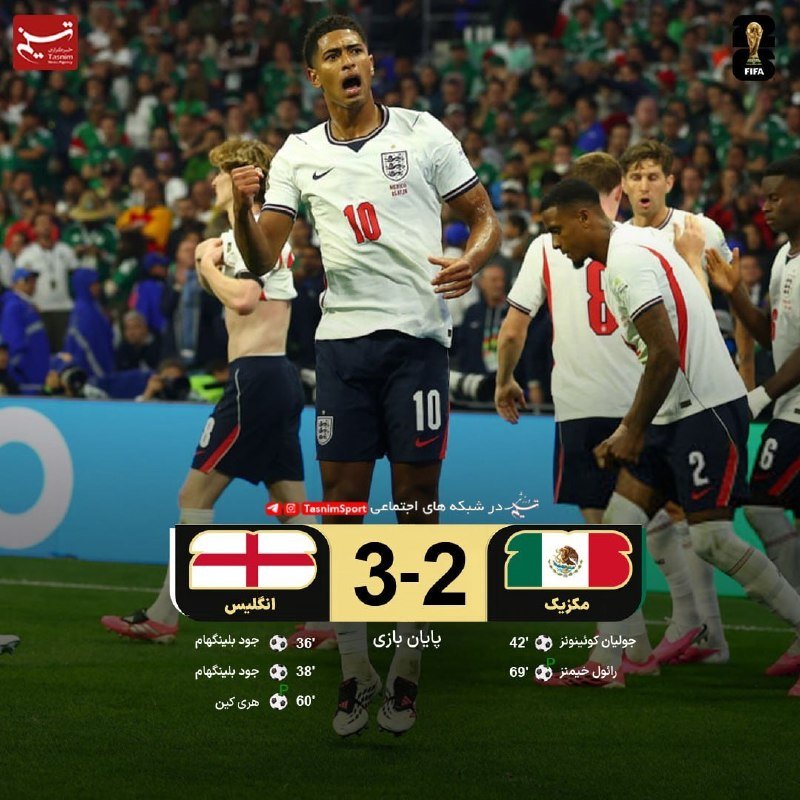
England did something on the night of 5 July that, on paper, looks routine: they won a knockout game and advanced. In context, it was the loudest kind of statement. Jude Bellingham scored twice, England played the final stretch a man down, and they still held on to beat co-hosts Mexico 3-2 at Estadio Azteca — the first defeat Mexico have suffered at the Azteca in a World Cup, according to Al Jazeera's match report filed in the early hours of 6 July. The win sends England to a quarter-final against Norway and sends Mexico home from a tournament they helped host.
Strip away the noise and a familiar pattern emerges. Co-hosting nations carry an obligation that visiting sides do not. Mexico had to manage the tournament's logistics, the diaspora's expectations, and the symbolic weight of playing in their own cathedral. England arrived with a squad built to outlast moments rather than dominate them, and on a night when a red card tilted the geometry of the match, they managed exactly that. This is the lens worth holding: not whether England deserved it — most dispatches agree they did — but what a result like this does to the politics of a tournament the United States, Canada and Mexico are jointly staging.
A stadium built for a different script
Mexico's World Cup story in 2026 has been one of rehabilitation. The federation entered the cycle with questions about depth, tactical identity and the ageing core of the squad that lifted the 2012 Olympic gold. Playing group games in front of their own supporters, against the backdrop of a politically charged co-hosting arrangement, gave them cover to reset the narrative. Beating South Korea, drawing with South Africa, and a respectable defeat to Sweden in the group was enough to get them to the knockouts. Then came England.
The Azteca is not a neutral venue for visiting teams. Altitude, crowd and history compound. England conceded first, drew level, fell behind the shape of the game after a red card, and still found two goals through Bellingham. Al Jazeera's report frames it as a "ten-man England" victory — a tag that does more work than it looks, because the match's emotional centre was whether the sending off would finally tip the tie. It did not. France 24's headline called it an "Azteca thriller"; the Indian Express dispatched it as a "wild round of 16 clash." The pattern across wires is consistent: England weathered, Mexico did not.
What the Iranian wire saw
It is worth pausing on Tasnim's framing. The Iranian state sports agency's English wire, dispatched at 03:11 UTC, opened with "Bellingham's double" and closed the bulletin with "England - Norway in the quarter." That is unusually thin colour from an outlet that often layers regional politics into its sports copy. The implication is that, for a federation used to reading geopolitical signals into every fixture, this one carried a sporting meaning rather than a civilisational one. England were a footballing opponent, not a stand-in for anything else. Mexico were hosts, not proxies. The clean read is itself the story.
The Telegram channel BellumActaNews, picking up the result shortly after, drew the obvious line: "first defeat in the Mex…" at the Azteca in a World Cup. The cut-off matters less than the headline. Mexico's unbeaten home record in this tournament had become a kind of soft-power asset — proof that co-hosting with the United States and Canada had not diluted the tournament's emotional gravity south of the Rio Grande. That asset is now spent.
The structural view, in plain language
Mega-events are sold on the premise that the host sells itself. Mexico's bid rested on football passion, organisational depth, and a fan base that travels. None of that disappears with one defeat, but the optics of the exit — at home, against a European heavyweight, after taking the lead — concentrate the costs. England, by contrast, leave the Azteca with a result that does two things at once. It validates the depth of a squad built around Bellingham, Harry Kane and a midfield engineered to absorb pressure. And it gives the Football Association a clean answer to the question every World Cup squad eventually gets asked: can you win ugly?
The wider read is that joint hosting tends to redistribute, not erase, the burden of legitimacy. When the United States and Canada wanted the tournament, they needed Mexico's stadiums and they needed Mexican fans to fill them. Mexico delivered both. The dividend was supposed to be runs in the knockouts. A round-of-16 exit changes the arithmetic for 2030 and beyond, when the tournament expands again. Co-hosting is a bet that the host's team performs; when it does not, the venue becomes a backdrop rather than a stage.
What remains uncertain
The sources do not specify the identity of the England player sent off, the timing of the dismissal, or which Mexico goals came before or after the red card. Al Jazeera's report notes the "ten-man" framing without naming the recipient; France 24 and the Indian Express follow the same restraint. That is consistent with early-match wires filed before lineups and disciplinary detail were confirmed. A fuller reconstruction — the tactical shift, the substitutions, the minutes of each goal — will settle over the next 24 hours as confirmed team-sheet data circulates.
What is not in dispute is the result, the scorer of both England goals, and the destination. England meet Norway in the quarter-finals. Mexico go home. The tournament rolls on without its co-host, and the Azteca — for the first time in this World Cup — becomes just another venue.
How Monexus framed this: the wire coverage treated England's win as a sporting result, occasionally shading into atmosphere copy. We pushed past the scoreline to read the result as a small case study in co-host politics — what a co-host gains from a deep run, what it loses when the run ends at home.
Wire provenance
This editorial synthesis draws on the following public wire/social posts:
- https://t.me/tasnimnews_en
- https://t.me/BellumActaNews