FIFA, a USMNT striker, and the geopolitics of a lifted red card
UEFA accuses FIFA of crossing a "red line" by letting USMNT striker Folarin Balogun dodge an automatic one-match ban after his red card. Belgium has reportedly lawyered up. Washington is thanking the federation. The episode is small in sporting terms and large in governance ones.
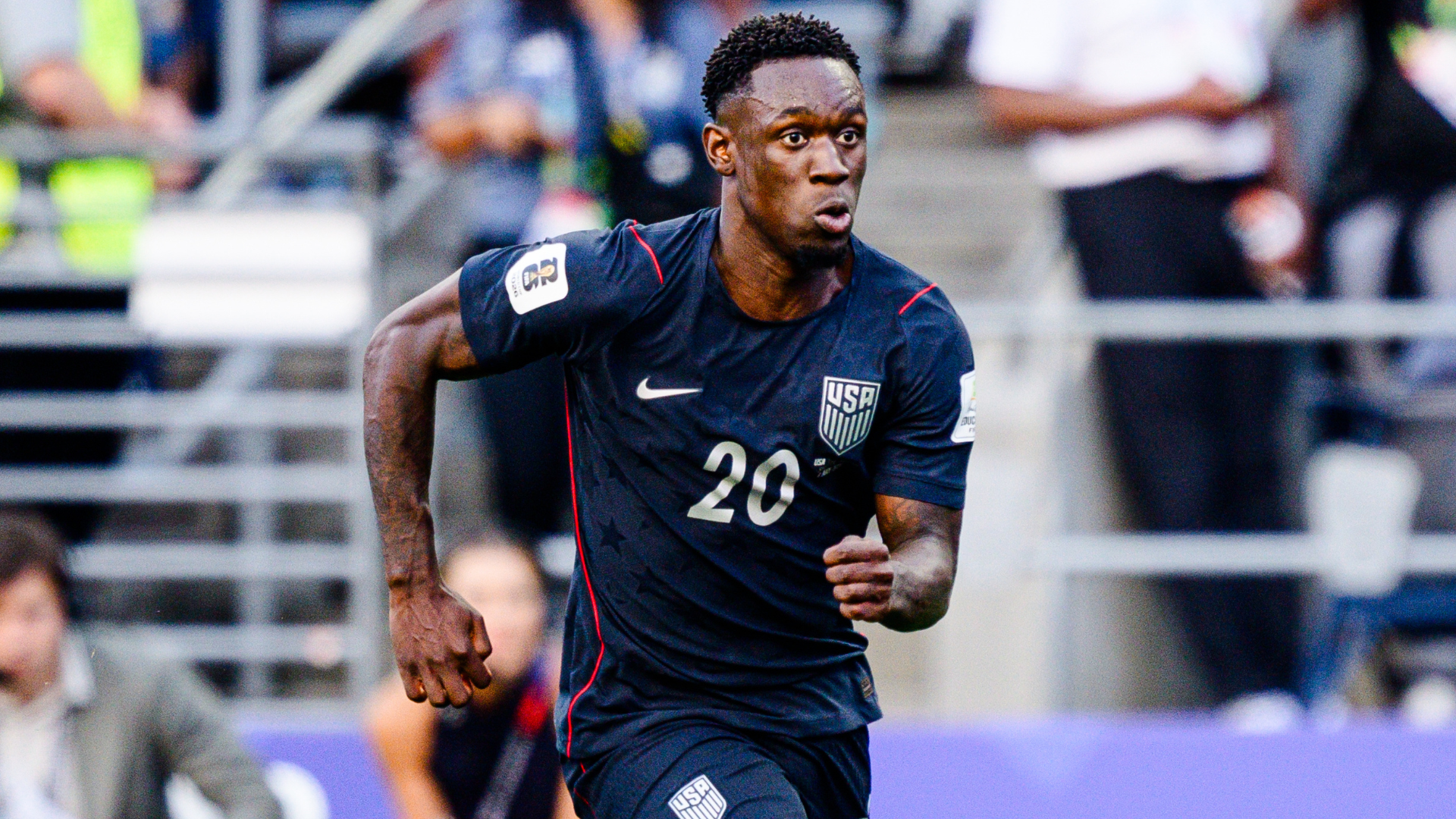
On 5 July 2026, FIFA suspended the automatic one-match ban that should have followed Folarin Balogun's red card, freeing the USMNT striker to face Belgium. UEFA's reply came within hours. The confederation said FIFA had crossed a "red line," arguing that the rules are explicit and "cannot be made subject to exceptions." Belgium's football association followed by saying it was "astonished" and exploring "all potential options," and by 6 July Belgian outlets reported the federation had engaged lawyers to challenge the decision. [Clash Report via Telegram, 6 July 2026, 11:16 UTC; Polymarket, 6 July 2026, 11:14 UTC; Polymarket, 5 July 2026, 21:58 UTC; Polymarket, 5 July 2026, 17:16 UTC.]
The sporting case is narrow: one striker, one sending-off, one match. The governance case is not. A federation's disciplinary arm has chosen to override the standard application of its own rules in the middle of a World Cup, and a sitting head of state has publicly thanked it for "reversing a great injustice." FIFA, for its part, insists the White House had no influence on the call. The incident now sits at the intersection of three pressures that have been building across the tournament: the projection of national interest through soft-power venues, the credibility of governing bodies whose authority depends on being seen to apply rules equally, and the political theatre that the modern World Cup has become.
What actually happened
The sequence is well established and procedurally clean. Balogun picked up a red card; under the standard interpretation of FIFA's disciplinary code, a one-match suspension follows automatically, with the disciplinary committee having narrow grounds to intervene. On 5 July 2026 at 17:16 UTC, FIFA's apparatus effectively used those narrow grounds to suspend the ban, clearing the striker to face Belgium. By 17:28 UTC, Donald Trump had publicly thanked FIFA for "reversing a great injustice." At 18:02 UTC, FIFA moved to pre-empt the obvious inference, assuring the public that the White House had no influence on the decision. UEFA's response followed by the morning of 6 July, with Brussels-based outlets reporting the federation had "lawyered up" to challenge the ruling. [Polymarket, 5 July 2026, 17:16 UTC; Polymarket, 5 July 2026, 17:28 UTC; Polymarket, 5 July 2026, 18:02 UTC; Polymarket, 6 July 2026, 11:14 UTC.]
The pattern is more important than any single line in the timeline. A decision, a presidential thank-you, a denial of influence, a rival confederation's protest — all within roughly eighteen hours.
The dispute is about rule-application, not the player
The Belgian federation's complaint, as relayed through Telegram channels covering the dispute, is procedural. Their argument is that the disciplinary code does not allow the kind of exception that has been applied here. UEFA's framing — "rules are clear and cannot be made subject to exceptions" — is the language of bodies that have spent decades defending their autonomy from political meddling. It is the language of an institution that remembers 2018, 2022, and the slow erosion of the principle that sporting decisions should be made by sporting authorities. [Clash Report via Telegram, 6 July 2026, 11:16 UTC; BRICS News via Telegram, 6 July 2026, 12:16 UTC.]
That is also why the White House dimension matters less than it appears at first glance. Even if FIFA's denial is taken at face value, the optics are damaging: a decision that benefits a US player, taken in a tournament hosted in the United States, greeted by a presidential statement of gratitude. Reasonable people can read the same facts and reach different conclusions about causation. The structural question is whether, in this tournament cycle, FIFA's disciplinary machinery can be seen to operate at arm's length from political patrons when those patrons happen to be the host.
Why the smaller federations are the ones paying the price
Belgium is not a minor footballing nation. The country has finished third at a World Cup and regularly produces top-tier professionals. But the asymmetry of the situation is real: a federation with a small permanent staff, facing a decision issued from Zurich, with the host nation's political class publicly weighing in on the merits. The recourse available to Belgium — formal challenge, diplomatic protest, appeals through sporting arbitration — is procedurally available but reputationally costly, and it asks a national federation to spend political capital on a single-player dispute when there is a tournament to play.
This is the dynamic that always shows up when a global governing body bends a rule. The cost of compliance falls on the party that lacks leverage, and the cost of protest falls on the party that has to lodge it. Smaller federations absorb both.
What to watch next
Three things will tell us whether this episode scars the tournament or merely grazes it. First, the timeline of any formal Belgian challenge — a procedural filing with the Court of Arbitration for Sport would put a number on the dispute and force FIFA to publish its reasoning in detail. Second, UEFA's next move as a confederation. A formal letter of protest from Nyon would harden the institutional response beyond the rhetorical "red line" language. Third, the on-pitch result. If Belgium beats the United States with Balogun in the side, the controversy will be filed under "vindicated complaint." If the USMNT wins and Balogun scores, the headlines will be about goals, and the governance questions will retreat to the back pages — until the next time a host's player is at the centre of a discretionary call.
The facts that remain genuinely contested are limited but real. The exact text of FIFA's disciplinary reasoning has not been published in the materials available; the chain of internal communications between Zurich and the White House is not in the public record; and the substance of Belgium's legal options has so far been reported through Polymarket and Telegram channels rather than through a primary statement from the Belgian federation. The framing of the controversy — corruption narrative versus procedural-flexibility narrative — depends on which of these gaps gets filled first, and by whom.
Desk note: Monexus treats this as a governance story dressed in football kit. The wire framing so far has led with the player; this publication leads with the institution.
Wire provenance
This editorial synthesis draws on the following public wire/social posts:
- https://t.me/ClashReport
- https://t.me/bricsnews