A red card, a reversal, and the geopolitical weight of a single FIFA ruling
When FIFA lifted Folarin Balogun's three-match suspension after a Trump intervention, UEFA called it a red line crossed. The episode lays bare how a late-stage World Cup hosting, presidential access, and federation politics can collide over one disciplinary file.
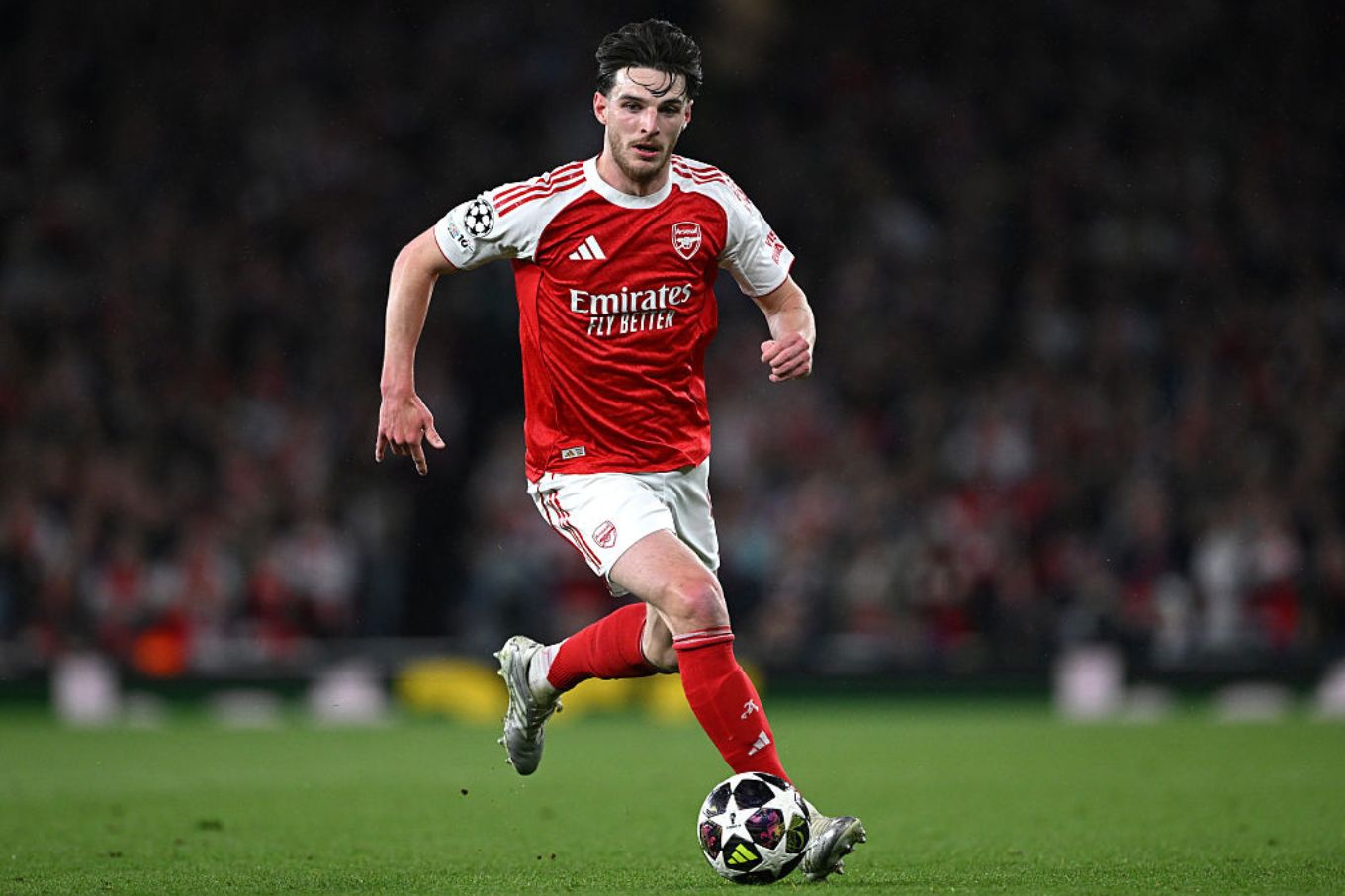
On 6 July 2026, European football's governing body accused FIFA of crossing a "red line" after the global federation reversed a three-match suspension on United States striker Folarin Balogun. The intervention that produced the reversal came not from a referee, a disciplinary panel, or the US Soccer Federation — but from the White House. The episode, set against the United States hosting the 2026 World Cup co-hosted with Canada and Mexico, has turned a routine red-card appeal into the most consequential piece of sports diplomacy the global game has seen in years.
In the space of five days, a single disciplinary ruling migrated from a dressing-room dispute to a federation stand-off, from a federation stand-off to a presidential statement, and from a presidential statement to a public rupture between two of the sport's most powerful bodies. Each step is small in itself; the cumulative effect is the more remarkable for it.
What actually happened in the file
The original incident led to a red card and a subsequent ban that would have ruled Balogun out of three fixtures in the most-watched tournament on the men's international calendar. Standard procedure sends such appeals through the FIFA Disciplinary Committee and, on further recourse, the Court of Arbitration for Sport in Lausanne. The reversal announced on 5 July 2026 bypassed that usual path. Reporting summarised by an Australian wire on the same day carried the headline that a "FIFA" decision had revoked the suspension, prompting the descriptor that the reversal had provoked "fury" across parts of the football world and "astonishment" at the speed of the move (SBS News, 2026-07-06). Within hours, the same theme was amplified on social platforms: a post captured by a prediction-market X account logged Donald Trump thanking FIFA for "reversing a great injustice" after Balogun's suspension was lifted (Polymarket X feed, 2026-07-05). The White House intervention — and the public thanks it produced — is the detail that turned an administrative file into a political one.
UEFA's response followed swiftly the next morning. An item from a Telegram channel tracking European football summarised the federation's stance: UEFA denounced FIFA's decision, saying a "red line" had been crossed (Ren Intel, 2026-07-06 09:47 UTC). The phrasing is unusually severe for a body that, in public at least, has spent recent years carefully managing its relationship with FIFA's Swiss headquarters in Zurich.
The counter-narrative: pressure that did not look like pressure
Two readings of the events are consistent with the available reporting. The first holds that the original red card was harsh, that the disciplinary committee's reasoning was thin, and that an independent appeal — run through the proper channels — would have produced the same outcome. On this view, FIFA simply accelerated a process that was already moving toward the right answer, and the White House merely nudged the timetable.
The second reading is darker. It argues that FIFA, sitting inside an American-hosted tournament, with US diplomatic muscle behind the host federation, found the political incentives overwhelmingly skewed toward deference. The fact that the public reversal was attributed to "FIFA" without a detailed written reasoning — and the fact that the appellate body of first resort appears to have been leapfrogged — is read by critics as institutional capture in slow motion. UEFA's "red line" language is, on this reading, a coded warning that the European confederation will not quietly accept a precedent in which a politically connected national federation can shortcut the disciplinary process in a tournament the United States is hosting.
The two readings are not necessarily mutually exclusive. The original punishment may have been over-stated; the remedy still might have set a problematic precedent. Which reading the football public will adopt depends on the procedural document FIFA eventually publishes, if it publishes one at all.
What the structural frame looks like from here
Strip the episode of its specific personalities and a familiar pattern emerges. Major sporting events hosted by major states have, for two decades, been sites at which the host's political weight bends the competition in ways the federations cannot fully police. The 2022 men's tournament in Qatar — where FIFA had to keep issuing clarifications about workers' rights, alcohol policy, and LGBT+ access — was the prior high-water mark. The 2026 edition, distributed across three North American host nations and the largest in the competition's history, raises the stakes simply because the host pool is bigger and the broadcast windows cut deeper into American prime time.
That scale is what makes the Balogun file different from a routine appeal. In a smaller tournament, a domestic political intervention would have less consequence because fewer downstream matches depend on the affected player's eligibility. Here, Balogun is a senior US Men's National Team striker; whether he plays in the knockout rounds is, in the most literal sporting sense, a national-team outcome that the United States government can be expected to care about. The federation knew it. That knowledge shaped its incentives.
The harder problem is institutional. FIFA's authority rests on the perception that its decisions are made on footballing grounds and only on footballing grounds. Each time a politically connected actor is widely understood to have moved the needle on a procedural outcome, that perception takes a hit. The European confederations, whose clubs supply the bulk of the players and the bulk of the broadcast revenue, are the constituencies that pay the highest cost when FIFA's authority is diluted in public. That is why UEFA's language was harsher than anything that has come out of Zurich's neighbours in years.
Precedent: the cases FIFA will now have to defend
The closest comparable episode in modern FIFA history is the 2010s-era dance between the federation and the Swiss federal authorities over banking secrecy, in which FIFA's institutional position was repeatedly tied to political decisions taken elsewhere. Closer to the field of play is the 2014 World Cup, when the Brazilian government's surge in infrastructure spending produced venues that local governance structures were politically responsible for but operationally unprepared to run. In neither case was the underlying competition compromised; in both, the federation had to defend a separation between sport and politics that was visibly thinner than its public statements implied.
What the Balogun reversal adds to that precedent book is a new venue: the disciplinary case file. Past political interventions have touched broadcasting rights, stadium construction, alcohol sales, and labour policy. They have not typically touched individual player eligibility by way of direct presidential engagement. The European federations' worry — and the worry that the Court of Arbitration for Sport in Lausanne will eventually have to rule on, if a case is brought — is that the file has now been opened.
Stakes: what the federations actually lose if the trajectory continues
The cleanest way to read the stakes is institution by institution. FIFA loses the perception of autonomy that its commercial partners rely on when they sign eight- and twelve-year sponsorship contracts. UEFA loses leverage in the next round of governance negotiations, particularly over the Club World Cup calendar that has been the federation's biggest internal fight of the past three years. US Soccer gains a senior player's availability — a near-term sporting benefit whose dollar value is hard to overstate in a tournament co-hosted on its own soil. The White House gains a visible piece of domestic sports symbolism at marginal political cost: a presidential statement praising the federation is not, in itself, a contested action, even if the underlying intervention is.
The losers, in any honest accounting, are the smaller federations whose players and officials do not have a direct line to any head of state. The disciplinary process exists, in part, to keep that asymmetry from deciding outcomes. If the asymmetry is now openly producing reversals at the most visible end of the competition, the process has begun to fail at its core task.
What remains genuinely contested is whether UEFA will move beyond the language and into formal action. An official complaint to CAS — unlikely, but not impossible, if a confederation wanted to draw a sharp line — would force the file into the open in a way that public statements cannot. Polling is not yet available on how the European football public is reading the reversal; federation sources have not, in this round, released internal correspondence. What the available reporting shows is that a single disciplinary decision has cracked open a fault line that was always there, and that the fault line is now visible at the highest levels of the game.
This piece compared the wire framing of the FIFA reversal with the European confederation's response, holding the procedural and the geopolitical frames side by side rather than collapsing them.
Wire provenance
This editorial synthesis draws on the following public wire/social posts:
- https://www.sbs.com.au/news/article/world-cup-astonished-usa-balogun-red-card-suspended/6y5pva0kp
- https://t.me/rnintel
- https://en.wikipedia.org/wiki/UEFA
- https://en.wikipedia.org/wiki/FIFA
- https://en.wikipedia.org/wiki/Folarin_Balogun
- https://en.wikipedia.org/wiki/2026_FIFA_World_Cup
- https://en.wikipedia.org/wiki/Court_of_Arbitration_for_Sport
- https://www.sbs.com.au/news/article/world-cup-astonished-usa-balogun-red-card-suspended/6y5pva0kp
- https://t.me/rnintel
- https://en.wikipedia.org/wiki/UEFA
- https://en.wikipedia.org/wiki/FIFA
- https://en.wikipedia.org/wiki/Folarin_Balogun
- https://en.wikipedia.org/wiki/2026_FIFA_World_Cup
- https://en.wikipedia.org/wiki/Court_of_Arbitration_for_Sport