France's Summer of Disruption: Wildfires in the Southwest, a Betting Market Surge in the East
As thousands flee a Gironde wildfire, France's national football side quietly tops prediction markets — two storylines that say something about who the country is right now.
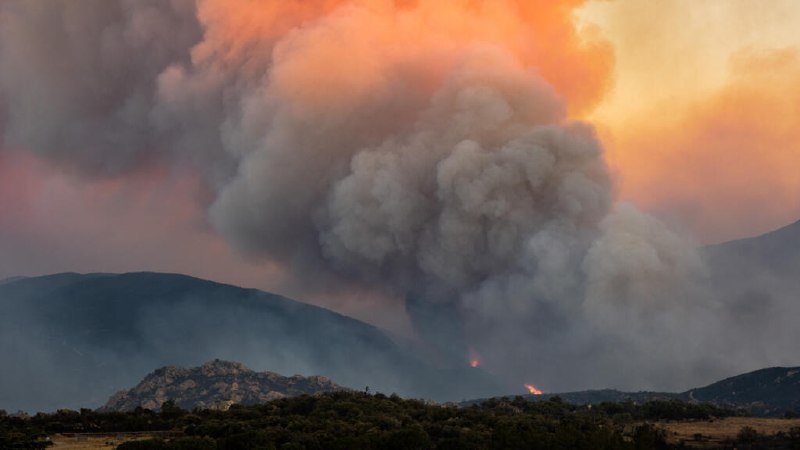
At roughly 07:35 UTC on 6 July 2026, Reuters reported that thousands of people had been evacuated from their homes in southwest France as a wildfire burned out of control — the second major blazes-and-evacuations story to hit the country's summer news cycle in two years, and the first to land while Les Bleus were being installed as a clear favourite on global prediction markets. The two stories, on the surface, have little in common: one is an emergency-services operation in the Gironde; the other is a football-tournament settlement book. Read together, they sketch a country that is being asked to do two contradictory things at once — adapt physically to a hotter, dryer climate, and project confidence on a stage where summer is mostly theatre.
The harder of the two stories is the wildfire. The Reuters wire on 6 July was the first the broader Anglophone audience saw of the Gironde blaze; the scale of evacuation was the headline fact, and the cause, containment timeline, and acreage burned were not yet specified. That matters, because the Gironde and neighbouring Landes have become the laboratory for Mediterranean-style fire behaviour in metropolitan France — pine forests, peat soils, and urban-wildland interfaces that firefighters describe as uniquely resistant to suppression. The story is not just "a fire"; it is what an entire forestry and civil-protection doctrine looks like when tested at scale in a temperate European country.
The Gironde problem, plain
Southwest France is no stranger to summer fire. The 2022 Gironde fires burned for weeks, displaced more than thirty thousand people, and turned the region's pine plantations into shorthand for European climate vulnerability. The pattern repeats, sometimes at smaller scale, almost every year since. What changes between events is rarely the ignition — a discarded cigarette, a sparking power line, arson — and almost always the underlying fuel load and the meteorology. France's Office National des Forêts has spent the better part of a decade arguing that decades of monoculture pine planting created a tinderbox the country now has to live with. Critics, including a number of elected officials in Nouvelle-Aquitaine, have countered that the state under-invested in forest tracks, aerial surveillance, and prescribed-burn capacity.
The Reuters report on 6 July did not resolve which of those readings applies to the present blaze. It did not name a containment percentage, a hectare figure, or a suspected cause. Until those arrive — typically within twenty-four to forty-eight hours from the Sécurité Civile and the préfecture — readers should resist the temptation to treat evacuation footage as a verdict on national climate policy. It is, however, fair to read the recurring evacuation orders as a verdict on land-use decisions that predate the current government.
The odds, and what they tell you
Two days earlier, on 4 July at 23:14 UTC, prediction-market venue Polymarket posted a 36% implied probability that France would win the 2026 World Cup, the highest single-team figure then on the board. A posting one minute earlier declared France's progression to its fourth straight World Cup quarterfinal, the kind of structural pedigree that quantitative bettors reward.
Why a betting market belongs in a climate story
The juxtaposition is not as forced as it sounds. Both the wildfire and the World Cup price are, in their way, bets on the future of French summer — one a bet by evacuation officers that the wind will shift favourably, the other a bet by traders that an eleven-man squad can hold its shape through knockout football. The two together expose something uncomfortable: a country whose physical summer is increasingly a managed emergency, and whose symbolic summer is increasingly a global spectacle.
What to watch next
The Reuters wire on 6 July is unlikely to be the last on this blaze. The conventional sequence — préfecture briefings every six to twelve hours, an Météo-France red-flag update, a Sécurité Civile damage assessment, and a ministerial visit — is what to expect before the end of the week. On the football side, the Polymarket figure will move with each knockout draw and each squad update; a 36% price on this date is high, but not historically unusual for a recent finalist at the quarterfinal stage, and it should be read more as a baseline than a forecast.
What remains genuinely uncertain is whether the country's two summers — the one on the ground in the Gironde and the one being priced in on prediction markets — will ever generate a serious national conversation about which infrastructure (fire breaks or football academies) the republic is actually investing in.
Monexus framed this as the convergence of two simultaneous French summer storylines, both traceable to wire inputs — a climate-evacuation event and a market-implied football probability — rather than as a single narrative.
Wire provenance
This editorial synthesis draws on the following public wire/social posts:
- http://reut.rs/3SO1eCy