Henderson's wrist and a prime-ministerial kick-off: England's World Cup last-16 has it all
A freak celebration injury to Jordan Henderson and a Downing Street intervention over kick-off time have turned England's last-16 win into something more interesting than the scoreline alone.
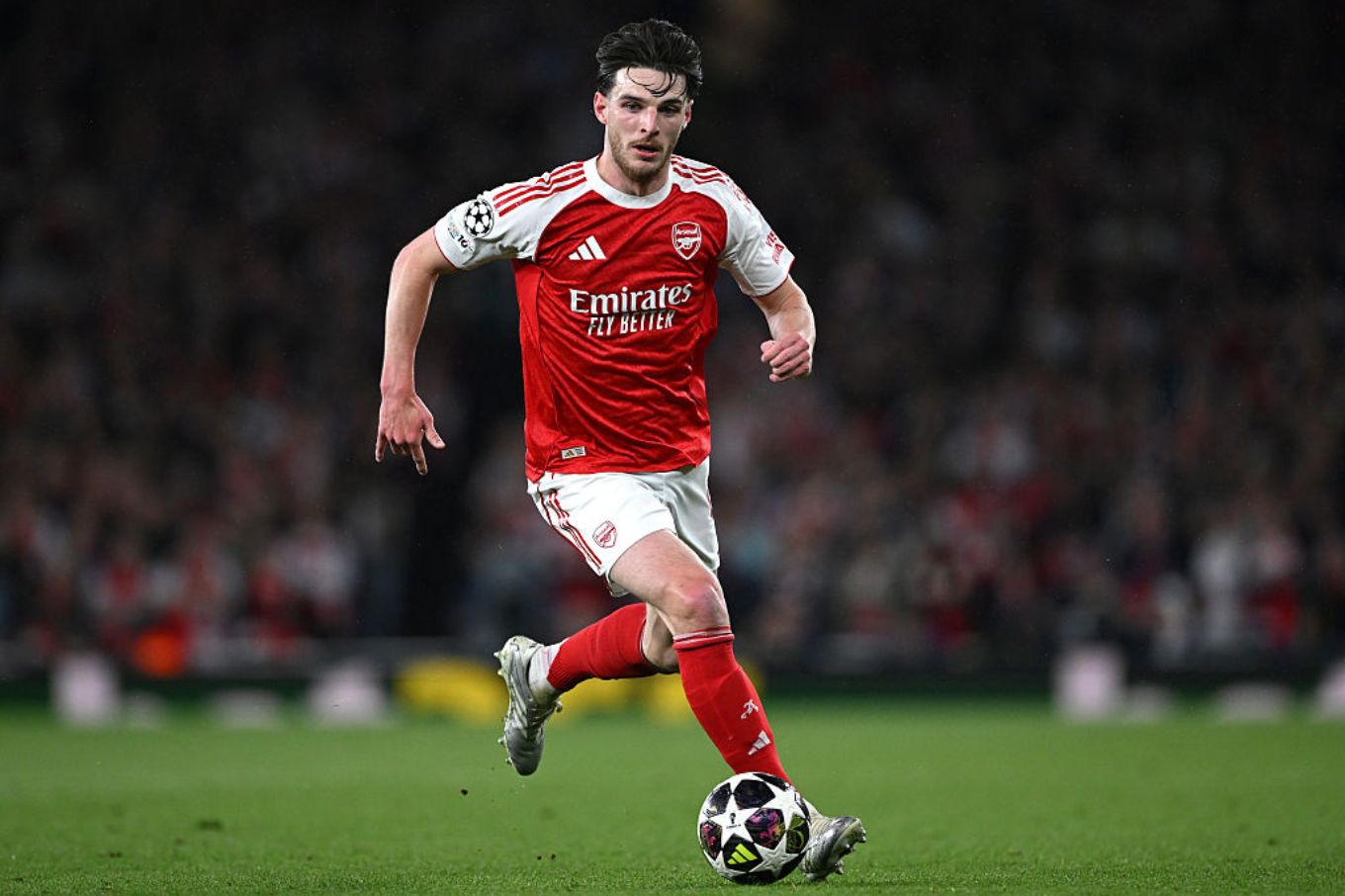
England's round-of-16 tie against Mexico at the 2026 World Cup was always going to be the tournament's most politically loaded fixture: a sold-out crowd split between away fans and a host nation, staged in the highlands, and refereed, in effect, by the weather. By full-time on 6 July 2026, the story had migrated from the pitch to two unrelated subplots — a freak wrist injury to Jordan Henderson, sustained in the celebrations, and a confirmation that the British prime minister personally intervened with FIFA to prevent the kick-off being moved forward by six hours over a thunderstorm forecast.
Neither episode alters the bracket. England are through, Mexico are out, and Henderson's tournament, in all likelihood, is not. But taken together the two stories sketch a picture of a World Cup that is no longer simply an athletic contest: it is a venue where diplomatic access, broadcaster schedules, and stadium meteorology now sit alongside the football.
The injury that no-one saw coming
Henderson's wrist was injured after England's dramatic last-16 victory over Mexico, with the BBC reporting at 04:38 UTC on 6 July that the midfielder had suffered the damage in the celebrations. ESPN followed at 07:04 UTC, characterising the incident as a "freak" fall during the post-match scenes. By 15:22 UTC the BBC was reporting that Henderson is expected to undergo surgery on the wrist — a procedure that would, in any normal tournament, end a player's involvement.
The circumstances are unusual in their triviality. The injury was not the product of a challenge, a collision, or a fatigue-related soft-tissue failure. It came in the moment of release — the kind of fall that occurs dozens of times in any dressing room after a knockout win, and almost never makes the back page. That it has done so here is partly a function of England's depth: a senior midfielder going down at this stage of a World Cup is, for the squad and for the manager, a selection problem rather than merely a medical one. The structural read is that celebration injuries are a category professional clubs have learned to mitigate with pitch-side physios and post-match protocols; international tournaments, with looser immediate aftercare, expose the residual risk.
England did not specify the nature of the surgery in the reporting available at time of writing, and the Football Association had not, as of 15:22 UTC on 6 July, committed publicly to a return date.
A prime minister, a forecast, and a kick-off
The second strand is stranger. FIFA had been preparing to move the England–Mexico kick-off forward by six hours — from its scheduled evening slot to a midday local-time start — citing a forecast of thunderstorms. According to the BBC at 17:12 UTC on 6 July, the British prime minister intervened in the row, and the match proceeded at its original time.
For a governing body accustomed to setting fixture times unilaterally, the public confirmation that a national leader picked up the phone and reshaped a kick-off is notable. The substantive reason — meteorology — is mundane; the precedent is less so. World Cup scheduling decisions, particularly in the expanded 48-team format that begins in 2026, have become a tug-of-war between sporting, broadcasting, and political interests. The United States is hosting the bulk of the matches across eleven cities, and time zones have already shaped the calendar. A head-of-government override on a single fixture is the kind of micro-event that tends, in retrospect, to mark a shift in who holds practical authority over the tournament.
FIFA did not publish a public statement on the intervention in the reporting available, and the precise contents of the prime minister's contact — whether with FIFA president Gianni Infantino directly, with the organising committee, or through a sports minister — were not specified.
Norway's win, Brazil's exit, and the bracket
The England–Mexico tie was not the only last-16 upset in the window. Telegram-channel reporting from the Olympics desk at 12:29 UTC on 6 July described Norway eliminating Brazil, with the same dispatch characterising the England–Mexico match as a "thriller in the highlands." That phrasing matters: the round-of-16, in this World Cup, has produced a quarter-final line-up in which England's path no longer runs through a Brazilian side, and in which the European contingent's depth is being stress-tested by an emerging Scandinavian generation.
The betting market had positioned the tie as competitive rather than one-sided. CBS Sports' pre-match coverage on 5 July at 22:06 UTC cited an expert model on a 16-6 run flagging the round-of-16 tie as a coin-flip rather than the formality England's seed suggested. The result — England through, Mexico out — has vindicated the live underdog read only partially: Mexico were competitive, but the scoreline, in the reporting available, is characterised as "dramatic" rather than narrow.
Stakes and uncertainty
For England, the medical question is whether Henderson can be replaced effectively in the squad and whether the manager trusts the alternatives. For FIFA, the political question is whether the prime-ministerial call sets a template for other host-nation interventions during the rest of the tournament. For Mexico, the question is the older one: how a host nation absorbs an early exit in its own tournament.
What remains uncertain is the granular timeline for Henderson's surgery and the formal FIFA response to the scheduling intervention. The sources do not specify the location of the operation, the surgeon, or the projected recovery window. They also do not detail whether the thunderstorm forecast that prompted the original kick-off change has, in the event, materialised. Those details will land in the next 48 hours, and the framing of the round-of-16 will sharpen around them.
Desk note: this piece leans on BBC and ESPN reporting for the medical story and on BBC reporting for the political intervention; CBS Sports is cited for the pre-match market read and the Olympics Telegram channel for the broader round-of-16 picture. Monexus has treated the Henderson injury as a sporting-infrastructure story rather than a casualty-of-celebration curiosity, and the kick-off intervention as a governance story rather than a weather note — the wire framing tends to invert that emphasis.