India's nutrition debate turns on a single food — and the limits of that frame
The National Institute of Nutrition's director says no single food can carry a child's diet. The pushback reveals how India's malnutrition fight is being reframed — and where the political fault lines now sit.
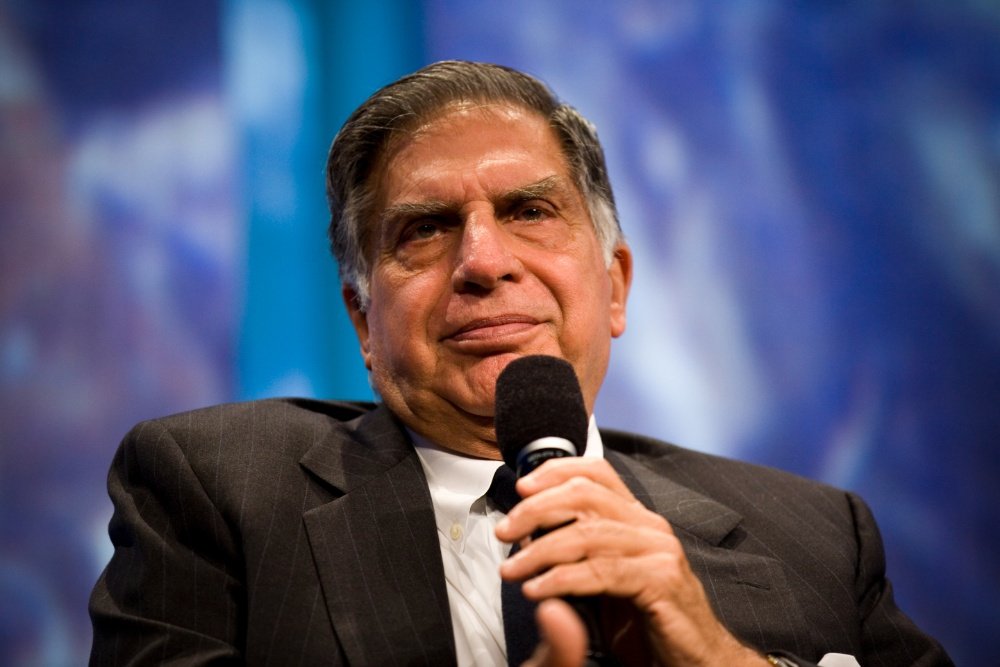
On 6 July 2026, the head of India's National Institute of Nutrition broke with the country's loudest nutrition argument of the past year: the idea that a single food, however protein-dense, could rescue a generation of children from chronic undernutrition. According to reporting in The Indian Express that day, NIN Director Hemalatha R. used a public forum in Hyderabad to argue that no single food — eggs included — is sufficient on its own for a child's growth, and that dietary diversity must remain the organising principle of public-health policy. The intervention lands in a country where the politics of the school midday meal have, for nearly a decade, doubled as the politics of caste, federalism, and state-level identity.
The NIN is not a peripheral voice. It is the principal nutrition research body under the Indian Council of Medical Research, and its dietary guidelines shape the training of anganwadi workers, the procurement lists of state governments, and the framing of central schemes. When its director says a single food cannot do the job, she is not correcting a fringe view. She is trying to close a debate that has run on for years, and that has done real damage in the meantime.
Eggs, lentils, and the politics of the midday meal
The Indian Express reporting on 6 July makes clear that the single-food argument has cut deepest in the long-running fight over eggs in government school meals. Several southern states — Tamil Nadu, Andhra Pradesh, Telangana, and Odisha — have for years served boiled eggs as part of the midday meal or the anganwadi supplementary nutrition programme, and have built their child-nutrition credentials on the practice. A clutch of northern and western states, including Madhya Pradesh, Rajasthan, Gujarat, and Uttar Pradesh, have resisted egg distribution on grounds that range from vegetarian-majority demographics to upper-caste dietary norms and, more bluntly, electoral calculation.
The single-food frame suits both sides of that fight. For states that already serve eggs, it gives a clean, marketable metric: more protein, served daily, to the children who need it most. For states that refuse, it gives a target to attack: if one food can solve the problem, then any food is dispensable, and the political cost of saying no drops. Hemalatha's intervention is, in effect, a refusal to let either side win the argument on those terms. A diversified diet, by NIN's account, cannot be reduced to a single protein vector — and once that is conceded, the political utility of the egg-as-saviour story weakens on both sides.
The Indian Express piece also surfaces a quieter point. The NIN's diversification argument is, at root, an argument about cost and logistics as much as it is about biology. A diversified plate that includes pulses, millets, dairy, green leafy vegetables, and a protein source in rotation is harder to procure, harder to store, and harder to monitor than a boiled egg dropped into a steel plate. Single-food solutions are attractive because they are auditable. The NIN is asking states to accept more complexity in exchange for better outcomes — a trade most public administrations are reluctant to make.
What the diversification argument actually claims
NIN's position, as paraphrased in the Indian Express report, is that protein adequacy in Indian child diets is rarely a question of absolute scarcity. It is, more often, a question of distribution across the day and across food groups, and of absorption — iron, vitamin B12, vitamin A, and zinc deficiencies limit the value of protein that is consumed. Millets, for instance, deliver protein alongside complex carbohydrates and micronutrients, and at lower cost per calorie than several refined alternatives. Pulses deliver protein and fibre together. Dairy delivers calcium and fats that aid absorption of fat-soluble vitamins. None of these substitutes for any of the others; the diet needs the combination.
This is not a fringe scientific view. It tracks the framing used by UNICEF India in successive State of the World's Children reports, and by the WHO's own guidance on complementary feeding, both of which emphasise dietary diversity scores as a primary metric rather than protein intake alone. The single-food frame flattens that complexity into something a chief minister can announce on a campaign stage; the diversification frame insists on the complexity and pushes the political conversation back to procurement, cold-chain, and pricing policy.
The pushback the NIN will face
The intervention will not land quietly. Three lines of resistance are predictable. First, nutrition NGOs that have spent years campaigning for egg inclusion in midday meals will read the diversification argument as a dilution of a clean, winnable ask. Eggs are measurable, photogenic, and politically legible; millets are not. Second, state-level nutrition bureaucracies that have built programmes around a single anchor food — eggs in Tamil Nadu, milk in Gujarat, fortified rice in several central schemes — will resist being told that their flagship intervention is incomplete on its own. Third, the food industry, which has built a fast-growing market around fortified single products and ready-to-eat therapeutic foods, has a commercial interest in the single-vector frame and will push back against any messaging that implies its products are insufficient without accompaniment.
A plausible counter-read sits alongside the NIN position: in the immediate crisis of severe acute malnutrition, single-vector therapeutic foods do save lives, and arguing against their primacy risks confusing acute clinical intervention with population-level dietary policy. Hemalatha's framing, as reported, holds both at once — but the press coverage will tend to flatten that into a binary, and the binary is where the political fight will happen.
Where the structural stakes sit
The fight matters beyond nutrition. India runs the world's largest school-feeding programme, reaching roughly 120 million children daily through the midday meal scheme, and the second-largest supplementary nutrition programme through anganwadis. Procurement decisions in those programmes move agricultural markets — particularly for eggs, pulses, and millets — at subcontinental scale. If the NIN diversification frame prevails, the procurement mix shifts, the political economy of the midday meal shifts with it, and the locus of agricultural lobbying shifts again.
There is also a federal question embedded in the row. Nutrition, school feeding, and anganwadi services sit on the Concurrent List of the Indian Constitution, which gives both the central government and the states a legitimate policy role. The single-food frame has, in practice, allowed state governments to brand themselves on a single intervention — and central schemes to brand themselves the same way. The diversification argument forces both levels back into a more collaborative posture, in which states have to demonstrate dietary adequacy across food groups rather than along a single line, and the centre has to support that complexity with procurement flexibility. That is a harder political lift, and the reason it has not been tried at scale.
What remains contested
The sources available on 6 July do not specify which state governments have formally responded to Hemalatha's remarks, nor whether the NIN's position will be codified in revised dietary guidelines or in central scheme guidance in the coming months. The Indian Express piece is a single-day news report, not a longitudinal policy tracker. Whether the diversification argument translates into procurement change, or remains a corrective remark from a respected institution, is the open question. The NIN's authority is real; so is the political pull of a single-food headline. The next few months will show which one bends first.
This piece treats the NIN intervention as a public-health argument with political consequences, rather than as a food-fight column. The frame matters because procurement in India moves at the scale of states, and the dietary guideline a state adopts shapes which farmer gets a contract.