Iran buries its martyred: the choreography of grief after the strike on the Supreme Leader
Tasnim’s overnight feed showed an endless procession toward a martyr’s burial. The choreography tells you who the regime thinks it’s fighting now.
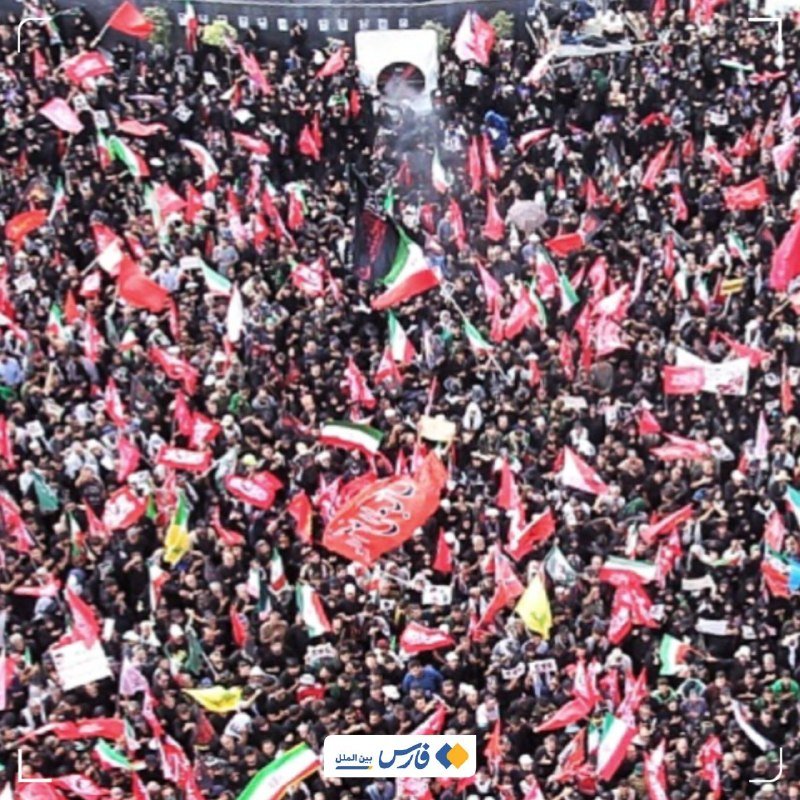
The procession that won’t end
Somewhere in central Iran, in the small hours of 6 July 2026, the streets filled. State-aligned outlets uploaded the same images on a loop: a slow-moving vehicle carrying shrouded bodies, crowds pressed against the convoy, mourners chanting, the hashtags #Badarqa_Aghai_Shahid_Iran and #must_rise appended to every post. Tasnim News, the outlet closest to the Islamic Revolutionary Guard Corps, kept the stream live from roughly 04:40 UTC onward, updating the burial route as the cars moved [https://t.me/tasnimnews_en]. By 05:48 UTC, the channel was broadcasting pledges of vengeance — “We are Zulfiqar Heydar, the avenger of our leader” [https://t.me/tasnimnews_en].
That is the headline. Not the policy shift — the choreography. Iran often scripts its grief, but the volume here is different.
What the framing actually says
The leadership at the centre of these funeral rites is described as “martyred” and “revolutionary,” not merely “deceased.” “Martyrdom” is a deliberate signal: the dead did not fail; they were killed, and that killing accrues political capital inside the system. Hassled mortar volleys are out; choreographed mass processions are in. The choice of vocabulary — shahid, avenger, must rise — tells the observer who the regime believes is responsible and which constituency it is trying to mobilise on this particular morning.
The functional effect is to convert a kinetic blow into a unifying narrative. Foreign-policy posture narrows because the mourning cycle demands it. When the state broadcaster moves from “we grieve” to “we avenge,” the Overton window at the top of the Iranian system closes.
What we don’t know — and why it matters
The thread in front of this publication is a single source: Tasnim’s English-language Telegram channel, running at high frequency during a live funeral procession. That tells us two things and warns us about a third.
First, it confirms there is an Iranian state funeral this morning and that the death is being framed as an assassination of a senior figure. Second, it confirms that the security and media apparatus is mobilising mass symbolic support. Third — and the warning — a single state-aligned feed cannot tell us who struck whom, with what, when, or how. Iran International, Reuters, AP, BBC and Al Jazeera will provide the corroborating detail within hours. Until they do, this publication treats the scale and shape of the response, not the underlying strike, as the verifiable story.
What the choreography is for
Mass funerals in the Islamic Republic do not just honour the dead. They ratify the line of succession, broadcast grief at the scale the street can bear, and remind neighbouring capitals what an Iranian security death costs. Three mechanisms are in plain view. Public composure converts to regime durability: the more visibly normal the procession, the more the system signals continuity under fire. Coverage on Telegram and state TV creates an information monopoly: while the procession lasts, the regime controls the optic and Western analysts spend the morning arguing about footage. Finally, the choice of hashtag — must rise — turns mourning into a recruitment pitch. The clerics are not telling their base to grieve in private. They are telling them to enlist.
What to watch by sundown
Three signals will matter before 6 July ends. First, an attribution — official or otherwise — from Tehran naming the actor it blames; the rhetoric is already loaded for it. Second, an English-language statement from the Iranian foreign ministry or military command, which will decide whether the response is bilateral, regional or proxied. Third, a price move in crude on the same day, because the insurance market reads these processions faster than analysts do. None of these has been confirmed by wire services as this article files. The propaganda of grief is already at full volume; the evidence behind it is still arriving.
How Monexus framed this: the wire will, within hours, lead on who was killed and by whom. We have led on what the regime’s own footage tells us about how it intends to use the death — because that frame, even on a single source, is the one that will shape Monday’s headlines.
Wire provenance
This editorial synthesis draws on the following public wire/social posts:
- https://t.me/tasnimnews_en
- https://t.me/tasnimnews_en/3
- https://t.me/tasnimnews_en/4
- https://t.me/tasnimnews_en/6
- https://t.me/tasnimnews_en/8