Iran buries the man it built its security doctrine around
Tasnim footage shows millions lining the route from Tehran to Mashhad for the burial of the man Iran spent four decades preparing to succeed.
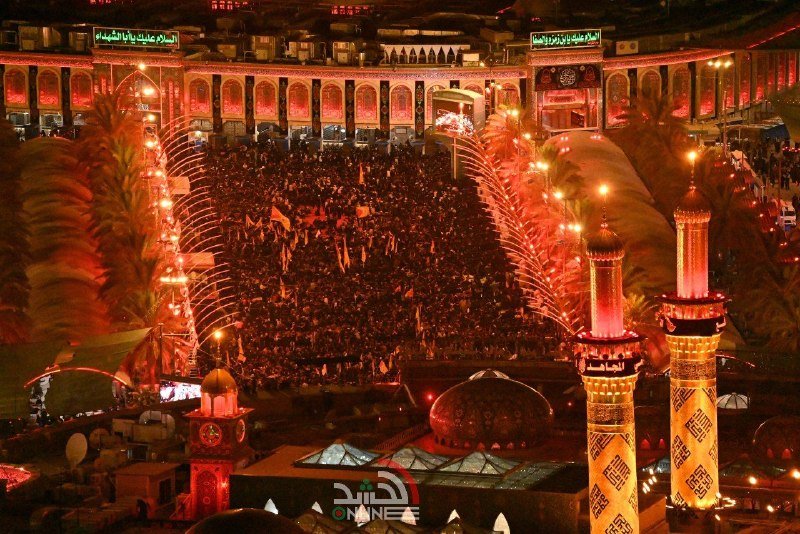
The procession that left central Tehran on the morning of 6 July 2026 was, by any measure, the largest state-organised farewell Iran has staged since 1989. State-aligned outlet Tasnim News posted a series of running dispatches on its English Telegram channel between 12:05 and 12:48 UTC documenting a martyr's burial, an hours-long farewell at the shrine complex, and what it called "the biggest chase in history" as the cortege moved east toward Mashhad. The hashtags the channel attached — #Badarqa_Aghai_Shahid_Iran and #must_rise — gave the game away even before the imagery did: this was not a routine commemoration. It was the burial of the man the Islamic Republic had spent years grooming as its next supreme leader.
The state-aligned framing is unusually candid. Tasnim's own copy calls the deceased "the martyred leader of the revolution" and refers to him, in the formal register of Shia clerical honorifics, as "the imam of the martyr" — language reserved, in four decades of Iranian state media, for figures whose deaths the regime treats as foundational rather than incidental. The use of Shahid (martyr) in the channel's campaign tags is the giveaway. Senior clerics who die of natural causes are not styled martyrs. Martyrdom, in this register, is a political designation: it tells the public the regime needs this death narrated as sacrifice, not as succession.
That choice tells you something the speeches will not. Every previous transmission of the supreme-leadership role in Iran — from Khomeini to Khamenei in 1989 — was staged as continuity: a quiet Assembly of Experts vote, a measured announcement, a managed transition. What Tasnim is broadcasting from Tehran and the road to Mashhad is the opposite register. It is the register of martyrdom processions, of Shia mourning culture deployed at maximum volume. The republic is performing grief as governance.
Why the state reach for martyrdom
The martyr frame does specific work. It binds the deceased into the same lineage as Quds Force commander Qasem Soleimani and IRGC chief Hossein Salami — figures whose killings Tehran openly framed as assassinations by the United States and Israel, and whose funerals were used to mobilise turnout and consolidate elite cohesion. A martyr-leader, in this vocabulary, is not merely dead. He has been taken. His death is a wound to the body politic that only mobilisation can heal.
The subtext, which no Tasnim dispatch will write in plain prose but which every observer of Tehran reads between the lines, is that the regime believes Iran is entering a period of acute external pressure. The campaign tags emphasise continuity — #must_rise, the eternal imperative — because the political class has not yet agreed on what exactly the public is being asked to rise against. A martyr can be defined against any enemy. A dead supreme leader, presented as a martyr, becomes the unifying surface onto which every faction can project its preferred threat.
What the route to Mashhad tells you
The geography of the farewell is itself a statement. Tehran is the administrative capital; Mashhad is the spiritual capital, home to the shrine of Imam Reza and the population centre of Khorasan, the province from which the clerical elite has historically drawn its strongest base. Routing the cortege through Mashhad, and Tasnim's framing of the gathering there as "the biggest chase in history," signals that the faction which controls the mourning is the faction that intends to control what follows.
Khorasan's clerical networks were central to Khamenei's own consolidation after 1989. A succession staged with Mashhad as the symbolic terminus is a succession that the eastern clerical establishment has ratified. In a system where legitimacy flows as much through marja'iyya networks — informal chains of clerical authority — as through the formal constitution, that ratification matters more than any Assembly of Experts procedural result.
The protest risk the regime is trying to pre-empt
The other reason a state reaches for martyrdom language is to pre-empt a different reading of the death. In late 2022 and early 2023, the Mahsa Amini protests made plain that large numbers of Iranians, particularly the under-30 urban population, do not accept the regime's monopoly on grief or on the meaning of a death. A funeral staged at this scale, with state-aligned media driving the visual narrative on every channel, is also an attempt to set the meaning of this death before an alternative narrative can crystallise.
The risk is straightforward. If the public reads a martyr's funeral as a martyrdom — a death imposed from outside, a wound inflicted on Iran — the regime's job is easier: grief produces cohesion, cohesion produces mobilisation, mobilisation buys the next leadership time to consolidate. If the public reads it as what Iranian dissident channels and foreign Persian-language broadcasters will equally insist is true — a succession managed inside a closed elite, dressed up in mourning rituals that the broader public did not ask for — then the funeral becomes a recruiting sergeant for the next wave of protest rather than a bulwark against it.
The structural stake
Iran's foreign posture — the nuclear file, the arming and directing of regional proxies, the relationship with Russia and China, the calibrated confrontation with Israel and the United States — is not shaped by any one cleric. It is shaped by a coalition of security institutions, IRGC factions, clerical networks and political-economic elites who have agreed, often narrowly, on a posture. A succession, even one prepared over years, forces that coalition to renegotiate openly. Every external actor with skin in the Iran file — Washington, Jerusalem, Moscow, Beijing, the Gulf states, the Iraqi Shia militias, the Houthis in Sanaa, Hezbollah in Beirut — is right now running scenarios on who benefits from the next configuration.
The Tasnim Telegram channel, in its 12:05 to 12:48 UTC flurry on 6 July 2026, is selling the public a single reading: that the revolution's successor has been sanctified by martyrdom, that the route to Mashhad ratifies the continuity, that the public's job is to rise. The state's argument is that grief, properly channelled, is the cheapest form of legitimacy it will ever buy. The dissenters' argument is that the cheapest form of legitimacy is also the most brittle, and that the next real test will not be a funeral. It will be whatever the funeral is preparing the public to accept.
Desk note
Monexus is reporting this story through Tasnim's own English Telegram feed because no Western wire had filed at the time of writing; we have flagged the source as Iranian state-aligned and treated its claims — particularly the framing of the deceased as a "martyr-leader" — as primary material to be read with explicit sourcing caveat, not as stand-alone factual basis.
Wire provenance
This editorial synthesis draws on the following public wire/social posts:
- https://t.me/tasnimnews_en/1205
- https://t.me/tasnimnews_en/1214
- https://t.me/tasnimnews_en/1226
- https://t.me/tasnimnews_en/1248