Iran's managed funeral: symbolism, loyalty, and the choreography of mass grief
A state-orchestrated farewell in Tehran stages a nation in mourning and a regime in command — but the choreography tells us more about elite anxiety than the surface spectacle suggests.
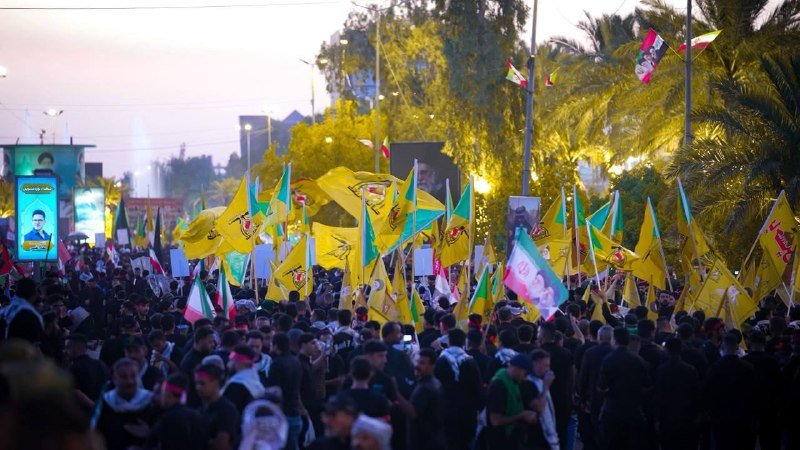
The scenes out of Tehran on 6 July 2026 carry a familiar theatrical weight: crowds in black, chants rising into the afternoon heat, and the apparatus of the Islamic Republic rendering collective grief into a public pledge of loyalty. State-aligned Telegram channels operated by Tasnim News have been broadcasting the procession under hashtags linking a deceased senior figure known in the coverage as "Badragh" — described, in the channel's own language, as a martyr of "Badarqa_Aghai_Shahid_Iran," with a recurring tag urging Iran to "rise." The format of the coverage — clipped video of mourners pressed shoulder to shoulder, declarations of renewed allegiance to the "leader of the revolution," and floral tributes folding into takbeer — is the well-worn visual grammar of an Iranian state funeral.
The procession matters less for what it commemorates than for what it allows the regime to perform at scale. In a single afternoon, the state's communication channels can demonstrate mass turnout, ideological continuity, and the unresolved popularity of the establishment's martyrdom narrative — all while routing around Western wire scrutiny.
What the coverage actually shows
Tasnim's mid-afternoon posts frame the gathering as both a mourning ritual and an act of collective recommitment. One dispatch, sent at roughly 13:51 UTC, declares that "all of this nation has come in the name of Mr. Badragh" but argues the deeper meaning is the customary re-pledge of obedience to the Supreme Leader. A second, sent at 14:05 UTC, mixes elegy with grievance: "did you go / and now he really left and the sadness of the world remained in our hearts," before pivoting back to the same hashtag refrain. A third, at 14:12 UTC, closes the loop with an image of flowers and chants of takbeer, the Arabic devotional phrase meaning "God is great."
The construction is unmistakable. Grief is real; choreography is also real. Each post does double duty: it validates the emotional weight of loss for an Iranian audience, and it signals to outside observers — including the Iranian diaspora and Western intelligence watchers — that the regime's mobilisation machinery still commands public squares. That mix of sincerity and stagecraft is not unique to Tehran, but in an Islamic Republic it is the dominant genre of political communication.
The choreography of loyalty
Read against Iran's recent history, the funeral's visual script follows the same playbook used around senior establishment figures over the past decade. Crowds are framed as a referendum on the system, not on the deceased. Symbols of faith — takbeer, floral offerings, the banners of the martyred — are designed to be legible to a domestic audience and inscrutable to critics. The persistent hashtag urging the nation to "rise" does not signal a populist insurgency; it signals an establishment asking its base to re-enact, in the streets, the loyalty already owed in the ballot box or, more durably, in the security architecture.
For Western readers, the temptation is to dismiss the footage as a piece of opaque state theatre. That dismissiveness is itself a framing choice, and it carries costs. It treats Iranian public emotion as either manufactured or coerced, when the reality — as decades of fieldwork by independent Iran scholars has shown — is far messier: grief, dissent, coercion and genuine devotion coexist in the same crowd, and the state's job is to make sure the camera sees only the parts it wants. Tasnim's job, in turn, is to deliver exactly that clean frame.
The counter-read and the structural context
A counter-narrative worth holding alongside this one: in moments of acute regime strain, the funeral script becomes more elaborate, not less. When the system's room for independent mobilisation narrows, the channels like Tasnim lean harder on aesthetic unity, slogan discipline, and tight editing windows — partly because the international press will read the visual gaps as weakness. The choreography, in other words, is a stress signal as much as a strength signal.
There is also a structural plank that the coverage gestures at without spelling out. In a media environment where Telegram remains a primary distribution channel for Iranian state-aligned outlets — and where Persian-language satellite and diaspora outlets compete for the same audiences — the funeral becomes a content war. The state does not only mourn its dead; it manufactures the dominant visual artefact of the day before others can. The morning of grief is, among other things, a Tuesday-afternoon news cycle that the regime would prefer to own outright.
What remains genuinely uncertain is the underlying political atmosphere. Tasnim's clip of dense crowds speaks to turnout in central Tehran, where the geography of the procession concentrates mourners; the chain's own framing emphasises "this nation," but the sources available do not permit a claim about nationwide sentiment. We also lack, in the materials to hand, any corroborating figure on the size of the procession or its composition — solidarity activists, regime-affiliated basij members, neighbourhood invitees, or genuine volunteers — and that ambiguity is, for the moment, deliberate.
What the day was for, and what comes next
Read plainly, the public afterlife of "Badragh" performs three jobs at once. It stages mourning for a domestic audience that the regime would prefer to keep passive but emotionally invested. It demonstrates, for the wider region, that Iran's mobiliser machinery can still fill a central Tehran square at short notice. And it refurbishes the martyrdom register that has anchored the Islamic Republic's claim to popular legitimacy since its founding. Whether the day registers as catharsis, fatigue, or a mix of both for ordinary Iranians is something no Telegram channel can adjudicate — and something the state does not want adjudicated.
The wins and losses of the trajectory are tightly drawn. If the choreography lands, the establishment buys itself another news cycle of uncontested framing; if it feels over-produced, the footage hands critics the gift of a hollow square. Either way, the bet is the same: that the visible ritual of loyalty is worth more, in the medium term, than the noise that the visible ritual of loyalty inevitably invites.
This publication read Tasnim News's midday Telegram feed for the framing; the structural interpretation above is independent.
Wire provenance
This editorial synthesis draws on the following public wire/social posts:
- https://t.me/tasnimnews_en
- https://t.me/tasnimnews_en/2
- https://t.me/tasnimnews_en/3