Iran stages state funeral in Tehran as regional order drifts and Western wire desks stay quiet
State-aligned outlets broadcast a packed Imam Hossein Square for the funeral of a senior slain figure. Western wire desks, by late morning UTC on 6 July 2026, had not been given a place at the table.
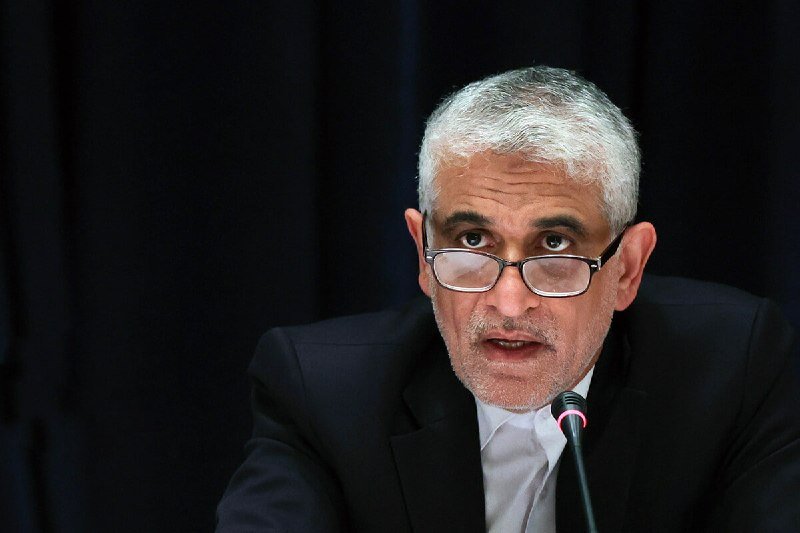
At 03:05 UTC on 6 July 2026, Iran's state-aligned Tasnim News Agency broadcast live video from Imam Hossein Square in central Tehran. The frames showed a densely packed crowd under morning light, with security personnel visible along the perimeter; the national anthem of the Islamic Republic of Iran was played at the ceremony's opening about twenty-four minutes later. By 04:17 UTC, Tasnim's channel carried a logistical briefing from a figure identified as Sardar Hassanzadeh, described as chief of staff for the funeral, announcing that the burial procession would move westbound. Mehr News posted corroborating footage of the opening moments a short time later.
The state-aligned feed is loud, choreographed, and built for foreign camera crews that have not shown up. By late morning UTC on 6 July 2026, no Western wire — Reuters, Associated Press, AFP, BBC — had produced a verified independent account of the ceremony or the underlying events. A story that, by precedent, would have drawn a four-bureau pool is currently being narrated almost entirely by Tehran's own information apparatus. The framing of a major Iranian security event is therefore being set in Washington, London, and Brussels by default, because there is no counter-narration present at all.
What the state apparatus is showing
The visual grammar is straightforward and well-rehearsed. State outlets Tasnim and Mehr News are publishing identical-language descriptions of crowds gathered in Imam Hossein Square for what they call the funeral of an unnamed "Mr. Martyr of Iran," framed in Telegram posts with the hashtag #Badarqa_Aghai_Shahid_Iran. The reference to a senior figure of the Islamic Republic who died violently, with the martyr framing applied, is unmistakable in tone. The procession is choreographed along an east-to-west axis, with logistical details — route, vehicle preparation, ceremonial order — being fed through a single named coordinator. By design, this is content an editor abroad could pull off a wire and file in three paragraphs.
Why Western desks have not filed
The Western news industry, for all its muscle, has thinned its permanent Tehran presence to a handful of reporters, most of them working through stringers in Dubai or via dual-located correspondents. A state funeral of this visibility would, under normal conditions, justify a chartered pool. The absence suggests one of three things, and the first two are uncomfortable: access has not been granted; visas have not been issued; or the editorial calculus in New York and London has decided the story does not earn a permanent seat.
Both routes produce the same outcome. When access is closed, the framing apparatus of the host state becomes the only voice in the room. When the calculus is "skipped," outlets tell readers the event does not warrant their own attention, and the absence itself becomes a statement about the order of priorities.
The structural problem with narrating Iran from outside
This is the deeper issue, and it is structural rather than editorial. The great-power assumption baked into much of the Western press corps is that Iran is a story to be filtered through Washington, Tel Aviv, and Riyadh. The assumption works for sanctions debates and nuclear diplomacy, but it produces a blind spot for events whose meaning is delivered inside Iranian civic space — funerals, religious commemorations, regional-organisation ceremonies, public displays of clerical authority.
When those events are visually dramatised by state media, and when no independent foreign reporting reaches the page, the resulting coverage has three predictable shapes. It echoes the state framing, with appropriate caveats. It ignores the event, leaving only a search-engine trail of state footage. Or, most commonly, it imports a Washington read of the person being mourned — a hardline, an ideologue, a violent operator — and retrofits that onto whatever footage was filed by the regime itself. None of those outcomes produce journalism the reader can stand on.
What readers should be careful about over the next 24 hours
Three uncertainties deserve flagging, because they will shape how the day settles into the record. First, the identity of the deceased has been elided in the Telegram dispatches and is, by press time, not sourced outside Iranian state-aligned channels. Second, Western wire access may yet open; if it does, the framing will shift sharply, and a story now being told as solemn public mourning will likely be reframed as a moment of internal mobilisation. Third, and most quietly important, regional reactions will surface over the next 12 to 24 hours from Beirut, Baghdad, Damascus, and Sanaa via channels close to the Islamic Republic's axis of influence, and those will not be carried by the wires that control the morning news cycle in the West.
The plain conclusion is that the information environment around Iran is tightening precisely at moments when its events deserve the most rigorous open-sourced reporting. A state funeral staged in the centre of a capital of nine million people should not be a story that passes into the historical record on the say-so of one press apparatus.
Desk note: Monexus is filing from open-source state-affiliated feeds and Telegram because independent wire reporting of the Tehran ceremony is absent at the time of publication. The visual record is currently the state apparatus's; readers should treat any framings, names, or attributions as Iranian-source-only until verified by an independent wire pool that, as of 06 July 2026 10:00 UTC, has not produced coverage.
Wire provenance
This editorial synthesis draws on the following public wire/social posts:
- https://t.me/tasnimnews_en/14836
- https://t.me/tasnimnews_en/14838
- https://t.me/tasnimnews_en/14834
- https://t.me/mehrnews/100382