Iran's state-aligned mourning machine and what it tells us about the information environment
A Tasnim-led funeral narrative for a martyred leader is being staged with religious-revolutionary choreography. The more interesting question is what that performance does to the public-information environment.
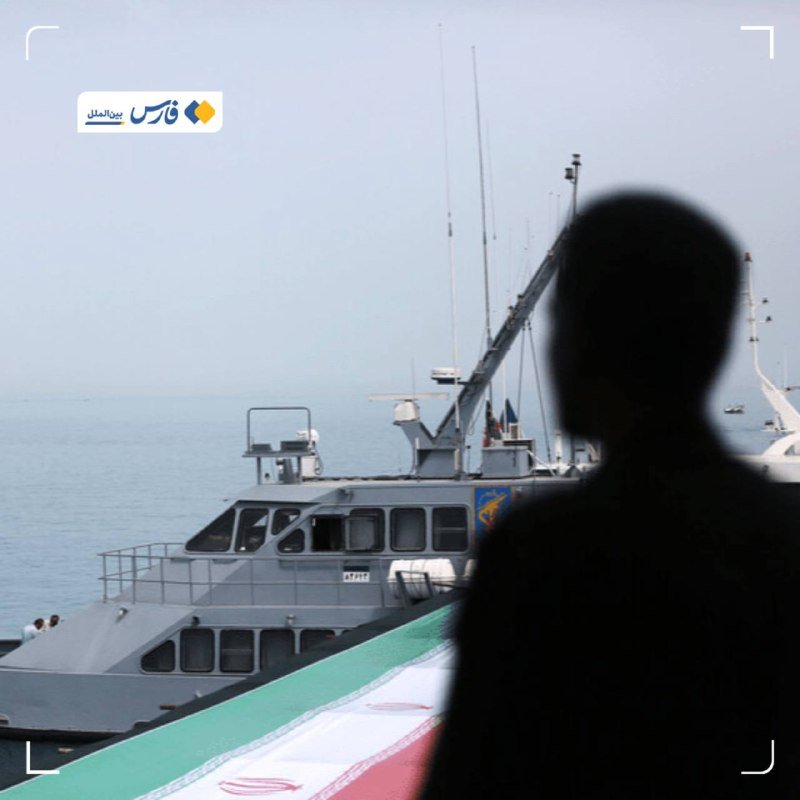
On 6 July 2026, Telegram feeds affiliated with Tasnim News — the outlet closely tied to the Islamic Revolutionary Guard Corps — filled the early-afternoon window with a single, repeating subject: the funeral in Qom of a slain Iranian leader whose identity the thread items leave deliberately unspecified. By 15:44 UTC, the channel was publishing short video captions mourning a "martyr" whose "family trip" is wished a safe passage. By 15:57 UTC, it was reporting that "the entrances of Qom are full of lovers of the revolutionary leader," with pilgrims streaming in from cities near and far. By 16:39 UTC, the message had hardened into a slogan: "We have come to love the martyred leader and we will continue his way." By 17:04 UTC, the mood outside the Jamkaran mosque, nine hours before the formal ceremony, was being curated for the camera.
Strip the choreography away and something more interesting is happening than a state funeral. The Tasnim thread — five items in roughly ninety minutes, each a discrete beat of the same narrative arc — is a working demonstration of how a state-aligned outlet manufactures emotional consensus in real time. The pattern matters because the same infrastructure that stages a Qom funeral is the same infrastructure that frames the next sanctions round, the next proxy confrontation, the next nuclear-deadlock headline. Read the thread as advertising for the broader information environment.
What the thread actually shows
The five items are not news, in any conventional sense. They are ritual. Each post carries a hashtag (#Badarqa_Aghai_Shahid_Iran) that anchors the coverage to a single symbolic frame, and each is dated to within minutes of the previous one — the cadence of a newsroom, but the texture of a liturgy. Tasnim is not reporting what happened; it is choreographing what the audience is supposed to feel as it happens.
This is not new for Iranian state-aligned media, but the density is striking. Five discrete emotional beats — tenderness, pilgrimage, defiance, slogan, vigil — in ninety minutes is a sprint even by the standards of outlets that exist to sustain a permanent state of mobilisation. The repetition is the point. Anyone scrolling the channel at any point in that window sees the same story from five angles and concludes, without being told, that the entire country is in motion.
Why the Western wire line reads this wrong
The default Western instinct is to translate this as propaganda and move on. That framing has a kernel of truth — Tasnim is, after all, an outlet whose institutional role inside the IRGC's media architecture is well established — but it is also lazy. Calling a thing propaganda does not explain the mechanism, and the mechanism is what actually shapes how Iranians inside the country, the Iranian diaspora, and foreign-policy analysts in Washington, Brussels, and Tel Aviv all read the next six months of news out of Tehran.
What the thread demonstrates is a deliberate saturation strategy: produce so much emotional content, on such tight cadence, that any alternative framing must spend its first three paragraphs establishing that there is an alternative. The cost of dissent rises with the volume of the dominant signal. This is not a uniquely Iranian phenomenon — saturation media strategies are a feature of most contemporary state-aligned ecosystems — but Iran runs a particularly disciplined version of it, and Tasnim is one of its principal instruments.
The structural pattern, in plain prose
What we are watching, more broadly, is the consolidation of information systems that do not pretend to be neutral. Major Western wire services retain, for now, the conventions of attribution and counter-claim that make their output auditable. State-aligned outlets in Iran, Russia, China, and the Gulf have largely dropped that pretence and operate as instruments of national narrative. The two systems now run in parallel, addressed to different audiences, and they meet only in the aggregator feeds where most readers actually consume the news.
This is a hegemonic transition in plain language: the era when a single set of wire conventions dominated the global information environment is over, and what is replacing it is a layered market in which state-aligned outlets compete for the same eyeballs on different terms. The Qom funeral thread is a small, vivid instance of the larger contest. It is also, structurally, a reminder that treating any one of these systems as the default — including the Western one — is an editorial choice with consequences, not a neutral inheritance.
Stakes, and what remains uncertain
The near-term stakes are obvious enough: an information environment in which state-aligned saturation is the norm produces foreign-policy debates in which the cost of questioning the official narrative, on any side, is higher than the cost of repeating it. Over a longer horizon, the more uncomfortable question is whether the parallel systems will eventually merge — through platform consolidation, regulatory convergence, or simply audience fatigue — into a single degraded commons where every major event arrives pre-narrated.
What the thread does not tell us, and what no source in this set establishes, is the size or composition of the actual audience in Qom, the proportion of the funeral coverage that originates from spontaneous gathering versus organised mobilisation, or how the framing will land once the ceremony concludes and the next news cycle begins. The sources do not specify casualty figures, the identity of the deceased, or the institutional chain of command that produced the day's narrative. Honest reporting flags those gaps rather than filling them.
Desk note: Monexus read Tasnim's thread as a primary document of an information strategy, not as a neutral account of a funeral. Where the wire file eventually lands — Reuters, AFP, the BBC — will be cited directly when it appears; in the meantime, this piece treats the choreography itself as the news.
Wire provenance
This editorial synthesis draws on the following public wire/social posts:
- https://t.me/s/tasnimnews_en
- https://t.me/s/tasnimnews_en
- https://t.me/s/tasnimnews_en
- https://t.me/s/tasnimnews_en
- https://t.me/s/tasnimnews_en