Tehran reads Trump's ultimatum as a negotiating posture, not a red line
Tehran read Trump's 'deal is over' remark and a lapsed ceasefire as the opening of a new negotiating round, not a red line, and is now saying so in Gharibabadi's language of force.
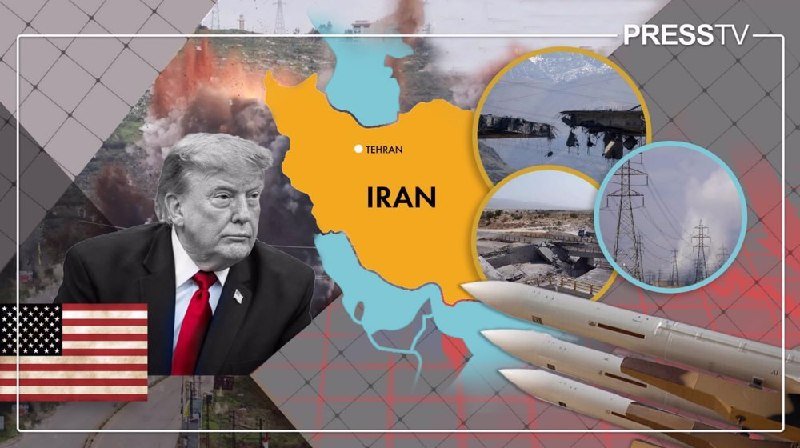
On 8 July 2026, aboard the USS Abraham Lincoln in the north Arabian Sea, a US official told CNN's Pamela Brown that the ceasefire with Iran had "at least temporarily ceased," describing the situation as "very dynamic." Hours earlier, returning from Türkiye on Air Force One, Donald Trump told reporters that an interim deal aimed at ending the war with Iran was "over" and that the United States had "won over them militarily." Within minutes, the S&P 500 slipped on the headline. Tehran's read, in turn, was immediate and uniform: the American president was performing strength he had not yet secured, and the right response was to speak to him in his own language.
The framing matters. Western wire coverage treated Trump's remarks as an ultimatum. Iranian state media treated them as the opening gambit of a renewed negotiating round, not a red line. That second reading has now been formally transmitted to the public: Iran's Deputy Foreign Minister Kazem Gharibabadi told IRNA that Trump's recent statements "clearly vindicate Tehran's position" that Washington only responds to force, and told Press TV that with "the criminal and murderous Trump, one must speak in his own language." The Iranian response is not a refusal to talk. It is a counter-claim about who blinked first.
Tehran's diagnostic
The argument Gharibabadi is making is older than this ceasefire cycle, but its mechanics are visible in real time. In IRNA's English dispatch and in Press TV's evening coverage, the Iranian line runs as follows: Trump's escalation rhetoric is read as confirmation that maximum pressure works only in one direction, and that the United States approaches the table whenever it is denied a quick win. Fars framed Trump's "won over them militarily" claim as the "illusion of military victory," and called the American president, in the outlet's translated phrasing, the "terrorist president of America." The Grayzone's Max Blumenthal, in an interview with University of Tehran analyst Setareh Sadeqi, surfaced a parallel current inside Iran: ordinary Iranians and some politicians are openly calling for retaliation against Trump and Prime Minister Benjamin Netanyahu, a mood the piece treats as a measurable variable, not an outlier. The mix is striking, hard rhetoric and a public call for revenge running alongside formal diplomatic language that the door remains open.
What the record shows
The factual surface of the past 36 hours is unusually dense. Trump, on the flight back from the NATO summit in Türkiye, told reporters the allies "chose not to" help with Iran when given the chance and that he was "sort of forgetting about that," before pivoting to note they "all want to help with Iran so badly" now (ClashReport pool transcript). On Syria, he formally notified Congress that he was beginning the process of removing Damascus from the US list of state sponsors of terrorism, a separate but adjacent move made in the context of his meeting with Syrian President Ahmed al-Sharaa (France 24). On Lebanon, Trump told the press that al-Sharaa had made unspecified commitments regarding Hezbollah: "He was great" (osintlive pool clip). These are not the statements of an administration disengaging from the region. They are the statements of an administration repricing its commitments.
Inside Iran, a separate event complicates the picture. An unidentified missile struck the Incheboroon-Gorgan railway line at Aq Qala in Golestan Province on 8 July, the final Iranian link of a transnational rail corridor opened in late 2013 and early 2014 (rnintel). The line is strategically conspicuous: it connects Iranian rail to Turkmenistan and, by extension, to the northern corridor into China. The scale of damage was not disclosed in the immediate aftermath, and no one claimed responsibility. Iranian officials have not formally attributed the strike, but the geographic signalling is hard to miss, and Golestan sits hundreds of kilometres from the Persian Gulf theatre that has defined the war narrative to date.
The asymmetric signalling problem
This is what Tehran is reading when it calls Trump's posture negotiating rather than terminal. An ultimatum that the sender refuses to date, with a Senate minority openly warning that "the war against Iran will end" as a critique of the president (Senator Bernie Sanders, via Tasnim), and with ceasefire language already "temporarily" lapsing in the official telling, is functionally indistinguishable from a posture that leaves room to climb down. Gharibabadi's "language of force" formulation is the diplomatic translation of that reading. Iranian negotiators have used the same construction in past rounds with Washington and understand that it travels.
The market read of the same hour was less generous. Reuters reported the S&P 500 closed lower after Trump's "the deal is over" remark, with chip stocks splitting on the news (Broadcom leading gainers among recently beaten names), a pattern consistent with traders pricing the reintroduction of tail risk rather than a quick resolution. Tehran, by contrast, is pricing continuity: pressure up, diplomacy down, and the assumption that escalation rhetoric from Washington is a tell about American constraint, not American resolve.
What to watch next
The next 72 hours will test whether Tehran's reading is correct. Two markers matter. First, whether the USS Abraham Lincoln's posture shifts from deterrence presence to active tasking, which would convert the "temporarily ceased" ceasefire into something more durable in either direction. Second, whether the Golestan railway strike produces an attribution and a diplomatic response, since an unclaimed strike on a transit corridor linking Iran to Turkmenistan and onward to China is the kind of event that quietly reshapes the negotiating geometry of any Gulf settlement. If Gharibabadi is right, neither marker will move before Trump's next public remark; if he is wrong, both will move at once.
Sources
- CNN via Pamela Brown aboard USS Abraham Lincoln, ceasefire status
- IRNA English: Gharibabadi on Trump's remarks
- Press TV: Gharibabadi on "criminal and murderous Trump"
- Fars News International: Trump and the "illusion of military victory"
- The Grayzone: Iranian calls for retaliation
- rnintel: Aq Qala railway strike, Golestan Province
- France 24: Trump begins process to remove Syria from terrorism list
- Reuters via X: S&P 500 reaction to Trump's "deal is over" remark
- ClashReport pool: Trump on NATO and Iran
- osintlive: Trump on al-Sharaa and Hezbollah
Desk note: this piece treats Iranian state-media distribution of foreign-ministry statements as primary sourcing comparable in weight to a State Department briefing, rather than as one-directional propaganda, in line with Monexus's symmetric evidentiary standards.