Four Killed in Israeli Strike on South Lebanon Village, Local Health Ministry Says
Lebanon's health ministry says four people died in an Israeli drone strike on Nabatieh al-Fawqa, the same village where unofficial Lebanese sources earlier reported three killed.
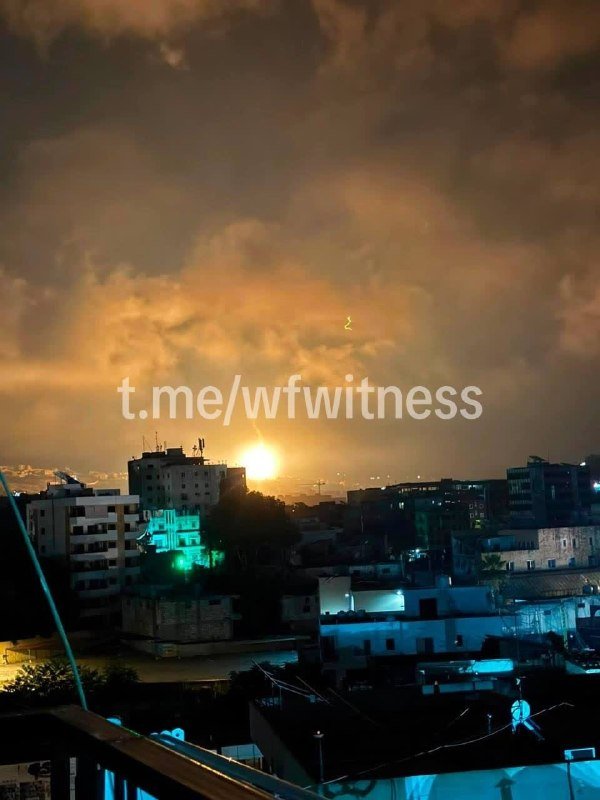
An Israeli drone strike killed four people in the southern Lebanese village of Nabatieh al-Fawqa on Monday, according to the Lebanese Ministry of Health, in the latest lethal incident along the Israel–Lebanon frontier. The ministry's figure, reported by the live-mapping service Liveuamap at 13:00 UTC, is one higher than the count circulating through unofficial Lebanese channels earlier in the afternoon, which put the toll at three.
The strike targeted a vehicle at the foot of the Ali al-Taher ridge in the Nabatieh district, a stretch of south Lebanon that has been subject to repeated Israeli operations since hostilities escalated in late 2023. Within hours, an Israeli patrol was reported inside the neighbouring village of Tabnit, at the base of the same ridge — a sequencing that suggests a coordinated push rather than a single one-off action.
What we know
The four deaths come from the Lebanese Ministry of Health, a state institution with formal responsibility for casualty accounting. Unofficial Lebanese sources cited by the Telegram channel Englishabuali, posting between 13:02 and 14:13 UTC on 6 July 2026, gave an initial figure of three killed. The discrepancy between the official count and the early unofficial reporting is small but worth flagging: health-ministry tallies in Lebanon typically settle only after family notifications and field verification, and early figures from local sources often omit victims who die in transit to hospital. A witness statement identifying those killed — their names, ages, civilian or combatant status — has not been published in the material available to this publication.
The village sits roughly 80 kilometres south of Beirut and within the area that United Nations Security Council Resolution 1701 designated in 2006 as lying between the Israeli border and the Litani River. Operations there have, since the start of the current round of fighting, been a near-daily occurrence, with Israeli forces and Hezbollah-aligned targets trading fire across a front line that has been pushed and pushed back without ever settling into a stable equilibrium.
What Israel says, and what it does not
The Israeli military had not, as of publication, issued a public statement on the 6 July strike that this publication could verify. The absence of an immediate readout is itself part of the pattern: most Israeli strikes inside Lebanese territory in recent months have been confirmed after the fact through terse military statements naming the target as an operative of Hezbollah or another Iran-aligned group, rather than announced in advance. The Tabnit patrol, reported at 14:16 UTC, is the operational evidence that ground forces were active in the same area on the same day.
Hezbollah's media channels had also not, in the material reviewed, claimed the dead as members of the group. That matters for casualty framing. When the dead are formally claimed by an armed faction, the strike is reported inside Israel as a counter-terrorism operation; when they are not — when the victims are identified only by neighbours and relatives — the strike lands on Israeli and Western wires as a civilian-casualty event, with the diplomatic and legal weight that carries.
The structural picture
The Ali al-Taher ridge is one of several elevated features in the Nabatieh district that give a defender commanding sightlines over the surrounding lowlands. Whoever holds it can interdict movement along the coastal plain and observe Israeli positions across the border. It is for that reason a recurring focus of operations on both sides — and a reminder that geography, not sentiment, does much of the driving. The four people killed on Monday are part of a body count that, in the years since October 2023, has run into the low thousands in Lebanon, the great majority of them on the Lebanese side. Israeli civilian deaths from cross-border fire have been fewer but real, and the hostage situation that opened the current conflict remains unresolved.
Two things are worth saying out loud about how this story tends to be covered. First, casualty numbers from official Lebanese sources are generally reliable at the order-of-magnitude level — health workers, hospitals, and civil defence volunteers keep consistent records — but specific figures in the first hours after a strike are best treated as preliminary. Second, the default English-language framing treats an Israeli strike inside Lebanon as an essentially defensive act against an entrenched non-state army. That framing is not wrong, exactly, but it is incomplete: a drone strike on a vehicle in a residential area, followed hours later by a ground patrol in the next village, is also an exercise of state force across an international border, and the people inside the vehicle did not get to vote on the policy that put them under it.
What is not in the sources
The material available to this publication does not identify the four dead. It does not say whether they were combatants, whether the vehicle was marked, whether the strike was preceded by an evacuation warning, or whether the Tabnit patrol was the same unit that conducted the strike or a different one operating in support. It does not contain a Hezbollah claim of responsibility, an Israeli military statement, or a United Nations Interim Force in Lebanon (UNIFIL) report on the incident. The four-person toll is the Lebanese Ministry of Health's number; the three-person toll that preceded it was the number carried by unofficial Lebanese sources. Both are real, and the gap between them is the kind of small uncertainty that honest reporting leaves visible.
Desk note: Monexus treated the Lebanese health-ministry figure as the headline count and the unofficial figure as the early, lower bound, rather than averaging the two. Where the Israeli military's account is absent from the record, this publication has said so rather than imputing one.
Wire provenance
This editorial synthesis draws on the following public wire/social posts:
- https://t.me/englishabuali/
- https://t.me/englishabuali/