Israeli strike kills four in Nabatieh al-Fawqa as south Lebanon village absorbs another blow
An Israeli drone strike on a vehicle in Nabatieh al-Fawqa killed four people on 6 July 2026, according to Lebanese authorities — the latest fatality in a southern Lebanese district that has absorbed repeated exchanges since October 2023.
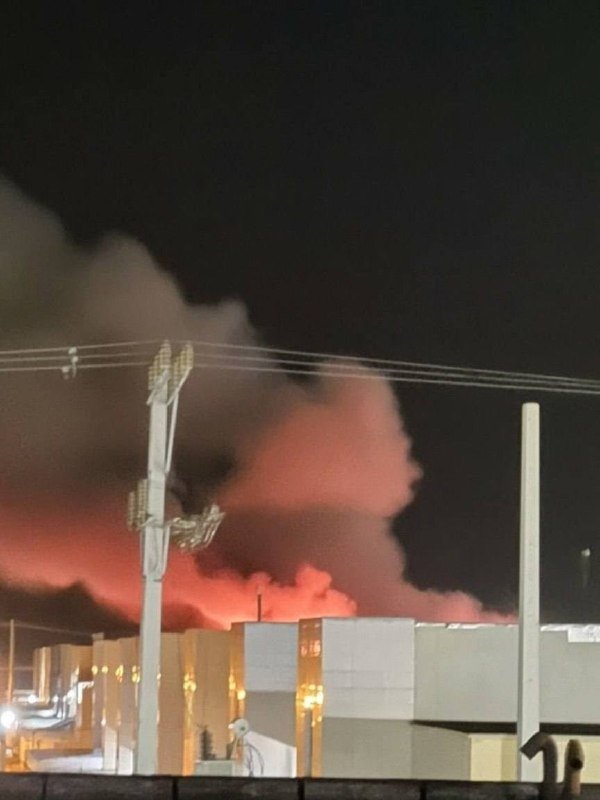
An Israeli drone strike hit a vehicle in the south Lebanese village of Nabatieh al-Fawqa on the morning of 6 July 2026, killing four people and underscoring how a district once associated with Hezbollah's political heartland continues to absorb lethal exchanges more than two years after the cross-border front opened. Lebanese officials identified the dead as including a school principal, her mother, and a municipal worker, according to L'Orient Today reporting carried on Telegram channels monitoring the incident. The strike, at the foot of the Ali al-Taher ridge in Nabatieh district, was reported across multiple Lebanese information channels within minutes of impact.
What is being reported as a single tactical action is, in fact, the latest data point in a long, grinding ledger of Israeli operations in south Lebanon — operations justified by Israeli commanders as defensive, but which routinely register on Lebanese mortality tallies as civilian. The reporting gap between the two sides of the border has hardened into something close to a script, and this morning's events followed that script with little variation.
What the Lebanese sources say
Lebanon's Ministry of Health put the toll at four killed in the strike on Nabatieh al-Fawqa, as carried by the Liveuamap wire shortly after midday UTC on 6 July. Unofficial Lebanese accounts aggregated on Telegram channels initially put the figure at three before the ministry count settled at four, a familiar sequencing in which municipal and civil-defence sources move faster than the formal health ministry but sometimes correct upward. L'Orient Today's account specified the identities: a school principal, her mother, and a municipal worker, with a fourth victim named in subsequent Lebanese reports. The village sits in Nabatieh district, an area that has been inside Lebanon's contested southern tier since the earliest weeks of the cross-border exchanges that began in October 2023.
L'Orient Today is one of the more disciplined English-language Lebanese outlets, and its casualty identifications typically track Lebanese security and municipal sources rather than partisan claims. The specific naming of a school principal and a municipal worker matters because it pushes the strike away from any narrow counter-militant framing: whatever the intended target, the human cost was carried by civilians in named, identifiable roles.
What Israeli framing typically asserts
Israeli military spokespeople have not, as of this writing, addressed the Nabatieh al-Fawqa strike publicly in the manner available to the wire channels monitored here. The standing Israeli position, carried repeatedly by the IDF Spokesperson's unit and by Israeli media coverage of operations in south Lebanon, holds that strikes in the area target Hezbollah military infrastructure and operatives, and that civilian harm is either incidental or the consequence of the armed group's deliberate embedding within populated areas. Israeli press coverage of comparable strikes routinely cites the IDF for figures on "operatives" killed and on weapons-storage or launch-site claims.
That framing carries weight — Hezbollah's long-standing practice of siting military assets within villages is well-documented and is the structural reason south Lebanese civilians have repeatedly found themselves inside the targeting geometry of Israeli fire. Israeli security concerns along the northern border, after a year in which the home front absorbed rocket and drone incursions, are not abstract. The audience for Israeli briefings is right to read them as serious.
The structural objection, voiced repeatedly by UN agencies, humanitarian NGOs, and Lebanese civil society, is that proportionality and the distinction between combatants and civilians remain binding obligations regardless of where a hostile actor chooses to site its infrastructure. Strikes that kill school principals, mothers, and municipal workers in single-vehicle targeting raise specific questions about the intelligence picture that nominated the vehicle and the precaution framework that authorised the strike.
What the broader south Lebanon pattern shows
Nabatieh district has been a recurring location in the south Lebanon ledger since October 2023. The district's capital, Nabatieh city, was struck repeatedly in the early weeks of the exchange; villages on the Ali al-Taher ridge have appeared in casualty reports across 2024 and 2025 with a regularity that suggests a persistent operational focus on the ridgelines north of the Litani, the river Israel has demanded Hezbollah withdraw behind. Each cycle of escalation — and each reported Israeli assassination of a senior Hezbollah commander — typically produces a fresh cluster of village-level strikes in the district.
The pattern matters because it shapes the policy frame. A single strike can be defended on the merits of its specific intelligence. A pattern of strikes on the same district over months, with civilian names recurring in the casualty lists, requires either a much broader intelligence explanation — that the district genuinely harbours a dense, persistent, civilian-embedded threat picture — or an acknowledgement that the civilian cost is not incidental but structural. Israeli briefers, when pressed, lean on the first explanation; UN observers, including UNHCR field staff reporting from the area, lean on the second. The truth almost certainly sits between them and varies strike by strike, but the public case for the operation does not get easier to make as the village-level tally grows.
What remains uncertain and what is contested
Three points of contestation deserve flagging. First, the exact target: Lebanese and Israeli accounts may diverge sharply once the Israeli statement lands, and the gap between "a vehicle carrying a school principal" and "a vehicle carrying a Hezbollah courier" is the entire argument. Second, the wider pattern's causal story: Israeli briefers may point to a specific Hezbollah rocket-launch event in the preceding 24 hours as the precipitant; Lebanese sources may identify no such event. Third, retaliation risk: Hezbollah's pattern of escalation after civilian casualties in south Lebanon is uneven — sometimes a measured rocket salvo, sometimes an asymmetric drone strike, sometimes restraint — and the next 48 hours will determine which this morning's strike provokes.
The sources available here do not yet carry an Israeli military statement on the strike, nor do they carry a Hezbollah claim of retaliation. The Lebanese casualty count of four is the settled figure as of 13:00 UTC on 6 July 2026. Subsequent reporting, once Israeli and Hezbollah channels comment, will be the test of which framing survives contact with the underlying facts.
The stakes
For south Lebanese civilians, the stakes are concrete and accumulating: a district that has already absorbed years of displacement, infrastructure damage, and psychological strain is recording another four names. For the Israeli home front, the stakes are the credibility of the northern border's quiet — a quiet that depends on Israeli operations degrading Hezbollah's capacity to fire without re-igniting the cycle. For Lebanese state institutions, the stake is the persistence of a healthcare and civil-defence reporting infrastructure that, even under fire, still produces identifiable names and a count. For the wider regional picture, the stake is whether the post-October 2023 deterrence architecture, which has held in part through targeted Israeli operations and calibrated Hezbollah responses, can continue to absorb strikes like this one without breaking the equilibrium.
Desk note: Monexus leads on Lebanese state and civil-society reporting of the strike — L'Orient Today and the Lebanese Ministry of Health — because they carry the on-the-ground casualty identifications that Israeli wire reporting has not yet matched. Israeli framing, where it emerges, will be added in subsequent updates. Western wires have not yet filed English-language copy on this specific strike as of 13:00 UTC on 6 July 2026.
Wire provenance
This editorial synthesis draws on the following public wire/social posts:
- https://t.me/englishabuali/
- https://t.me/wfwitness/