Khamenei's farewell, choreographed by the clerics
Najaf and Karbala are being readied for the funeral procession of Iran's long-time Supreme Leader. The choreography tells you almost everything about who wins the next chapter.
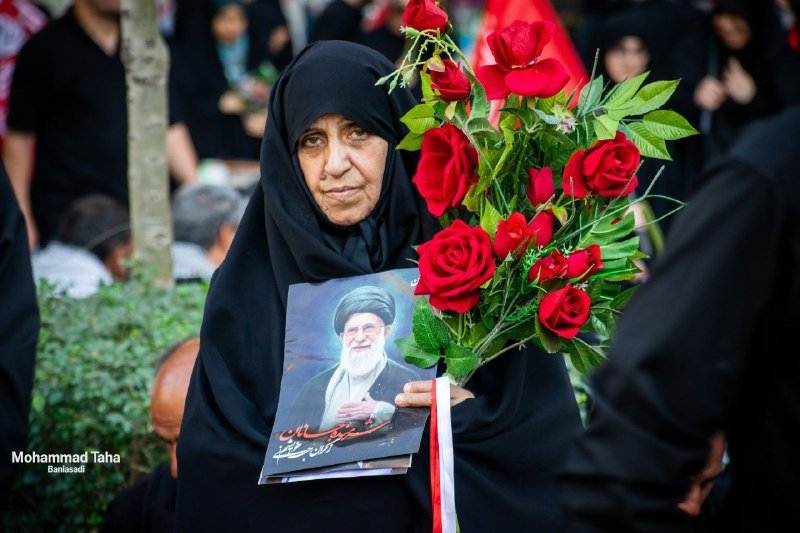
Two days out from the funeral, the streets of Najaf and Karbala are being quietly repaved with martyrdom. That is the unmistakable register of the footage running across Iranian state-affiliated channels on 6 July: a prayer ceremony over the body of Grand Ayatollah Seyyed Ali Khamenei, the Supreme Leader who shaped the Islamic Republic for nearly four decades, treated as a religious rite rather than a state funeral, and the holy cities of southern Iraq being draped in black as if they — not Tehran — were the natural capital of Shia commemoration.
The choreography tells you almost everything about who wins the next chapter. When a regime stages its most sacred farewell not in its own capital but in the seminary towns across the border, it is borrowing legitimacy, projecting reach, and signalling to successor factions that the Iraqi shrine network remains the real estate that matters.
Martyrdom, not memorial
Iranian state media is using the language of shahada before it has used the language of rahbari. Tasnim's bilingual Hebrew-language briefing, designed for an Israeli audience that has spent the year tracking escalation through Lebanese airspace, frames the Najaf and Karbala preparations as "Iraq's biggest funeral," and foregrounds an unmistakable line: "Netanyahu's eyes are blind," the kind of theological-political taunt that doubles as a campaign slogan. [1] The sermon over the body, broadcast by Tasnim on 6 July, deploys the same register — the leader honoured not as a head of state but as a martyr of the umma, his family grouped under that same banner. [2] The grammar is deliberate. A martyr is a martyr is a martyr; the question of who replaces him is left suspended in prayer.
That suspension is the point. The Islamic Republic's succession mechanism is rarely so overt as a vote. It is the slow alignment of clerical networks, security institutions, mosque pulpits, and televised grief. Whoever can stand inside the most frames of this particular week has already won a non-trivial fraction of that contest.
Why Najaf, not Tehran
The choice to stage the principal ceremonies in the Iraqi shrine cities is not geographic accident. Najaf houses the Hawza, the seminary system from which Iran's clerical elite has historically drawn its theological warrant; Karbala carries the weight of the Karbala paradigm — Hussein, martyrdom, the rejection of illegitimate power. Reading the procession through Karbala is reading the successor who needs to invoke resistance. Reading it through Najaf is reading the successor who needs to invoke scholarship.
Holding both cities in a single event is itself a statement: this is a succession contest conducted in front of the seminary cameras, with Iraqi Shia institutional weight on display for Tehran's clerical conclave. The relatives and students networked between Qom and Najaf will be the same names tapped when the Assembly of Experts eventually acts. Tasnim's on-the-ground footage from both cities — empty boulevards draped, broadcast units positioned, mourners gathering — reads less as coverage than as a production designed to be quoted for years. [3]
What gets said in Hebrew
There is a separate thread worth pulling. Tasnim runs a Hebrew-language desk. That