Red flags and realpolitik: reading the funeral rites of an Iranian supreme leader
Theatrical mourning in Tehran and Tunis reveals how symbolic choreography shapes regional influence — and what the red flags signal about who is being mourned, and why.
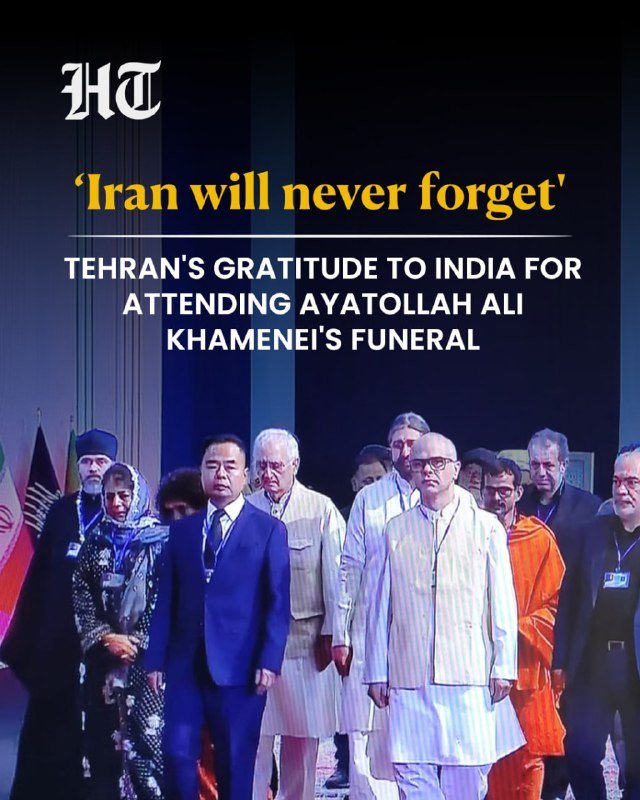
On 6 July 2026, red flags were unfurled across central Tehran and Tunis as funeral rites for Ayatollah Ali Khamenei, Iran's long-serving Supreme Leader, moved into their public phase. The visual script was deliberate: crowds in black, banners invoking martyrdom, and the unmistakable iconography that Iran reserves for those it considers fallen defenders of the faith. The Indian Express reported the scene under the headline "Why are red flags flying at Ayatollah Khamenei's funeral in Iran?" — a question whose answer tells you most of what you need to know about the regime's symbolic vocabulary. In parallel, Iranian state-aligned outlet Tasnim carried footage of Tunisian citizens holding a parallel tribute, branding Khamenei the "martyr leader of the nation," a phrasing that fuses religion, sovereignty and grievance into a single image.
Funerals are when a political system tells you what it believes about itself. The choreography around Khamenei's farewell is not grief alone; it is a piece of statecraft, choreographed for audiences in Tunis, Beirut, Sanaa and Baghdad as much as for the streets of the capital.
The optics are the message
The Indian Express's accompanying analysis argues a more pointed thesis: "In diplomacy, optics shape influence." That formulation is unfussy and largely right. Iran has spent four decades cultivating an aura of resistance leadership across the Arab world, and the funeral is the moment to consolidate that brand. The Tunisian tribute is the giveaway — North African publics are not a natural constituency for Persian-Shia political theology, and the very act of staging a parallel ceremony in Tunis is a signal that Tehran is spending diplomatic capital to widen the tent. Whether that capital buys durable loyalty or a one-off photograph is a separate question, but the willingness to spend it is itself information.
Red flags in Iranian political vocabulary carry a specific freight: they denote blood, injustice, and the duty of revenge. Their prominence at a head-of-state funeral is unusual in the region — most state funerals default to green, white or the national tricolour — and the choice to elevate red signals that the leadership wants Khamenei's death read inside the framework of martyrdom politics rather than ordinary state succession. That framing does work domestically; it does less obvious work abroad.
What the regional read looks like
In Western wire framing, the default line on any Iranian ceremonial moment is to read it as theatre: domestic legitimation in the face of economic strain and isolated diplomacy. There is something to that. Iran's economy remains under sanctions pressure, its regional proxies have taken heavy blows since October 2023, and the question of succession has been live for years. A funeral that doubles as a rally for the next Supreme Leader is, in this reading, bread and circuses.
But the structural counter-read deserves equal airtime. Iran is the only state in the region that has built, over decades, a sustained symbolic infrastructure — from al-Quds Day to the Arbaeen pilgrimages — that reaches Shia populations well beyond its borders. The Tunisian tribute is not an isolated event; it sits inside that longer project. The Indian Express's diplomatic-optics framing is in effect a recognition that the regime's soft-power machinery is real, and that dismissing it as performance mistakes the medium for the message.
The succession question underneath the bunting
No source item in the current thread names a successor, and this publication will not speculate on one. What the framing tells us is that the leadership is keen to project continuity rather than rupture. The decision to invite foreign delegations to a televised mourning ceremony is itself an act of succession politics: it gives every visiting official a chance to be photographed alongside the next generation of Iranian leaders, and it gives the next generation a stage to appear dignified, in control and connected. If that stagecraft holds over the coming weeks, the political transition — whenever it comes — will be smoother than the worst-case forecasts from 2024 and 2025.
If it does not, the same footage will be replayed as evidence of a system that confused ritual for authority. Funerals are irreversible tests of political legitimacy: the crowd either shows up or it does not, and the cameras catch the difference.
What remains uncertain
The sources available do not name the visiting heads of state, do not give crowd-size estimates that can be independently verified, and do not specify which Iraqi, Lebanese or Yemeni factions have sent senior representation as opposed to lower-level delegations. Any of those details, once confirmed, would materially change the read. For now, the prudent position is that the visual language is unambiguous and the political content is still being written.
What can be said with confidence is that the choice of red flags over national colours, and the staging of parallel ceremonies from Tunis to Tehran, is a deliberate bid to convert grief into geopolitical positioning. The diplomatic record will judge whether the bid worked.
Desk note: Monexus treated the funeral coverage as a study in symbolic statecraft rather than as a personality profile, balancing the Western wire instinct to dismiss Iranian ceremony as theatre against the structural fact that Iran's regional soft-power infrastructure is decades in the building. Where the Iranian Tasnim framing would simply celebrate, and the Western wire would simply decode, this publication tried to do both at once — and to mark plainly what the available sourcing does and does not establish.
Wire provenance
This editorial synthesis draws on the following public wire/social posts:
- https://t.me/s/JahanTasnim