Kharkiv's fuel grid is being ground down on purpose
Two more petrol stations hit in a single July morning, a Geran strike on a drone-storage warehouse the day before: the pattern is no longer indiscriminate — it is logistics.
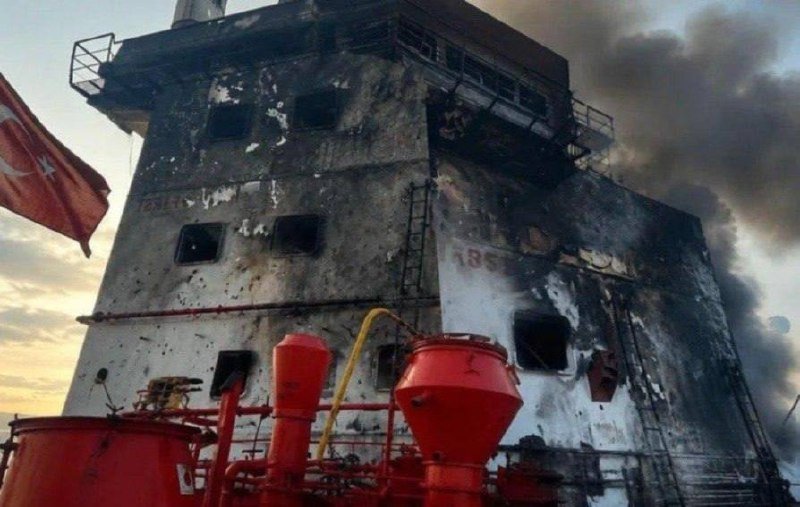
By the time Kharkiv's commuters filled their tanks on the morning of 6 July 2026, two petrol stations in the city's orbit had already been turned into wreckage. Telegram-channel monitoring outfit AMK Mapping posted the first photograph of burning forecourt canopies at 10:41 UTC; forty-five minutes later, the channel intelslava reported that the hit count on Kharkiv fuel infrastructure had risen by the end of the working day. The strikes follow a Geran-2 drone attack on a warehouse in Bezruky, a town in Kharkiv Oblast, which AMK Mapping said on 6 July at 09:48 UTC was being used by the Ukrainian military for drone storage.
This is not a story about random munitions falling on a city. It is a story about a specific category of civilian economic infrastructure being targeted in a specific sequence, and the sequence is the argument.
What is actually being hit
Russian long-range strike packages over the past week have shifted weight onto fuel retail and storage sites, not the usual choreography of thermal-power substation and rail yard. The Geran-2 is a slow, low-altitude, operator-controlled cruise drone — cheap, attritable, and aimed at targets that burn. On 6 July at least two of them hit Bezruky, a settlement inside Kharkiv Oblast that sits close enough to the frontline to be hosting military logistics; the warehouse struck, AMK Mapping reports, was storing Ukrainian drones, the kind of secondary target Russia has been reaching for since its glide-bomb and Shahed inventories were stretched across the southern axis. Then, within an hour, two more FPV hits on civilian petrol stations inside the regional capital's commute shed.
The arithmetic matters. A single fuel station is not a strategic asset. A regional fuel network — even a half-destroyed one — is. Civilian drivers, ambulance fleets, the contractors who rebuild the city, and the logistics tail that feeds the front all draw from the same forecourts. When enough of those forecourts go up, queues form, prices spike, and the cost of moving anything in Kharkiv goes up even before a single soldier notices.
The Western wire says "infrastructure"
Mainstream coverage of Ukraine, including the Reuters, AP, and AFP wires that wire desks depend on, has spent most of the past two years describing Russian strikes on substations, water treatment, and rail nodes with the word "infrastructure" — a noun that flattens the targeting logic into a background fact of war. The framing is technically accurate and strategically misleading. There is no Ukrainian doctrine that calls for bombing Donetsk's transformer yards; there is now, visibly, a Russian doctrine of grinding down the civilian logistical surface that makes a defended city function. The two are not equivalent.
When a Ukrainian long-range strike hits a Russian fuel depot or an airbase, the same wires tend to run it on the back of an "inside Russia" frame, with emphasis on the political embarrassment to the Kremlin. When the direction of fire reverses, the language loosens again: "energy infrastructure," "critical infrastructure," and the reader is left to do the synthesis alone.
What the targeting pattern actually adds up to
Read across enough days, the Bezruky warehouse and the two petrol stations stop looking like three incidents and start looking like one campaign. Geran-2s on a drone-storage site inside Kharkiv Oblast suggest Russia is trying to attrit Ukrainian deep-strike capacity at its forward edge — before those drones can be moved to launch points. The fuel-station hits suggest something parallel on the civilian side: degrade the network that moves people, fuel, and supplies around the rear-area cities that host the units operating those drones. Each hit is small. The cumulative effect — a city whose logistics are running on half its forecourts and twice its overtime — is the product.
This is the structural frame anyone watching the war honestly has been waiting to see drawn out loud. For two years the question has been whether Russia would treat the rear of Kharkiv as a battlefield in its own right, or as a place to drop ordnance when nothing better presented itself. The 6 July pattern suggests the first answer is now in operation. Bezruky and the petrol stations are roughly twenty kilometres apart; hitting them inside the same operational day is not coincidence, it is sequencing.
Stakes, and what the sources do not yet say
If the pattern holds, Kharkiv's civilian fuel supply becomes the front line that no one is asked to defend, because it is not formally part of any front line. Ukrainian engineers will rebuild; Ukrainian civil defence will reroute; drivers will queue. The cost is borne by the people of Kharkiv, not by any high-command decision-maker in either capital. That is the point of the doctrine.
Two things the public record still does not establish clearly. First, casualty figures for the 6 July petrol-station strikes — the sources so far are visual and channel-level, not Ukrainian emergency-services briefings. Second, whether the Bezruky warehouse was the primary target or whether the drones were loitering and fell on the most legible object below; AMK Mapping describes it as having been used for drone storage, which is a working assessment rather than a confirmed identification. Treat both as pending corroboration. The direction of fire, however, is not in dispute: Russia hit a fuel-storage site, then hit two civilian forecourts, in the same morning, in the same oblast, while shelling a drone-storage warehouse. That is a targeting choice.
This publication framed the 6 July sequence as a single logistical campaign; most wire desks will run the events as three separate "strikes on civilian infrastructure" items. The difference matters for what readers expect to come next.
Wire provenance
This editorial synthesis draws on the following public wire/social posts:
- https://t.me/s/AMK_Mapping
- https://t.me/s/intelslava
- https://t.me/s/AMK_Mapping