Kremlin signals openness as Trump–Putin call sets the clock on a 2026 Ukraine settlement
A 90-minute call and an 8% Polymarket line for a three-way sit-down capture the geometry of a war that neither Washington nor Moscow seems ready to escalate, but neither knows how to end.
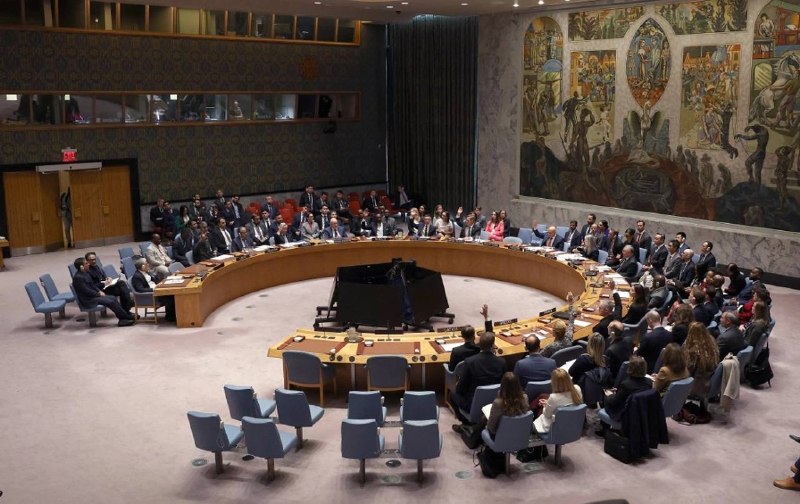
On 4 July 2026, a Kremlin readout revealed that Donald Trump and Vladimir Putin had held a 90-minute telephone call, in which the US president offered to help find a deal to end the war in Ukraine. By 6 July, the Russian side was back in public view with a complementary line: Trump, the Kremlin's spokespeople said, holds a "consistent" position on Ukraine and is confident in his own understanding of the war, while remaining "open to listening" to what Putin conveys. The same morning, Ukrainian domestic coverage noted a separate, quieter pressure point — an expert warning that water tariffs inside Ukraine are about to rise sharply. The two threads, a foreign-policy chess clock and a household-bills alarm, sit on the same calendar because a war that has lasted nearly four winters is now being negotiated as if it were a property deal, with Ukrainian civilians the parties who did not get a seat at the table.
The signal from Moscow is calibrated. The Kremlin is publicly performing two things at once: endorsing Trump's framing of the war as a problem to be solved between capitals, and reserving the right to be the voice Trump listens to. The bet is that an American president who "is confident in his own understanding" is also a president who can be moved by the right information at the right moment. The 4 July call, with its 90-minute duration and its offer to "help find a deal," is the operational version of that bet. The 6 July readout, with its patient, almost courteous vocabulary, is the diplomatic packaging.
What the Kremlin is actually saying
The two Kremlin statements carried on 6 July — that Trump's position is "consistent" and that he is "open to listening to the information that Putin conveys" — read in isolation as boilerplate. Read together, against the backdrop of a 90-minute call two days earlier, they amount to a public instruction manual for how Moscow wants the next phase to proceed. The first clause legitimises Trump's framing; the second reserves Russian input as the decisive variable inside that framing. The implicit message to Kyiv, to European capitals, and to the US foreign-policy establishment is that the channel Washington has chosen to privilege is bilateral, leader-to-leader, and weighted toward the side that has spent three and a half years practising how to talk about the war without conceding it.
The market for political outcomes is reading this with the same blunt instrument it uses for everything else. On 4 July, the Polymarket contract on whether Trump, Putin and Zelenskyy will meet together before the end of 2026 traded at 8% — a number that captures both the diplomatic possibility and the diplomatic distance. Eight per cent is not zero. It is the price of a long shot that the market judges real enough to maintain a book on. It is also low enough to reflect the structural fact that no three-way meeting has been scheduled, no agenda has been published, and the publicly stated Ukrainian position remains one that does not bend on territorial integrity.
What Ukraine is hearing — and saying
Kyiv is not on the 90-minute call. That absence is itself the story. A settlement process in which the invaded party's leader is not on the line with the two presidents who will frame the deal is, in form, the kind of process the Kremlin has preferred since 2022: a conversation about Ukraine, with Ukraine invited to confirm what has been agreed. Ukrainian officialdom has, for the moment, declined to confirm anything of the sort.
The water-tariff story running on 6 July is a useful index of what the war continues to cost inside the country the diplomats are bargaining over. According to a Ukrainian expert cited in domestic coverage, water tariffs are set to rise significantly, with the expert naming the precise window. The story matters here not because utilities are the subject of the Trump–Putin call, but because it pins down the second clock that any deal will have to satisfy: a domestic Ukrainian one, in which a population that has endured blackouts, displacement, and a labour-market disruption is being asked, in parallel, to absorb a fresh cost-of-living shock. A diplomatic settlement that delivers a ceasefire but delivers it onto a household balance sheet already under stress is a settlement that has not thought through its first hundred days.
The Ukrainian negotiating position, repeatedly stated by President Volodymyr Zelenskyy's office and by Ukrainian negotiating teams, is that the war began with a Russian invasion, that Ukrainian territory remains Ukrainian, and that any framework must be rooted in the established international-law premise of sovereignty and territorial integrity. That position has not shifted. What has shifted is the political weather in Washington, where the offer to "help find a deal" is the operative phrase and the contents of "deal" are deliberately under-specified.
The structural frame: deal-making as substitute for strategy
A 90-minute call, followed by complimentary Kremlin readouts, followed by a low-probability three-way meeting market, is not a strategy. It is a tempo. The two sides are producing the visible artefacts of a negotiation — calls, statements, market instruments — without yet producing the architecture that would make those artefacts add up to an outcome. The pattern is familiar from earlier phases of the war: a flurry of activity, an apparent breakthrough, a slow drift back to a baseline of attrition because the underlying disagreement has not been narrowed.
The structural problem is that the United States, under this White House, has chosen a bilateral frame. Bilateral frames work when the two parties can deliver what is being negotiated. Russia can deliver the disposition of its own forces; it cannot deliver Ukrainian political consent. Ukraine can deliver Ukrainian political consent; it is not at the table. The gap between what the bilateral channel can produce and what a settlement actually requires is the gap the market is pricing at 92%.
Inside that gap, several things are happening at once. The Kremlin is investing in the relationship with the US president as the primary asset — the readouts of 6 July are the public dividend of that investment. The Ukrainian side is investing in the proposition that any settlement must be one it can sign and survive politically, which is why the Zelenskyy government keeps returning to the language of sovereignty and the post-1991 borders. The European allies are investing in a third position, in which they are stakeholders without being parties to the channel, and are visibly uncomfortable with the geometry.
The water-tariff story is the underside of the same structural fact. Diplomacy conducted as deal-making tends to treat the war as a question of concessions, not as a question of consequences. Concessions have counterparties; consequences have populations. The Ukrainian household that opens a water bill in the window the expert named is a consequence, not a counterpart, and no 90-minute call has yet produced a mechanism for converting one into the other.
What the counter-narrative gets right
A fair reading of the situation has to grant the Kremlin's framing a real point: the war is unwinnable on the battlefield for either side at acceptable cost, and a negotiated end is preferable to an indefinite continuation. That is a serious claim, advanced seriously, and it does not become less serious because it is convenient for Moscow. A diplomatic process that treats the war as solvable is, in one important sense, treating the war as a problem rather than as an instrument, and that re-framing is itself a contribution.
The same fair reading has to register the costs of the re-framing. A process that prioritises a bilateral channel with Moscow, that describes the US president as "open to listening" to Putin's input, and that signals a three-way meeting at single-digit probability is a process that is implicitly pricing in Ukrainian agreement as something to be obtained, rather than something to be designed for. The historical record of settlements imposed on invaded parties is not encouraging. The Ukrainian political system has the capacity to refuse a deal it judges unacceptable; the question the next six months will answer is whether the diplomatic architecture being built around the war is one in which that refusal can be expressed, or one in which it is treated as an obstacle to be managed.
Stakes and the next six months
If the trajectory continues, three things become more probable by the end of 2026. The first is that the bilateral US–Russia channel produces text — a framework, a set of principles, a communiqué — that exists regardless of whether Ukraine has signed on. The second is that European allies, currently in a stakeholder-without-a-seat position, harden into a stakeholder-with-conditions position, attaching themselves to the process from the outside by virtue of their own sanctions leverage and their own financial exposure to the war's reconstruction. The third is that the Ukrainian domestic political system absorbs the diplomatic weather the way it has absorbed every previous phase: with gritted teeth, public unity, and a quiet intensification of the work of building the country the war has forced into existence — including, on 6 July's evidence, the work of telling its own citizens that the water bill is about to get worse.
The 8% Polymarket line is, in the end, a reasonable summary of the moment. It is high enough to keep the book open and low enough to keep the bet honest. A three-way meeting is possible but not, on present form, imminent. A 90-minute call is not a settlement. A "consistent" US president who is "open to listening" to the Kremlin's information is a US president whose information diet is, for the moment, the variable the rest of the architecture is being built around. Until that variable changes — or until the architecture widens to include the parties whose consent it requires — the war's third winter will be prepared, in Moscow, in Washington, and in the kitchens of Ukrainian households, on three different calendars at once.
Desk note: Monexus leads with the Kremlin's own readouts and the market's own pricing, and treats the Ukrainian domestic-cost story as a first-order input into any settlement timeline, not as a footnote. The wire services have largely framed the call as a US-led diplomatic opening; Monexus reads it as the opening move in a longer sequence whose outcome the market, for now, puts at one in twelve.
Wire provenance
This editorial synthesis draws on the following public wire/social posts:
- https://t.me/ClashReport
- https://t.me/ClashReport
- https://t.me/TSN_ua