Overnight barrage on Kyiv kills at least eight as Russia returns to mass strikes on the capital
A Russian missile-and-drone attack on Kyiv overnight into 6 July 2026 killed at least eight people and injured dozens, with apartment blocks hit across the capital and air alerts widened to multiple regions.
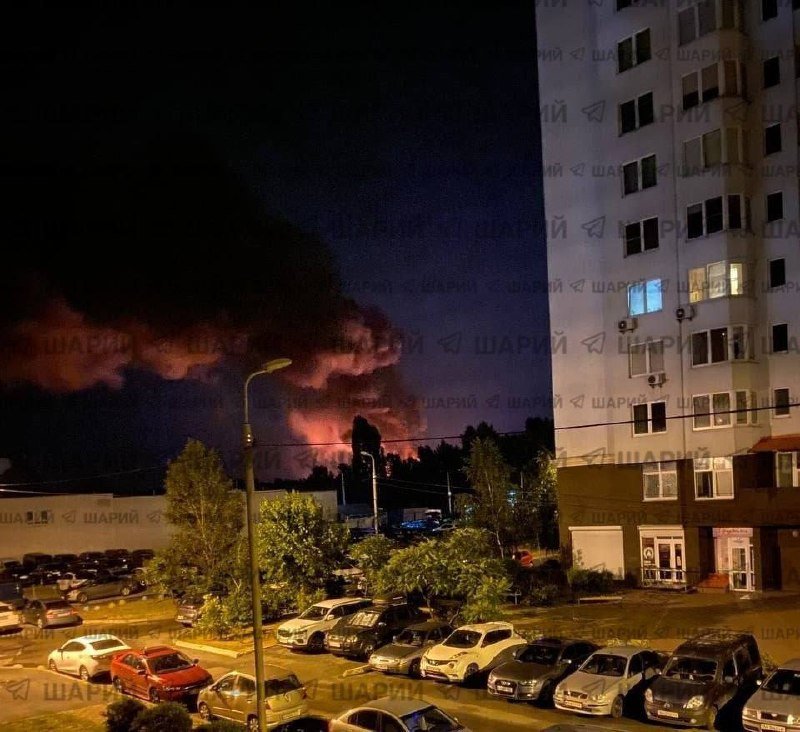
A Russian barrage of ballistic missiles and long-range drones struck Kyiv and the surrounding region overnight into 6 July 2026, killing at least eight people and injuring dozens, with apartment blocks and other civilian sites reported hit across the capital. Air-raid alerts were issued for Kyiv city and a number of Ukrainian regions in the early hours, according to Ukrainian operational channels tracking the attack in real time.
The strike marks a return to mass bombardment of the capital after months in which Moscow had leaned on glide-bomb and drone campaigns along the front line and on infrastructure targets outside major cities. The pattern is consistent with what Ukrainian and Western observers have warned about since spring: that any pause in city strikes was tactical, not strategic, and that Russian missile production lines have continued to outpace Ukrainian air-defence intercept rates.
What we know from the overnight reporting
Three independent Ukrainian operational channels converged on a similar picture in the four-hour window before dawn UTC. The operational channel operativnoZSU posted an air-alert notice covering Kyiv and a number of regions at 05:18 UTC on 6 July 2026. War correspondent Andriy Tsaplienko reported at 05:09 UTC that ten people were known dead in the capital from the attack, a figure that may yet rise as rescue crews clear damaged buildings. The open-source channel Clash Report, summarising initial reporting at 04:31 UTC, put the toll at "at least eight killed and dozens injured," with apartment buildings and other civilian sites among the locations struck, and explicitly named ballistic missiles and drones as the weapons used.
The slight numerical gap between Tsaplienko's ten and Clash Report's eight reflects how casualty tallies typically move in the first hours of a major urban strike: initial figures cluster around what rescue services can confirm on the ground, then expand as collapsed structures are searched. Readers should treat the eight-figure as a floor, not a ceiling. The direction of revision in nearly every previous Kyiv strike of this scale has been upward.
What the strike tells us about Russian targeting choices
Moscow has spent the last year signalling, through both official statements and milblogger commentary, that its long-range strikes are aimed at Ukrainian energy infrastructure, defence-industrial sites, and what Russian officials describe as "decision-making centres." Kyiv itself has been treated as the symbolic core of that third category. Even when glide-bomb and Shahed-type drone campaigns dominate the nightly headlines, the periodic return of ballistic missiles to the capital is the part of the campaign that does the most political work: it forces air-defence mobilisation across the country, burns through Ukrainian interceptor stockpiles, and demonstrates that the capital is not beyond reach.
The mix reported here — ballistic missiles plus drones — is the standard Russian recipe for saturating Ukrainian air defence. Drones arrive first, cheaply, forcing radar and gun crews to expend ammunition; missiles follow, hitting the targets the drones have thinned out. The pattern is not new, but its reappearance against Kyiv specifically, after a stretch in which strikes on the capital had been intermittent, suggests a deliberate escalation of signalling rather than a routine rotation of stockpiles.
The counter-narrative, and why it does not hold
Russian state and state-adjacent channels will, as they do after every strike on a Ukrainian city, frame the bombardment as a response to Ukrainian attacks on Russian territory and on Russian-held areas. That framing has internal consistency: Ukrainian long-range strikes on Russian oil refineries, military airfields, and logistical hubs have intensified over the past year, and Moscow has repeatedly warned of retaliation.
It does not, however, dissolve the core fact. Ballistic missiles and Iranian-designed long-range drones aimed at apartment buildings in a capital city are not precision strikes against military infrastructure, whatever the accompanying statement from the Russian Ministry of Defence. The civilian toll reported in the early hours — at least eight dead, dozens injured, residential blocks hit — is the predictable outcome of the weapons chosen and the targets selected. The escalation logic is real; the equivalence it implies between a city and a refinery is not.
Structural frame: a war of production, not of positions
What is unfolding in Ukraine is best understood not as a sequence of territorial battles — though those continue — but as a grinding contest between two industrial base rates. Russian missile and drone production has rebuilt and expanded under sanctions pressure, with imports of dual-use components routed through third countries and domestic substitution deepening each quarter. Ukrainian interception capacity, supplied by Western partners, has grown but remains finite; interceptors cost more than the drones they bring down, and the economic ratio favours Moscow over months, even when individual salvos are repelled.
In that light, an overnight strike on Kyiv is less a battlefield event than a balance-sheet entry. The capital is the most heavily defended urban target in the country; forcing Ukraine to engage hundreds of interceptors over a single night is itself the strategic outcome, irrespective of which specific buildings are hit. The civilian toll is the cost Kyiv pays for being both the political centre of the country and the most pressure-tested node in its air-defence network.
Stakes in the weeks ahead
Three near-term questions follow from the overnight attack. First, whether the eight-to-ten fatality count climbs as rescue operations conclude; Ukrainian emergency services have historically revised tallies upward over 24 to 48 hours. Second, whether Western partners move to accelerate the delivery of additional air-defence interceptors and long-range strike capabilities, or whether the strike is absorbed into the existing aid pipeline without adjustment. Third, whether the overnight pattern — ballistic missiles plus drones against the capital — repeats on subsequent nights or was a single demonstration event. Initial reporting does not yet allow confident answers to any of the three.
What the reporting does establish is the basic fact pattern: a deliberate, combined-arms strike on a European capital in the early hours of a Monday morning, with civilian casualties and residential damage confirmed by multiple Ukrainian channels operating independently. The remainder of the picture — the precise target list, the political response from Kyiv, the diplomatic fallout in European capitals — will become clearer as the day develops.
This article draws on three Ukrainian operational Telegram channels — operativnoZSU, Andriy Tsaplienko, and Clash Report — for the early-hour reporting, rather than on official Ukrainian government statements, which had not been issued at the time of writing. Monexus will update the casualty count and frame as official Kyiv sources publish.
Wire provenance
This editorial synthesis draws on the following public wire/social posts:
- https://t.me/operativnoZSU/
- https://t.me/Tsaplienko
- https://t.me/ClashReport