Kyiv wakes up to debris and a familiar arithmetic
An overnight barrage hits residential blocks in the Podilsk district, leaving casualties and a city again running the calculation it has run for more than three years.
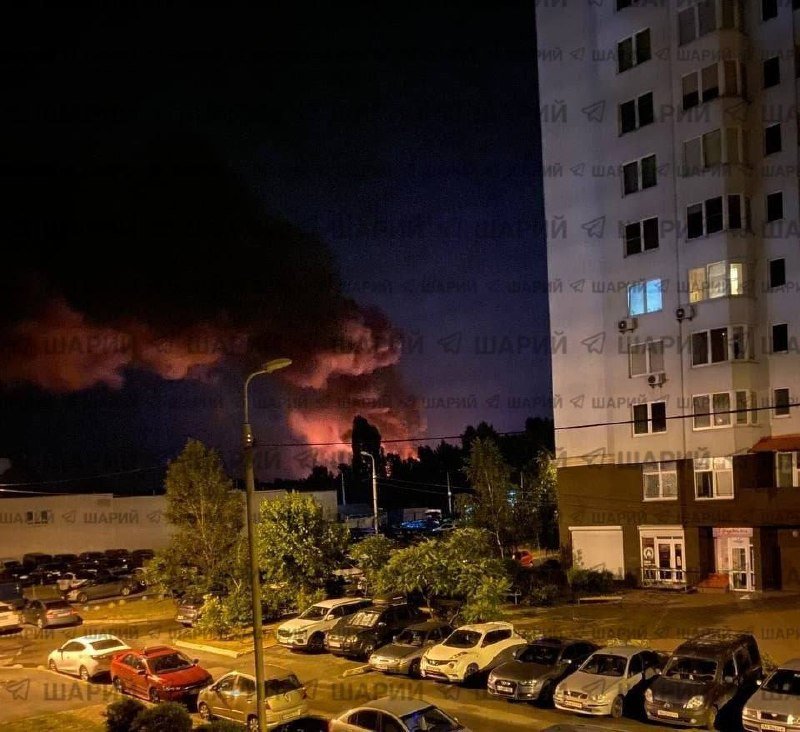
At 23:32 UTC on 5 July 2026, rescue teams in Kyiv were told that people were trapped on the upper floors of a residential block in the Podilsk district that had been hit by what Mayor Vitaliy Klitschko's office described as falling debris from an enemy attack. Within two hours, the casualty count had climbed to three, then five, then seven, with two of the wounded taken to hospital, according to Telegram updates from Pravda_Gerashchenko drawing on the Kyiv City Military Administration (KGVA). Fires had broken out in four separate residential locations across Podilsk; multi-storey buildings were damaged in three districts; in Darnytskyi, debris had set an apartment block alight.
The overnight barrage is not a rupture. It is the latest entry in a ledger that the Ukrainian capital has been updating almost nightly since the spring of 2022. What it illustrates, again, is the arithmetic of an invaded country being forced to absorb punishment in its housing stock, its power grid, its sleeping civilians, while the world's news cycle briefly glances up, then turns the page.
The scene as it arrived
Klitschko's early report framed the operation around extraction: people trapped at the 7th-to-9th-floor level of a damaged building, emergency services dispatched, a public warning not to leave shelter. Within an hour, the picture widened. The KGVA confirmed a woman hospitalised and two more treated as outpatients. By 00:23 UTC, fires had been recorded in four locations in Podilsk alone; multi-storey damage had been registered in three Kyiv districts. By 01:24 UTC, the city was reporting seven casualties with two in hospital.
The pattern is the pattern: a saturated strike, layered detonations across districts designed to overwhelm air defence and stretch rescue capacity. The Telegram feed does not specify the weapons used, the number of projectiles, or whether interceptors were engaged. Those details, when they come, will arrive through the Air Force and the General Staff of Ukraine in their morning briefings. What the feed captures first is the human side — the count, the buildings, the floors where people cannot get down.
Why the framing matters
Western coverage of overnight Kyiv strikes tends to render them as discrete events bracketed by casualty figures and a presidential reaction. That framing is not wrong, but it compresses what is actually a sustained industrial campaign. Ukrainian sources have for months described a deliberate Russian effort to degrade morale through cumulative exposure — to make sleep itself a casualty-producing variable. Treating each night as a separate story, and each story as a footnote, lets the strategy pass unexamined.
There is also a temptation, in outlets fatigued by the war, to read overnight barrages through a proxy-war lens that erases Ukrainian agency and treats civilian harm in Kyiv as ambient scenery for a great-power contest. The reporting from the ground — Klitschko's office, the KGVA, the State Emergency Service — pushes back against that compression. Kyiv is not a backdrop. It is a city of three million people who are running a calculation every night about which shelter to use, which corridor is still open, which neighbour has not yet come down from the ninth floor.
The structural read
Three things are worth holding in mind when the morning wires settle the numbers.
First, capacity. Air defence interception is a per-shot gamble with finite inventory; saturating it is precisely the point. Each successful hit on a residential block is, in Moscow's calculus, a return on a stockpile of Shahed-type drones and ballistic missiles that Western sanctions have so far failed to fully choke off. Reporting that focuses on the intercepts that work tends to obscure the economics of the ones that do not.
Second, signalling. Strikes on Kyiv rather than the frontline serve a domestic-political function inside Russia: visible punishment of the capital, the seat of government that Russia insists does not legitimately exist. The frequency of these barrages tends to rise around moments of diplomatic friction — sanctions packages, aid debates, peace-process rumours. The timing of this particular wave, days after a Nato summit communiqué and ahead of an EU aid vote, is worth tracking as the political weather clears.
Third, civilian resilience as a target. The Podilsk fires are not collateral in any useful sense of the word. They are the point. A city that keeps working after a night like this is a city that has been forced to absorb the cost of doing so — in trauma services, in housing stock, in the slow erosion of the assumption that home is safe. Ukrainian civil society has built remarkable capacity to absorb that cost. That capacity should not be mistaken for invulnerability.
Stakes and what to watch
The next 48 hours will produce the technical answers the Telegram feed could not: projectile count, intercept ratio, the type-specific damage profile, the official casualty list from the Ministry of Internal Affairs. The political answers will take longer. Whether Western air-defence deliveries are accelerating or stalling, whether Patriot interceptors are being moved to Kyiv at the rate Kyiv's mayor has been publicly requesting, whether the EU's aid tranche survives its procedural votes — these are the variables that determine how many more nights look like the one Kyiv just lived through.
There is one thing the sources do not yet say, and it is worth naming. The Telegram thread captures what was visible by 01:24 UTC on 6 July. Buildings still smoulding. Families still being accounted for on the upper floors. The full count — and the names — comes later, as it always does, and it is the later count, not the headline number, that should anchor the day's reporting.
For now, the arithmetic holds: a city hit, a count that climbed, a morning that begins with damage assessment rather than rest. Kyiv has done this calculation so many times that the machinery of it — the extraction, the triage, the morning briefing — runs without commentary. The commentary, such as it is, has to come from outside. And it should be specific, sourced, and slow enough to outlast the news cycle.
Desk note: Monexus frames this strike within the established record of Russian attacks on Ukrainian civilian infrastructure, drawing casualty details from the Kyiv City Military Administration as relayed by Pravda_Gerashchenko on Telegram. Technical specifics on weapons and intercepts will be updated when the Air Force of Ukraine and the General Staff publish their morning briefings.
Wire provenance
This editorial synthesis draws on the following public wire/social posts:
- https://t.me/Pravda_Gerashchenko/
- https://t.me/Pravda_Gerashchenko/
- https://t.me/Pravda_Gerashchenko/
- https://t.me/Pravda_Gerashchenko/
- https://t.me/Pravda_Gerashchenko/