Strikes on Lebanon and a checkpoint death in Hebron expose the fault line in the US-brokered calm
An Israeli strike on a vehicle in southern Lebanon killed at least four people on 6 July 2026, while a baby died in the West Bank after troops blocked a family from reaching hospital — two episodes that together test the durability of the US-brokered ceasefire framework.
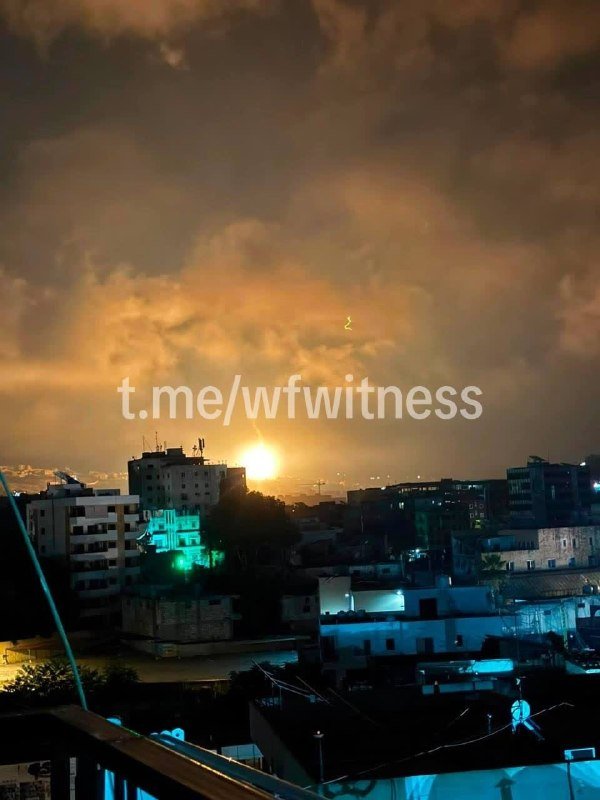
An Israeli air strike on a vehicle in southern Lebanon killed at least four people on Monday 6 July 2026, according to Al Jazeera's breaking-news wire at 14:22 UTC, with the broadcaster reporting that Israeli forces had continued to strike targets inside southern Lebanon despite a US-brokered ceasefire agreement nominally in force. Hours earlier, at 13:13 UTC, Al Jazeera's same wire had carried a separate account: a baby died in the occupied West Bank after his family's attempt to reach hospital was blocked by Israeli troops at a checkpoint. The two episodes sit on opposite ends of the country's geography and inside different policy frames — one framed in Jerusalem and Washington as the suppression of a rearming non-state army, the other framed in Palestinian cities as the daily cost of military rule — yet on the morning of 6 July they pointed in the same direction. The ceasefire architecture that the United States has spent the better part of a year selling to its Arab and European partners is being tested by an accumulation of small breaches rather than by any single dramatic provocation.
The strain is not theoretical. Israel's military campaign against Hezbollah has continued through the year at varying tempo, with Israeli officials arguing that residual missile, drone and reconstruction activity inside Lebanon justifies pre-emptive action. Lebanon's caretaker government has complained, in parallel, that the strikes violate the understanding underpinning the ceasefire. The 6 July vehicle strike is a textbook instance of the dispute: an incident that each side's read treats as evidence of the other's bad faith. That Palestinian infant's death is its corollary. Israeli security services describe routine checkpoint inspections and closures as the operational baseline of counter-terrorism work in the West Bank; Palestinian residents and human-rights monitors describe them as a slow-motion emergency, with predictable outcomes when ambulances and private vehicles are turned back at the kind of crossing captured on video earlier the same day outside Hebron. Both realities are true simultaneously; the political question is whose description of them produces policy.
Lebanon's southern front
The 14:22 UTC Al Jazeera flash is the clearest data point: an Israeli strike on a vehicle in southern Lebanon killed at least four people, with Israeli forces continuing to strike targets in the area despite the US-brokered ceasefire. The report does not specify the precise location of the strike, the type of munition used, or the affiliation of the four killed. What it does establish is the contradiction at the heart of the present arrangement: Israel is publicly committed, through its US-mediated understanding, to restraint in the south, while continuing kinetic operations it characterises as targeted.
Hezbollah's own posture has compounded the ambiguity. The movement has not formally resumed open hostilities, but Lebanese and Israeli outlets have tracked ongoing seizures of rockets, missiles and launchers in the Beqaa Valley and the south, presented by Israel as evidence that the group's reconstitution is further along than disarmament timelines permit. Israeli security officials cited in Israeli media have framed the strikes as preventive, against infrastructure that would otherwise be used in a renewed war. Beirut's read is the opposite: that the strikes themselves, by killing Lebanese civilians inside their own territory, are the breach. Both readings rest on evidence the other contests. The 6 July strike is unlikely to be the last on either side; the question is whether the political cover the US-brokered framework provides will erode before a workable enforcement mechanism is in place.
The West Bank, settlements and a checkpoint death
At 13:13 UTC, Al Jazeera's wire carried the second incident of the day: a baby died after his family was blocked by Israeli troops from reaching hospital in the occupied West Bank. The framing of the report — that troops denied a medical passage — is the framing Palestinians and rights groups have applied to a long catalogue of similar incidents. The Israeli security establishment has, in past cases, described individual refusals of passage as operational decisions taken on the basis of threat assessments specific to that checkpoint and moment, and has, in some cases, opened internal reviews when a death results.
The Hebron area is where the pattern is most concentrated. Earlier on 6 July, Palestinian activist Issa Amro — a Hebron-based human-rights defender who has documented military conduct in the city for years — posted video of an Israeli soldier closing a checkpoint, framed as a representative example of the daily obstacles Palestinians in and around Hebron face. Amro's account is consistent with the longer arc reported by Israeli and Palestinian human-rights organisations: closures, partial openings, and the unpredictability of access to schools, workplaces and hospitals by turns. It is also consistent with Israel's framing of Hebron as a high-risk operational environment requiring layered controls.
The settlements backdrop sharpens the picture. On 6 July, Israel advanced 22 new settlement units in the occupied West Bank, per a Telegram-distributed report from Palestine Chronicle referencing the Palestinian news agenda on settler attacks. Settler violence, IDF escort operations and the steady expansion of the settlement footprint are the connective tissue that links the strike in south Lebanon with the checkpoint outside Hebron. They sit on different legal and operational tracks — Israeli sovereignty claims, Israeli security doctrine, US-led diplomacy on the Lebanese border — but the common thread is a security-first frame under which civilian life, on both sides of the 1948 line and on both sides of the Litani, is treated as a constraint on operations rather than as the purpose of them.
What the US-brokered framework can and cannot hold
The US-brokered ceasefire with Hezbollah was sold, by Washington and by successive Israeli governments, as a calibrated compromise: Hezbollah would cease reconstruction at scale and sever visible ties to Iran's Islamic Revolutionary Guard Corps; Israel would curtail its strike tempo and refrain from operations against Lebanese civilian infrastructure; an international monitoring mechanism, backed by US and French diplomatic weight, would police the line. The premise of the architecture is that both sides have an interest in restraint strong enough to override the day-to-day logic of deterrence by force. The 6 July strike is a reminder that the operational logic of deterrence by force is still active on the Israeli side; a slow trickle of seizures, launches and arrests on the Lebanese side suggests it has not been switched off there either.
The structural problem is that the framework has no enforcement teeth on either front. The United States has political incentives to keep the architecture intact ahead of its own electoral calendar, but has not deployed either sanctions against violators or tripwire-style guarantees that would raise the cost of any single strike, seizure or launch. The result is an equilibrium in which both sides absorb incidents, deny patterns, and allow the verbal commitment to the ceasefire to drift further away from the operational reality on the ground. Each party retains the option, in extremis, of pointing to the other's accumulated violations as legal-political grounds for ending the arrangement — a feature of the deal, not a flaw, in the eyes of its harder-line supporters in both Beirut and Jerusalem; a fatal design weakness, in the eyes of diplomats in Washington, Paris and the Gulf capitals who see the ceasefire as the only realistic barrier to a third major war between Israel and Hezbollah.
What a sober read of 6 July leaves open
A few things are not in the source material. Al Jazeera's wire report does not name the vehicle struck in southern Lebanon or specify whether the dead were Hezbollah operatives, family members or non-affiliated civilians; the West Bank report does not identify the family of the dead infant or the specific checkpoint at which the medical passage was denied. The Palestine Chronicle report on settlements cites a count of 22 new units approved but does not, in the material available, list their locations or stages of planning approval. Issa Amro's video is offered as illustrative; it is not, on its own, evidence of the broader pattern in Hebron. Each of those gaps is the kind that a longer investigation could close; in the meantime, the prudent read is that 6 July produced two confirmed civilian-harm incidents, a further advance of settlement construction in the West Bank, and one more data point that the US-brokered framework is being worn down by the same kinds of small events it was designed to absorb.
The honest reading of the day is that no single one of these incidents is, by itself, enough to break the ceasefire architecture; the cumulative weight of them, month after month, is. The political question in Washington, in Beirut and in Ramallah is not whether the US-brokered framework will be replaced — there is no realistic replacement on the table — but whether its principal guarantors will decide to harden it, allow it to erode, or quietly treat the erosion as the price of something else they want to keep intact. The 6 July evidence suggests the third path is the one currently being chosen.
Desk note: this article is built from three Al Jazeera breaking-news wires and two Telegram-distributed reports from The Cradle and Palestine Chronicle published between 13:13 and 14:22 UTC on 6 July 2026. Where the wires named sites, casualties or settlement counts we kept them; where the wires did not, we said so. The piece takes the Israeli security frame and the Lebanese/Palestinian civilian-harm frame at equal weight, then puts the question of which frame produces policy in front of the reader.
Wire provenance
This editorial synthesis draws on the following public wire/social posts:
- https://t.me/thecradlemedia
- https://t.me/thecradlemedia/2