The West's Ukraine Problem Is Now a Turkey Problem
As NATO's ammunition stocks run thin and the alliance's biggest members look distracted, the bloc's second-largest army is becoming harder to ignore.
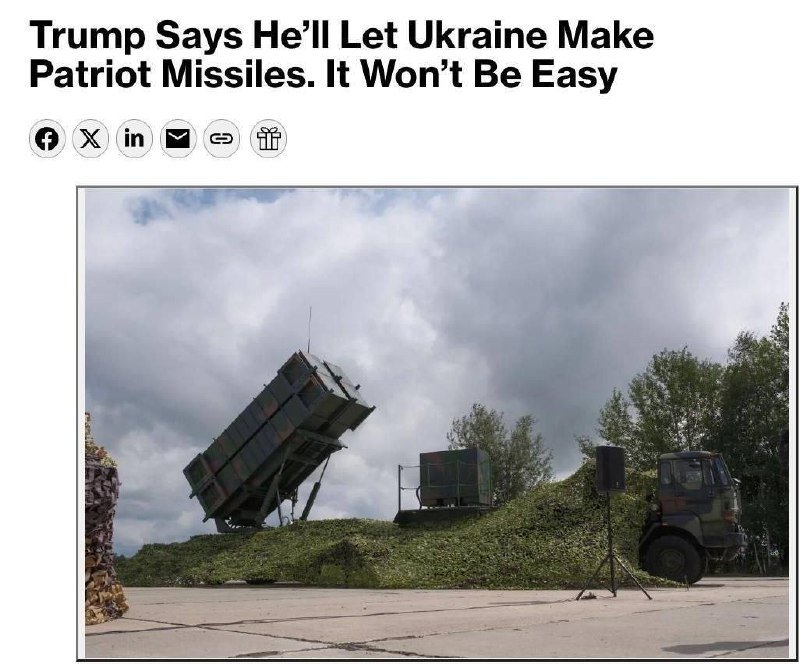
For three and a half years, the story of the war in Ukraine has been told in two registers: the industrial-scale carnage on the ground, and the slow, grinding arithmetic of Western weapons production. On 6 July 2026, that second register produced one of its sharpest warnings yet. NATO's secretary general publicly cautioned that the alliance does not have an "endless supply" of air-defense interceptors for Ukraine. The comment landed less than 24 hours after a long New York Times World News analysis argued that the war, and the Trump administration's evident disregard for the alliance, have generated something NATO has rarely needed: a renewed appreciation of what Turkey actually brings to the table.
Both signals point to the same awkward fact. The country that the Western policy class spent the last decade lecturing about democratic backsliding now hosts the second-largest standing army in NATO, a defence-industrial base that can produce interceptors, drones, and armoured vehicles at a pace most alliance partners cannot match, and a geographic position astride the Black Sea that no supply chain into Ukraine can route around. The alliance's Ukraine problem is steadily becoming a Turkey problem, whether Brussels or Washington wants to admit it.
The interceptor squeeze
Air-defence interceptors are not interchangeable with artillery shells. Each one is precision-machined, expensive, and produced on multi-month cycles by a handful of firms — principally in the United States, Germany, France, and the United Kingdom. Ukraine has burned through them at a rate that has outpaced every Western production schedule drawn up since 2022. The NATO chief's 6 July warning that there is no "endless supply" does not contradict earlier public commitments to keep Ukraine defended; it does, however, concede the obvious — that the bottleneck is not political will on paper, it is physical stock.
This is the structural backdrop against which Turkey's defence industry has become strategically relevant. Turkish firms produce loitering munitions and short-range ballistic missiles at scale and have exported armed UAVs to more than thirty countries. Ankara has also developed national air-defence systems that, whatever their performance against a peer competitor, are physically available in quantities the alliance's big-three producers cannot match on the timeline Ukraine is now operating on.
Why NATO is suddenly listening
For years, the Western consensus on Turkey inside Brussels and Washington treated Ankara as a difficult partner — operationally essential, diplomatically inconvenient. The 2026 NYT analysis argues that two specific shocks have inverted that posture. First, the war in Ukraine has not ended, and the ammunition economy that would resolve it on Kyiv's terms requires production capacity that does not exist in sufficient quantity west of Turkey. Second, the Trump administration's approach to the alliance has, in the analysis's framing, prioritised bilateral transactional deals over multilateral burden-sharing — which has the side effect of elevating middle powers capable of delivering hardware on demand.
The counter-narrative, inside Western foreign-policy circles, is that Turkey's growing influence inside NATO is itself a side effect of the war and that Ankara's value is being inflated by short-term emergency need. On that reading, Turkey is the contractor of last resort for a coalition whose big members refuse to mobilise their industrial base at the required tempo. Both readings can be true. The relevant fact is that, in July 2026, NATO's second-largest army sits in a country whose defence-industrial output is the only variable input the alliance can plausibly expand.
The structural frame
The pattern playing out across NATO in mid-2026 is not new, but it has become harder to deny. Alliances depend on three things: political cohesion among members, operational integration of forces, and industrial capacity to sustain a high tempo of operations. For most of the post-Cold-War era, the Atlantic alliance optimised for the first two and largely ignored the third. The war in Ukraine has exposed that omission in ways that cannot be patched with political declarations.
The harder question — which the wire coverage has not yet resolved — is whether Turkey's industrial weight inside NATO produces political concessions the alliance's European centre would not otherwise have made. Turkey has used leverage over Sweden and Finland's accession process, over sanctions enforcement in the eastern Mediterranean, and over energy-corridor routing for years. A NATO that depends on Turkish interceptors in 2026 is a NATO in which Ankara's outstanding demands on Cyprus policy, on F-35 sales, and on customs-union access are costlier to ignore.
Stakes over the next twelve months
If the trajectory holds, three outcomes become more probable. Ukraine's air-defence picture stabilises modestly — not because Western output surges, but because Turkish and other non-traditional suppliers fill specific gaps. NATO's internal balance of influence shifts further toward Ankara and away from the Franco-German engine that dominated agenda-setting in the 2010s. And the United States, already treating the alliance transactionally, has less leverage to demand European defence-spending increases when one of those European states is producing most of the consumables Europe actually needs.
What remains genuinely uncertain is whether the Western production base will respond to the interceptor squeeze the way it eventually responded to the 155mm shell squeeze — with multi-year contracts, allied munitions facilities on Ukrainian or Polish soil, and politically-protected industrial mobilisation. The NATO chief's 6 July warning is, in effect, an admission that this response has not yet arrived.
How Monexus framed this: the wire coverage treated 6 July as two separate stories — an air-defence warning and a Turkey reset. The news is the connection between them.