Netanyahu's Iran framing and the gap between Trump's diplomacy and Israeli war-planning
A Sunday statement from the Israeli prime minister insisting he and the US president are pursuing parallel interests lands at a moment when their publicly stated endgames on Tehran visibly diverge.
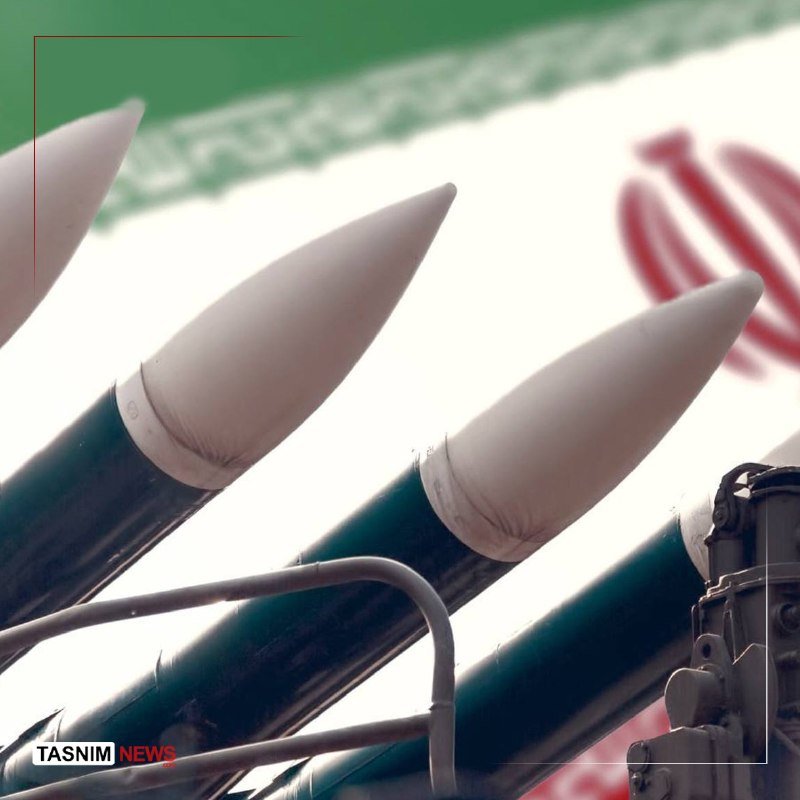
At 16:30 UTC on 6 July 2026, a statement carried by the Epoch Times Telegram channel put a familiar frame back on the diplomatic wire: Prime Minister Benjamin Netanyahu said Sunday that President Donald Trump is acting in the interests of the United States, and that he, Netanyahu, is doing the same for Israel. The phrasing was carefully calibrated. It did not claim alignment on Iran. It claimed parallel purpose — each leader pursuing his own country's interests, with the implicit promise that those interests run in the same direction.
That implicit promise is the story. For more than a year, the public posture of the Trump administration on the Iranian file has been transactional: sanctions, snapback pressure at the IAEA, periodic threats followed by relief windows. The public posture of the Israeli government has been different in kind, not in degree — a sustained insistence that Iran's nuclear and missile programmes cannot be contained by agreement, and that the window for a strike is finite. Both postures have been presented, in their respective domestic arenas, as compatible. The Netanyahu statement of 6 July is the latest attempt to keep that compatibility on the page.
The surface message
Read narrowly, Netanyahu's Sunday remarks add little. Two leaders saying they each pursue their national interest is the lowest-common-denominator formulation of an alliance: we cooperate because it suits us both. It does not name Iran, name a timeline, or describe a coordination mechanism. It does, however, set a rhetorical floor for the week ahead — and a floor matters when the ceiling is unstable.
The framing travels well in two directions at once. In Washington, it reassures a Congress that has been pressing the administration on Iran posture and an Israeli-American audience that wants the relationship described in unconditional terms. In Jerusalem, it gives the prime minister cover to continue war-planning and intelligence preparations that the Israeli defence establishment has not paused, even as diplomatic traffic with Tehran has intermittently reopened.
The divergence underneath
The strain sits underneath the surface message. The Trump administration has, across 2026, leaned on a deterrence-plus-negotiation track: maximum pressure maintained, but with doors visibly open to a deal that freezes enrichment in exchange for sanctions relief. Reporting through the spring pointed to active backchannel work. The Israeli establishment, by contrast, has continued to brief — through leaks to domestic outlets and through senior ministers' public comments — that a deal along those lines is unacceptable, and that unilateral action remains on the table if diplomacy fails.
Two positions can coexist in private. They cannot coexist indefinitely in public without one of three outcomes: an Israeli strike that forecloses the American track; an American deal that Israel publicly repudiates; or a public redefinition of "shared interests" that either narrows or widens the gap. Netanyahu's statement, by choosing the word "interests" rather than "strategy" or "policy," leaves the question open. That is not the same as resolving it.
Why the framing matters
Alliances are held together less by treaties than by a shared vocabulary. When two leaders describe the same problem in different words, allied bureaucracies drift toward different operating assumptions — what intelligence to prioritise, what military contingencies to staff, what diplomatic off-ramps to keep funded. The vocabulary of "parallel interests" is designed to defer that drift. It permits both sides to keep their own plans, their own timelines, and their own domestic political narratives, while signalling to allies and adversaries alike that the US-Israel relationship remains intact.
The structural pattern is familiar: a public surface of unity, an operational middle layer in which officials coordinate selectively, and a private layer in which the two governments disagree about the endgame. The press coverage reflects that layering — the formal statements appear together, while the substance is reported in pieces, often via anonymous Israeli or American officials. The result is that readers see a single alliance in the headlines and several competing alliances in the body copy.
What remains uncertain
Three things are not on the record from the source material of 6 July. First, whether the Trump administration was consulted on the wording of Netanyahu's statement, or merely informed of it. Second, whether the statement was triggered by a specific event — an Iranian move, an IAEA development, a leaked diplomatic exchange — or was a routine weekly calibration. Third, whether the American diplomatic track with Tehran is, in fact, still live in operational terms, or whether it has become a holding pattern while a decision on military action is made elsewhere.
What can be said is that the cost of the ambiguity is now being carried by Iran's regional partners, by Gulf states hedging between the two poles, and by Israeli and American voters who are being asked to trust a coordination they cannot see. The Netanyahu statement of 6 July is, in that sense, a holding action — buying time for a clarification that the next real event will force.
This publication reads Netanyahu's 6 July statement as a floor-setting exercise, not a policy shift. The proof will be in the operational record: whether a US-Iran channel produces movement, whether Israeli strike preparations advance, or whether both sides continue to run parallel tracks without ever testing the joint one.
Wire provenance
This editorial synthesis draws on the following public wire/social posts:
- https://t.me/epochtimes/