Interactive cinema makes a play for the festival circuit — and an audience that’s already watching
At Bucheon, a small studio is pushing ‘interactive cinema’ as more than a VR curiosity. The bigger question is whether audiences, and the rest of the industry, will follow.
On 6 July 2026, at the Bucheon International Fantastic Film Festival in South Korea, the relatively young outfit Next Interactive Studio used the industry platform of a genre-focused festival to argue for something larger than a single release: that interactive cinema deserves a slot alongside traditional film, with its own production ecosystem rather than as an off-shoot of VR or gaming. Variety reported the studio unveiled a slate of interactive films plus what it described as its own “interactive cinema ecosystem,” and that more than 100 audience members attended the showcase. The choice of venue is the tell. Bucheon is a mid-sized festival with a long track record of taking genre and experimental work seriously, which makes it a more sympathetic room than Cannes or Berlin for a pitch that the form itself has been under-served by existing industry infrastructure.
The bet is that the bottleneck in interactive work is not the technology — headsets have been consumer-ready for years — but the supply side. Producers who think in branching narratives, engineers who can ship a runtime, and distributors who can place a finished interactive title on a screen that is not a headset have not, until now, had an obvious shared pipeline. A studio that wraps those functions under one roof, with its own toolchain, is effectively trying to stand up a small studio system inside a category that has so far been carried by individual directors and ad-hoc teams.
What Next Interactive showed
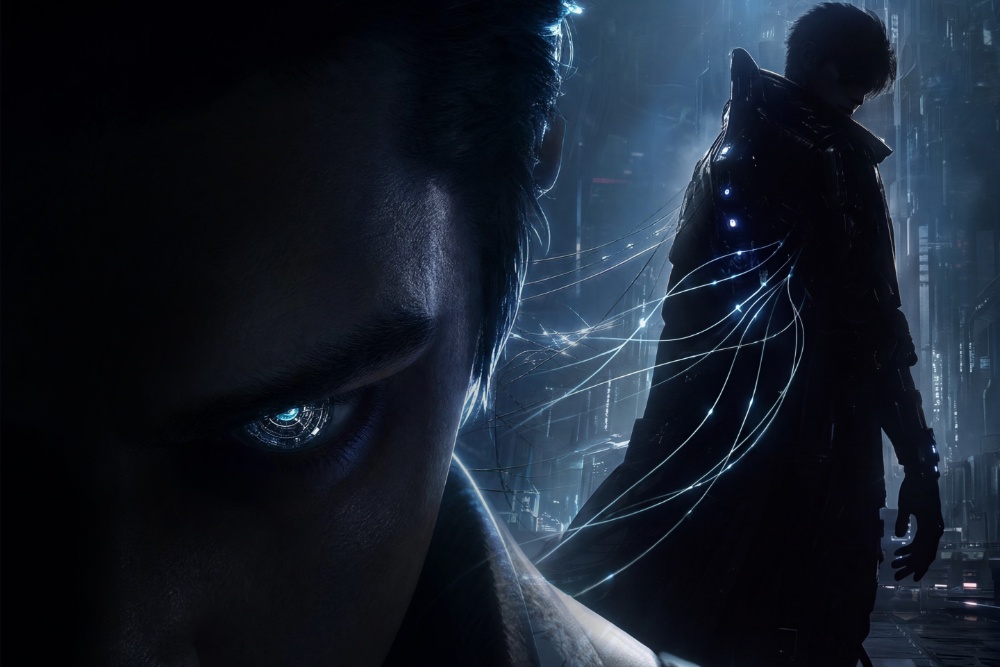
The studio’s showcase emphasised breadth over a single marquee title. Variety’s write-up pointed to a slate rather than a headliner, with the films presented as evidence that the studio can run multiple productions through the same pipeline. ‘Replica’ features in the studio’s promotional materials, which is how it surfaced as the hero image of the Bucheon slate — and gives the announcement at least one recognisable name for distributors to attach to. The studio’s framing of an “ecosystem” is the more interesting claim. It implies reusable tools, presumably a shared runtime, and an internal review process designed to handle audience choices — all of which are decisions that look like film production in one sense and software product management in another.
Why Bucheon, why now
Mid-tier festivals have been quietly absorbing the cost of platform experiments that the A-list circuit cannot. Bucheon’s programme has historically given space to genre, animation, and Asia-first work that bigger events are structurally inclined to under-program; running an interactive showcase there costs the studio a smaller reputational gamble than an equivalent pitch at a tier-one festival would. The move also reflects a regional bet. South Korea’s consumer base is unusually comfortable with platform-heavy media — the country has long been an early adopter of online video, microtransaction gaming, and webtoon-native IP — which gives a domestic studio a less risky launch market than an equivalent pitch would face in, say, France or the United States.
The counter-read: is anyone actually waiting for this?
The honest counter is that “interactive film” has been a category in slow burn for years, with flashes of attention that have not yet translated into a steady audience. The first wave of high-profile VR films landed at Sundance a decade ago to genuine industry buzz; the follow-through was thinner. The mainstream of festival-going audiences still treats interactivity as a curiosity, not a default. Next Interactive’s pitch only works if the studio can land a series of titles that travel beyond the festival bubble and onto platforms where non-specialist viewers will actually find them — streaming services, theatrical one-off screenings with mobile-controlled audience voting, or hybrid events that pair a broadcast with a synchronised second-screen experience. The Bucheon showcase is the first move, not the proof point. Production scale and pipeline claims are inputs; audience behaviour at scale is the output. Until a slate ships, performs, and is measured on something more durable than festival applause, the counter-narrative — that interactive cinema remains a critical darling without a commercial base — remains the more conservative read.
There is also a structural tension the studio has not yet had to answer publicly. When a viewer makes a choice that changes the next scene, somebody has decided what the other options were. The filmmaker’s hand is still there; it just moves earlier in the process, into the writing room and the editing bay, where multiple branches have to be written, shot, and finished coherently. A studio system that handles this well needs editorial infrastructure that traditional film rarely has to maintain — the equivalent of a game studio’s narrative team embedded inside a film company. Next Interactive’s claim is that this is exactly the toolkit it has built. The next twelve months of releases, if they land, will be the place where that claim is tested against reviewers who have seen one too many technical-demos dressed up as films.
Stakes
For audiences, the upside is real: more films that treat the viewer as a participant without descending into gimmickry. For the industry, the bet is on a category that finally crosses from festival novelty into something a paying viewer can find on a Wednesday night. For South Korea specifically, a working interactive-film pipeline reinforces a longer-running thesis that the country’s screen industries can ship product in categories the West still treats as experimental. For festivals, the question is whether Bucheon-style showcases become a regular slot on the calendar — and whether the major European festivals eventually have to make room for the form or risk looking as if they are running a different industry than the one audiences are actually watching.
This piece sits on the culture desk’s festival-industry beat. Monexus has framed Next Interactive Studio’s Bucheon showcase as a supply-side claim about interactive cinema’s production infrastructure, not as a headline-acts story about a single film.