Prediction markets are now pricing the next Middle East war in real time
Two live contracts on Polymarket have begun tracking the prospect of renewed US-Iran conflict, putting a price tag on escalation hours before Tehran-aligned broadcasters go live.
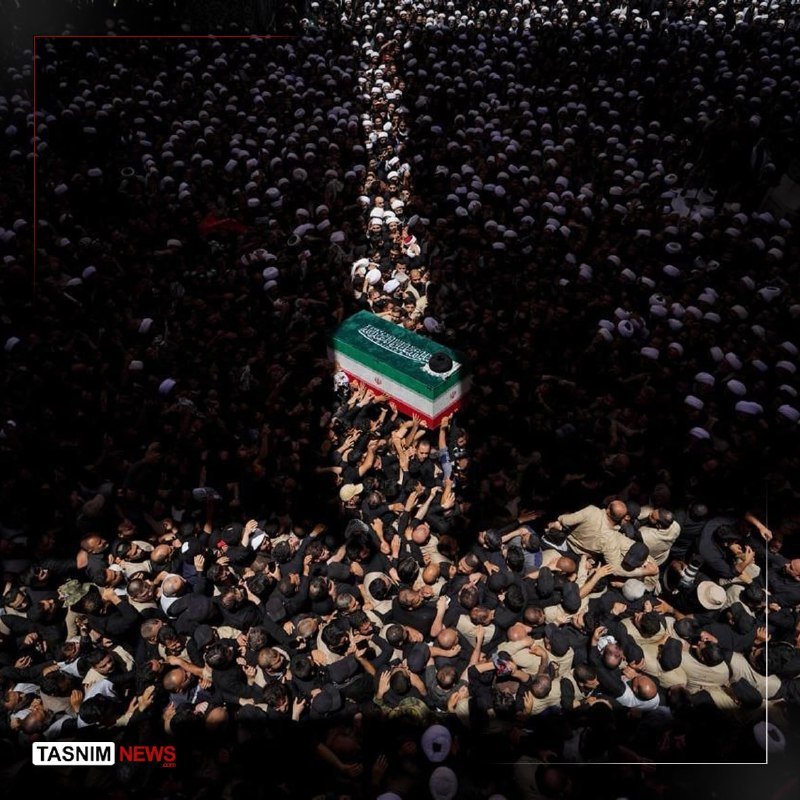
At 03:14 UTC on 6 July 2026, Al Alam Arabic began a live broadcast. Thirteen minutes later, Fars News followed suit. By any conventional measure that is unremarkable — Iranian state-aligned outlets run live coverage around the clock, and a coordinated go-live on a Monday morning in Tehran is the sort of thing that scrolls past unnoticed on a newsdesk. But this time the broadcasts coincided with a quieter, more interesting signal: two open prediction-market contracts on Polymarket, both updated within the previous 36 hours, that pay out if the United States strikes Iran before a stated deadline.
The pairing is worth sitting with. For most of the post-9/11 era, geopolitical risk has been priced in oil futures, in defence-sector equities, in sovereign credit spreads, and in the body language of officials at off-camera briefings. Prediction markets — platforms where users trade contracts on binary outcomes, with prices that float between zero and a dollar reflecting collective probability estimates — have until recently been a curiosity. Now they are functioning, at least in narrow corridors, as a near-real-time temperature check on questions the wire services still treat as unspeakable. The question is no longer whether that shift matters. It does. The question is what it means when the price of war and the price of peace both move before the camera crews have filed their stand-ups.
Two contracts, one forecast window
The first Polymarket contract, listed at poly.market/TZnRwW6, was last updated at 14:27 UTC on 4 July 2026. The second, at poly.market/j5xFrrq, refreshed at 15:03 UTC on 5 July 2026. Both sit inside a narrow band of forecast windows that traders and journalists now treat as the canonical dashboard for US-Iran military confrontation. The contracts themselves are short-form — the platform's house style — and their prices, which float continuously as traders buy and sell, have become a routine citation in market desks and, increasingly, in foreign-policy chat threads.
The fact that two contracts on the same underlying question were updated within roughly 24 hours of each other, and within hours of Iranian-aligned broadcasters going live, is itself the story. Prediction-market coverage of geopolitical risk is no longer a novelty item filed by fintech reporters. It is the speedometer.
What the wire services are still treating as noise
The dominant Western framing of the past week has been cautious — neither Reuters nor the major US wires have moved breaking-news copy on the basis of the Polymarket moves alone. That caution is defensible: prediction-market prices can move on thin liquidity, on the actions of a small number of large traders, or on coordinated signalling. A contract price is not a forecast in the meteorological sense; it is a weighted bet, and weights can be wrong.
But the counter-frame matters too. The same prediction-market infrastructure that the financial press once treated as a gambling curiosity is now being read in serious Middle East policy circles as a leading indicator. The two broadcasts — Al Alam Arabic at 03:14 UTC and Fars at 03:21 UTC on 6 July 2026 — were not random. They are the kinds of go-lives that Iranian state-aligned broadcasters stage when they expect either a kinetic event or a domestic-rhetorical moment that requires simultaneous framing. The Polymarket contracts updated in the prior 36 hours priced that prospect before the broadcasts began. The sequencing is the point.
The structural shift underneath the contract
There is a deeper change here than a fintech story. For decades, the public pricing of geopolitical risk was a monopoly of institutions — banks, hedge funds, intelligence services — with the infrastructure to process classified and commercial data. Prediction markets democratise that pricing in a way that is genuinely novel: they let anyone with a wallet and an opinion register a probability, and they let anyone with a browser read the result.
The implications cut both ways. On one hand, a more distributed, faster-moving price signal is, in principle, a more efficient price signal — closer to the Hayekian ideal of distributed knowledge than anything a sovereign analyst can assemble. On the other, prediction-market prices are also vulnerable to the same coordination dynamics that distort every other public-goods market: they can be moved by motivated actors, by reflexive traders front-running each other, and by the same information cascades that drive conventional news cycles. The Polymarket contracts updated on 4 and 5 July 2026 are a real-time experiment in whether this new infrastructure is more signal or more echo. The honest answer, at this stage, is that nobody knows.
What is at stake
If prediction-market prices on geopolitical questions prove durable as leading indicators, three things shift at once. First, the latency of risk pricing collapses from hours to minutes, which compresses the response window for both traders and policymakers. Second, the information asymmetry between institutional desks and the broader public narrows — anyone with a phone can now watch a US-Iran strike probability move in real time. Third, and most uncomfortably, the political economy of escalation itself changes: actors who wish to deter, or actors who wish to provoke, can read the market's temperature on their own moves.
The Tehran-aligned broadcasts at 03:14 and 03:21 UTC on 6 July 2026 were not, on the available evidence, a direct response to the Polymarket updates. The causal arrow almost certainly runs the other way. But the fact that both signals now exist on the same public timeline — and that both can be read by anyone with an internet connection — is the new geometry of geopolitical risk. The wire services will catch up. The question worth asking is whether the policymakers will.
This article draws on two open prediction-market contracts on Polymarket updated on 4 and 5 July 2026, and on two live broadcasts from Iranian state-aligned outlets Al Alam Arabic and Fars News on 6 July 2026. The piece does not assert a direct causal link between the market moves and the broadcasts; the temporal correlation is itself the reportable fact.
Wire provenance
This editorial synthesis draws on the following public wire/social posts:
- https://t.me/alalamarabic
- https://t.me/farsna