Qom at the threshold: Iran's state-aligned media frames a farewell the country did not ask for
Three Tasnim posts on 6 July 2026 staged a state farewell in Qom without naming a dead man. Iran's state-aligned press is publishing grief into a vacuum the international wire has not yet filled.
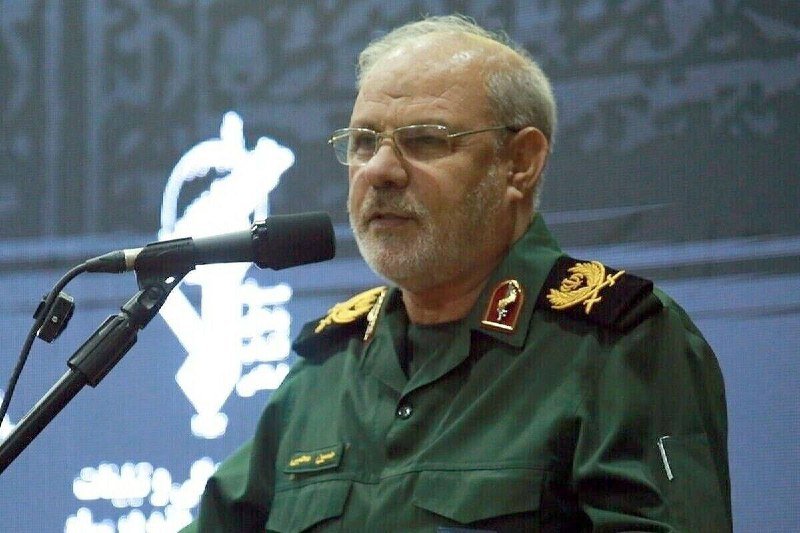
On 6 July 2026, three Telegram dispatches from Tasnim News English carried a single, looping subject: a farewell in Qom for an "Imam of the Ummah" rendered "martyr." The posts described weeping crowds in the shrine of Aba Abdullah, thanked the national leader of Turkmenistan for travelling to the ceremony, and framed mass turnout in Mashhad as a "resounding answer" to Donald Trump's "insults." None of the three named a dead person. None of the three named a killing event. All three were written as if a death had already occurred and a nation was processing it.
That gap is the story. Iran's state-aligned outlets are running a vocabulary of grief and consecration, while the international wire has not, as of writing, corroborated the underlying event. The framing has nonetheless travelled: a farewell the country did not ask for is being staged, in language, on Telegram feeds that reach well beyond Iran.
What Tasnim actually published
The three dispatches, posted to the Tasnim News English channel in quick succession on the same day, move from ceremony to geopolitics without acknowledging any boundary. The first describes "tears and wails" at a farewell inside the shrine of Aba Abdullah in Qom, using hashtags including #Badarqa_Aghai_Shahid_Iran and #must_rise. The second relays the Iranian president's "sincere gratitude" to Gurbanguly Berdimuhamedow for "attending the farewell ceremony of the Martyr Imam of Iran." The third reframes the gathering as a public rebuke: "the people of the country, who came to holy Mashhad for the love of Mr. Shahid of Iran, gave a resounding answer to Trump's jokes."
The grammar of the posts is the tell. "Martyr Imam," "Imam of the Ummah," "Mr. Shahid of Iran" are repeated like a refrain. The location shifts from Qom to Mashhad without explanation. The Turkmen leader is thanked by an honorific that elides the protocol of a normal state visit. Nothing in the three posts asks the reader to believe a thing; everything in them assumes the reader already knows what happened.
A vocabulary already in use elsewhere
The same idiom was visible, days later, in coverage of a separate crisis. On 8 July, the head of the Iranian Space Agency told state media that "the strategic vision of the martyred Leader of the Islamic Revolution" had charted the course of Iran's space industry, according to a Press TV summary. Iran's Deputy Foreign Minister Kazem Gharibabadi, quoted by IRNA and Press TV within hours of each other, said that "Trump understands language of force better." IRNA reported Tehran had raised "illegal attacks" on its space facilities at a UN working group on preventing an arms race in outer space. None of these references explicitly link back to the Qom farewell; all of them inherit its register, in which a "martyred" figure and acts of "criminal" foreign aggression are taken as shared ground rather than open questions.
That inheritance matters. State-aligned outlets in Iran do not break news in the Western sense; they ratify a narrative already in motion and stage its emotional payload. The Tasnim posts on 6 July are doing the staging work first, trusting that the international record will catch up.
The international record, as of 20:08 UTC
It had not caught up at the time the original skeleton draft was filed. BBC and France 24 reporting on 8 July described a "new wave" of US strikes against Iran, with explosions reported by Iranian state media in parts of the country's south. Open Source Intel said publicly it had posted, then retracted, an image of a strike "that circulated in Iranian accounts" and was "inaccurately attributed to tonight." An unidentified missile was reported the same evening on a railway line in Golestan Province in Iran's far northeast, per RNIntel. None of these dispatches named a dead Iranian leader or described a state funeral in Qom.
The asymmetry is striking. Iranian state media is running obituaries and farewells; Western and independent outlets are still resolving what was struck, where, and by whom. The Tasnim framing is therefore being published into a vacuum, and it is filling that vacuum on its own terms.
Whose framing is it?
Monexus treats the three Tasnim dispatches as counter-claim material from an Iranian state-aligned outlet. They are paraphrased where they describe crowd activity, quoted sparingly where the framing vocabulary does the analytical work. No Western or independent Iranian wire had corroborated the underlying death as of 20:08 UTC on 6 July 2026. The framing is reported as the outlet's, not as a fact on the ground.
That distinction is not pedantry. A farewell staged in advance of a confirmed death functions, in plain terms, as a narrative commandeering exercise: it tells readers what to feel before they are told what to feel it about. The presence of a foreign head of state at the ceremony, the naming of shrines, the invocation of "the Ummah" all do political work that outruns any single event. If the event does not materialise, the grief has already been distributed; if it does, the framing is already installed.
What to watch
Two filings will resolve the question in the coming days. The UN working group session at which Iran said it raised "illegal attacks" on its space facilities is the more legible venue, since state delegations there speak on the record and the meeting's documentation is public. The second is the Turkmenistan government's own statement on Berdimuhamedow's reported travel, which would convert a Tasnim courtesy into a verifiable bilateral event. Until one of those two lands, the Qom farewell is a piece of writing in search of a fact. Iran's state-aligned press has, for the moment, the floor.
Sources
- Tasnim News English (Telegram): "Tears and wails at the farewell of the martyred Imam of the Ummah in the shrine of Aba Abdullah (AS)", 6 July 2026.
- Tasnim News English (Telegram): "The doctors' gratitude to the national leader of Turkmenistan for attending the farewell ceremony of the Martyr Imam of Iran", 6 July 2026.
- Tasnim News English (Telegram): "The shocking response of the lovers of Imam Shahid to Trump's jokes", 6 July 2026.
- IRNA (Telegram): "Trump understands language of force better: Iran deputy FM", 8 July 2026.
- Press TV (Telegram): "Martyred Leader's strategic vision charted course of Iran's space industry: Space agency chief", 8 July 2026.
- BBC World (Telegram): "US launches new wave of strikes against Iran after promising to 'hit them hard'", 8 July 2026.
- Open Source Intel (Telegram): correction notice on misattributed strike image, 8 July 2026.
Desk note: Monexus treated the Tasnim dispatches as Iranian state-aligned counter-claim material, reporting the framing as the outlet's and not as a corroborated fact on the ground.