A listening device in Geneva: what Klaus Schwab's complaint tells us about the surveillance question Davos refused to confront
The WEF founder says he found a covert listening device in his home office and has filed a criminal complaint in Geneva. The episode lands on a debate Davos itself spent fifteen years shaping.
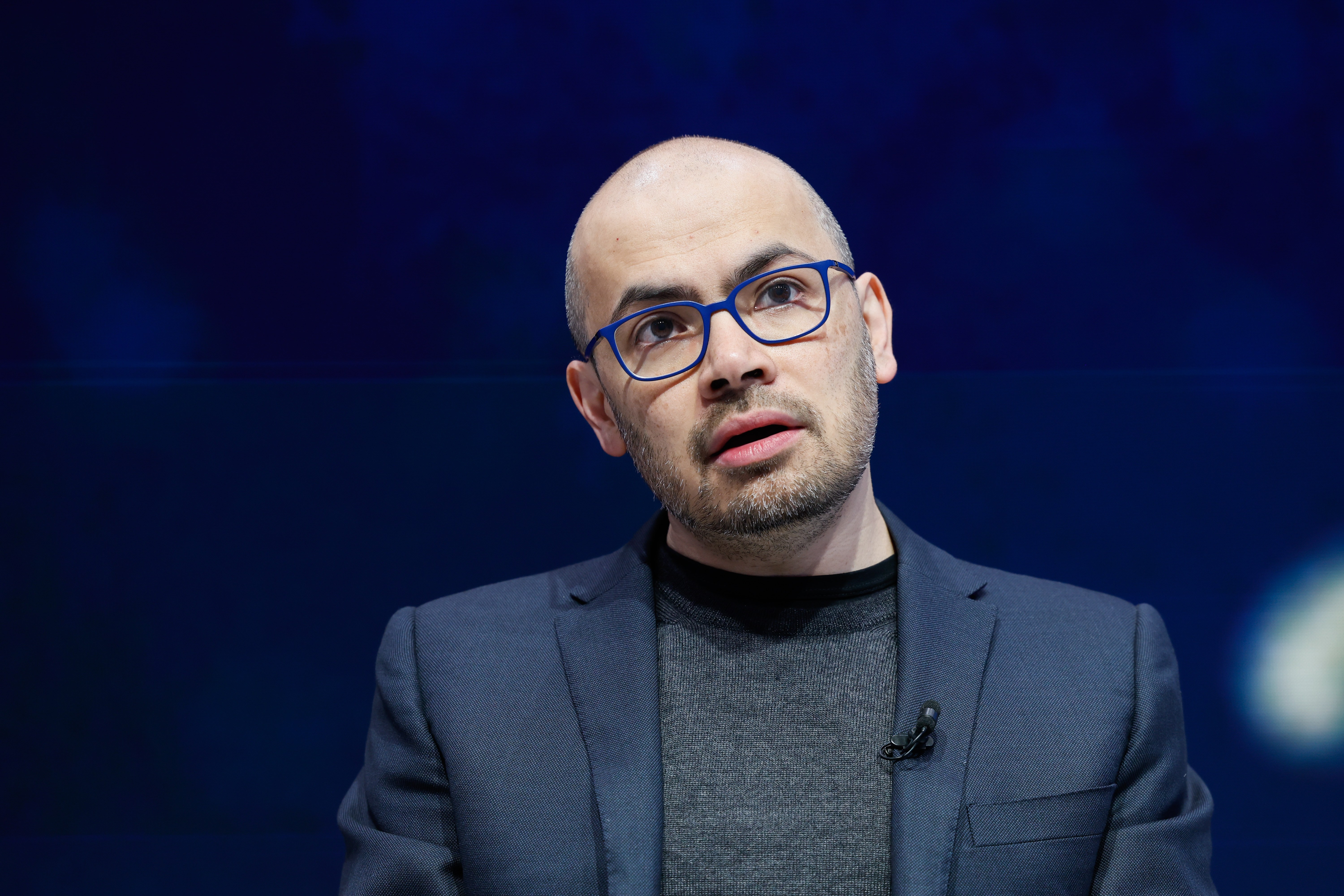
Late on the afternoon of 6 July 2026, a short, identical message ricocheted across the same network of accounts that have spent a decade turning fragments of news into geopolitical weather: Klaus Schwab, the 88-year-old founder of the World Economic Forum, had filed a criminal complaint in Geneva after discovering a covert listening device in his home office. The original line of reporting traces to Bloomberg, with the wire item itself picked up at 17:15 UTC by an aggregator channel and amplified, almost word-for-word, by Disclose.tv at 16:45 and again at 16:46 UTC. None of those pickup posts added sourcing beyond Bloomberg. Within ninety minutes the story had circulated to every corner of the financial-Twitter information loop — the kind of transmission speed that usually means the underlying claims are thin.
The complaint matters less for what it tells us about a wall wart or a pinhole microphone in Cologny than for the irony it pins to the wall: the man whose annual gathering in Davos spent more than a decade lecturing governments, tech platforms, central bankers and defence ministries about the political economy of mass surveillance, AI safety and digital sovereignty has himself become the subject of a state-of-the-question he helped put on the global agenda.
The complaint, in plain language
According to the Bloomberg line carried by the Disclose.tv transmissions on the afternoon of 6 July 2026, Schwab filed the complaint with authorities in the Canton of Geneva, alleging that a concealed listening device had been found in his home office. The complaint, by Swiss practice, hands the matter to the Geneva public prosecutor's office; a formal criminal investigation, if opened, would be led by cantonal police under the supervision of the prosecution, with the federal intelligence service (NDB) involved only if a foreign-state vector were credibly alleged. The Swiss press code means that once a complaint is filed and a probe is opened, the prosecutor issues minimal confirmations and lets the file run. There is no public docket, no hearing schedule, and no obligation on investigators to confirm or deny the existence of a device.
For that reason the Bloomberg item stays at a single plane of confirmation: a complaint, made by a named complainant through his lawyer, alleging a device, in a defined location, with no public identification of who placed it or why. The most likely outcomes, judging by the decade of comparable Swiss cases, are either a quiet dismissal for lack of evidence on attribution or a multi-year inquiry that produces no public finding. What the case does, immediately, is provide a testbed for the German-, French- and Italian-language Swiss press — Blick, Tages-Anzeiger, Tribune de Genève, 24heures — none of which had, in the hours after the Bloomberg item landed, matched the wire confirmation with independent detail.
The counter-narrative — why the case is being read as theatre
Among the audiences this story travels to fastest — the conspiratorial fringes, the encrypted-messenger-trading chat rooms, the Geneva old-money set, and a slice of the Davos-sceptical commentariat on the political centre-left — the dominant read is that the complaint is itself a signal. In that framing, a sitting founder of the world's most-photographed governance forum does not quietly find a microphone and go to the police; he goes to the police because he wants the matter on the record, in the open, and on Bloomberg's front bench. By that logic the device is real, the complaint is real, and the public step is meant to convey a message — to a private audience — about what is and is not acceptable in this decade's corporate and political espionage.
A second reading, more sceptical still, treats the device as a stage prop. The argument runs that surveillance cases filed by ultra-high-net-worth individuals in Switzerland are routinely public-relations vehicles disguised as legal filings: they get the complainant on the front page without exposing any evidence in court, and they signal vulnerability in a way that flatters both the complainant and the security services around them. Bloomberg's wire copy is consistent with either reading — it carries the complaint, names the device, and does not characterise intent.
A third reading, less colourful but more institutional, is that the complaint will simply run its course. The Geneva prosecutor's office does not need to maintain a particular public posture; it can decline to confirm the existence of a device investigation for years, and the complainant retains the right to convert the matter into a private civil action against an unidentified party. Swiss private international law has, over the last twenty years, produced a small library of cases in which powerful complainants cite intrusions at their chalets and primary residences but quietly settle behind bar associations rather than pursue attribution. None of that is in the wire copy; the thread context provides no further fact, and any inference beyond the wire copy is editorial speculation.
Why Schwab is the wrong complainant, and the right one
The biographical case is unusual. Klaus Schwab is not a Russian oppositionist in a Berlin townhouse, a Saudi exile in a Knightsbridge penthouse, or a Turkish journalist in a Zurich safe house — categories that have produced the bulk of the last decade's Geneva surveillance cases. He is the founder of a Swiss foundation whose explicit remit, since the early 2010s, has included the political risk of mass surveillance and the governance of artificial intelligence. The WEF's annual Global Risks Report, in successive editions from 2014 onwards, has consistently named cyber-espionage, data interception and the weaponisation of personal information among the top tier of cross-border risks. The forum's Centre for the Fourth Industrial Revolution hosted working groups in Geneva, San Francisco, Tokyo, Beijing and Dubai whose subject matter was, in part, the very technologies whose misuse his complaint now alleges.
This is what makes the case, on its own facts, useful as a stress test of the framing Davos itself pushed. The forum's preferred language for the last decade has tended to treat surveillance as something done by states to populations, mediated by platforms, and constrained by good governance. The complaint inverts the frame: the population is one person, the platform is a literal device in a private residence, and the governance arrangement is a cantonal prosecutor's office with limited extraterritorial reach. If the device turns out to be state-sponsored, the file will be referred upward; if commercial or private, it will not. Whichever way it goes, the case speaks to a gap the forum's own work left open — the question of what an individual at the apex of the global corporate-political class actually does, in practice, when their own perimeter is breached.
A structural frame: surveillance as a normal product of the decade
The deeper story of the last ten years is not that someone allegedly tapped Klaus Schwab's office. The deeper story is that the technological and market conditions for tapping it have become routine. Off-the-shelf cellular and network-borne intercepts, miniaturised audio devices that fit inside power strips and cable glands, and remote-exploit brokers operating on three-year contracts from Tel Aviv, Dubai and Singapore have, since the Pegasus disclosures of mid-2021, become a functioning market rather than a state monopoly. The commercial spyware industry has matured to the point that a wealthy individual's threat model is indistinguishable, in technical terms, from that of a regional prosecutor's office.
A decade ago, a wiretap of an ultra-high-net-worth residence in the Geneva basin would almost by definition have been the work of a foreign intelligence service, normally with the knowledge of the Swiss federal intelligence service. Today, the menu of plausible adversaries is wider and the technical signature is shallower. That has implications for how the Schwab file will be investigated. Cantonal police will look for device provenance — supplier, model, frequency fingerprint — and the device itself, if recovered, will produce more honest evidence than the complainant's motivations ever can. The structural news, in other words, is not about Schwab or about Davos. It is that the surveillance market has flattened, and the Kafkaesque result is that the man who warned of this flattening most consistently has now had to use his own filing cabinet to defend against it.
The stakes — what the file actually decides
For the Swiss system, the complaint is a small but instructive test of how the cantonal prosecution handles intrusion cases that touch the politically connected. Geneva is one of the few jurisdictions in Europe where a high-status complainant can file, see the file suspended for years, and still obtain what they wanted from the public act of filing — a real deterrent effect, on certain categories of adversaries, and a media mile. The downside is the loss of credibility if the file is perceived as orchestrated. The WEF, whose brand depends on appearing unbothered by the political weather, now has to either confirm the device, characterise the threat, or stay quiet long enough for the news cycle to pass.
For the global corporate-political class, the case is more material. The Davos circuit — chief executives, finance ministers, sovereign-wealth-fund chiefs, the senior partners of Western advisory firms — travels with a security architecture that has, since 2022, treated mobile devices as compromised by default and used dedicated meeting rooms and sealed communications channels for sensitive deals. Schwab's complaint suggests that even the apex of that architecture, the host's own residence, is not regarded by him as reliably secure. The downstream effect on conference security briefings, on the cost of secure travel for WEF participants, and on the forum's own internal posture is concrete and measurable, even if no part of it is in the wire.
For the broader debates that Schwab's own forum spent a decade hosting — on AI safety, on platform governance, on the misuse of commercial spyware, on cross-border data sovereignty — the case is an unintended demonstration that the forums' policy language has outpaced the operational security of even their own conveners. The WEF's working groups will continue to publish; the working-group members will continue to convene. But the room in which they meet is now a fraction more complicated than it was last week, and the meeting agenda will need to acknowledge that.
What we do not know, and where the evidence thins
Several material questions remain open. The wire copy does not specify whether the device is alleged to have been live at the time of discovery, whether it was transmitting or storing, what its likely operational date range was, what the complainant's counsel has characterised as the suspected vector, or whether the filing names a category of adversary (state, commercial, private). Cantonal prosecution practice does not require public disclosure of any of these, and the Swiss federal intelligence service, when engaged by cantonal authorities, does not confirm or deny the existence of investigations. The Bloomberg wire is, in effect, a confirmation that a complaint exists — not that a crime occurred, not that an adversary has been identified, and not that the forum intends to characterise the matter further. Until the prosecutor's office either opens a formal investigation — at which point a thin public notice will issue — or declines to open one, the file's content will remain the complainant's narrative.
— Monexus is treating this as a long-form security beat story rather than a Davos-scandal story. The wire deserves a measured read: a high-profile complaint in Geneva, named in Bloomberg, picked up by aggregators with no additional sourcing. The larger pattern — what a ten-year programme of Davos-led agenda-setting on mass surveillance now looks like in the rear-view mirror — is the appropriate level for a publication that has spent its first year paying attention to how the digital-governance story is framed.
Wire provenance
This editorial synthesis draws on the following public wire/social posts:
- https://twitter.com/disclosetv/status/20741
- https://t.me/disclosetv
- https://t.me/osintlive
- https://t.me/ClashReport
- https://en.wikipedia.org/wiki/Klaus_Schwab
- https://en.wikipedia.org/wiki/World_Economic_Forum
- https://en.wikipedia.org/wiki/Cantonal_police_of_Switzerland
- https://en.wikipedia.org/wiki/Federal_Intelligence_Service_(Switzerland)
- https://twitter.com/disclosetv/status/20741
- https://t.me/disclosetv
- https://t.me/osintlive
- https://t.me/ClashReport
- https://en.wikipedia.org/wiki/Klaus_Schwab
- https://en.wikipedia.org/wiki/World_Economic_Forum
- https://en.wikipedia.org/wiki/Cantonal_police_of_Switzerland
- https://en.wikipedia.org/wiki/Federal_Intelligence_Service_(Switzerland