Silverstone rewires the Grand Prix experience — quietly, for the fans the sport usually forgets
A BBC Sport feature on navigating Silverstone with an autistic child sat beside Charles Leclerc's win on the same weekend — together they sketch a sport learning, fitfully, to widen its front gate.
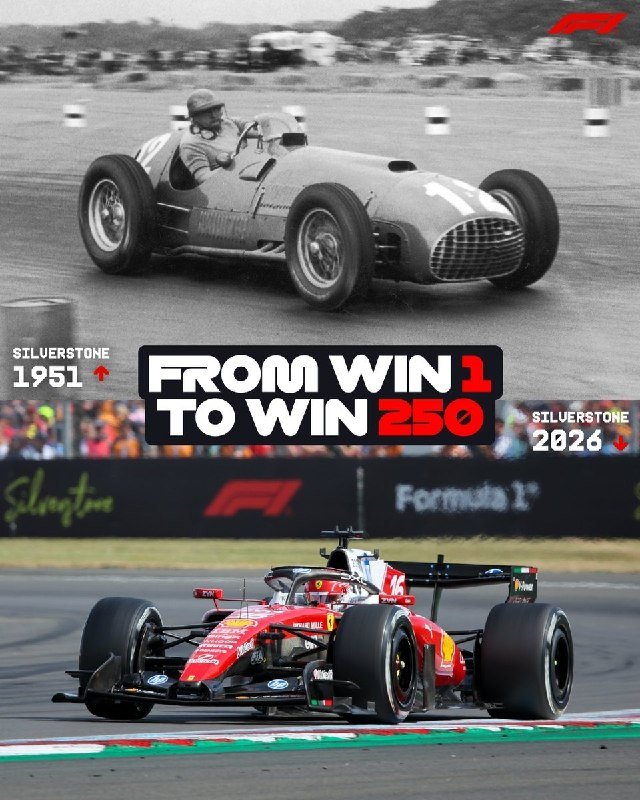
The British Grand Prix weekend at Silverstone, contested on 5 July 2026, will be filed in most newsroom ledgers as a Charles Leclerc victory and a Ferrari headline. That is fair enough on the timing sheet. But a quieter, more durable story came out of the same venue 24 hours earlier, when BBC Sport published a first-person account from a parent describing what it actually takes to take an autistic child to a live Formula 1 race — and what the circuit has done, in recent seasons, to make that possible.
The pairing is not sentimental. It points to a structural question the sport is only beginning to confront: who, beyond the premium-ticket holder, is Grand Prix racing actually for? Silverstone's answer — quiet rooms, sensory maps, designated viewing banks, trained stewards — is partial and often improvised. It is also, on the available evidence, more developed than anything the circuit's rivals have published.
The accessibility programme, in plain terms
The BBC Sport piece, dated 5 July 2026, walks the reader through the practical apparatus. The author's son responds to the sensory load of a Grand Prix weekend — engine noise, dense crowds, the unpredictability of an unstructured day — in ways that make an unmanaged visit untenable. Silverstone's response, in the parent's telling, includes quiet spaces positioned away from the loudest grandstands, pre-event sensory maps that flag the high-stimulus zones, accessible viewing platforms, and stewards briefed to recognise the situations families can find themselves in when a plan collapses mid-afternoon.
None of this is glamorous. None of it makes the broadcast cut. But it does convert a category of fan — one the sport has historically written off as too difficult, too expensive to accommodate, or simply too niche to design for — into someone the circuit is willing to plan around. The piece is also useful for being unsparing: it describes the points where the provision still frays, the staff who had clearly not been briefed, the sensory map that did not quite match the layout on the day. Silverstone is not a finished product; it is a work in progress that admits its seams.
The race, for context
On the track, the 5 July running produced a Ferrari 1-2 and a Leclerc win, confirmed by his own team radio, an excerpt of which circulated on Formula 1's official Telegram channel in the hours after the chequered flag. The radio message — short, unrehearsed, the kind of raw audio the team releases precisely because it cannot be improved by scripting — is the conventional Sunday afternoon currency of the sport: triumph, fatigue, gratitude.
The accessibility story and the race result sit on the same weekend by editorial accident. They should not have to share column inches. They are answering different questions. The race result asks who drove the fastest car on the day. The accessibility story asks whether the venue, as a piece of public-facing infrastructure, treats its least-favoured customers as a planning constraint or as a planning input. The second question is the one with a longer half-life.
Why this matters beyond Silverstone
Formula 1's growth model under Liberty Media has rested on three pillars: a Netflix-shaped global audience, a swelling calendar of destination races, and a premiumisation strategy that has steadily raised the cost of attending in person. The combination has produced packed grandstands in Austin, Jeddah and Miami, and it has also produced a sport whose gate price — ticket, travel, accommodation — puts a race weekend out of reach for a great many of the people who watched Drive to Survive and decided they might like to come.
Accessibility is not affordability, and the two should not be confused. A family for whom the noise and the crowds are the binding constraint is a different family from the one priced out by the weekend pass. But the structural pressure is the same: a sport expanding its broadcast footprint faster than it is widening its physical one. Any circuit that takes accessibility seriously is, in effect, hedging against the version of itself that exists only on screen — the version that anyone can watch, in any country, on a Sunday afternoon, but only the privileged few can attend in person.
The motorsport press has tended to cover accessibility as a soft feature — the human-interest sidebar, the feel-good kicker. That framing is patronising and also slightly wrong. The circuits that build credible accessibility infrastructure are doing something measurable: they are extending the addressable audience for a live product that is otherwise contracting. Silverstone, the oldest venue on the calendar, has a particular reason to think about this — its location in the British motorsport heartland gives it a deeper pool of returning families than most flyaway races can plausibly cultivate.
What remains uncertain
The BBC Sport piece is a single parent's account. It is not an audit. It does not enumerate how many quiet rooms exist, how many stewards have been trained, what proportion of tickets at the accessible viewing banks are sold at the standard price rather than as a premium add-on, or whether the provisions described survived the full weekend's weather and crowd flow. The article also does not compare Silverstone's programme against peer circuits — Monza, Spa, Barcelona — in any systematic way. The implication that Silverstone is ahead of the field is plausible but not yet demonstrated.
What can be said is that a major-circuit operator published, in its own national broadcaster, an account that names both the help it gave and the help it failed to give, and did so on the eve of its flagship race. That is a different posture from the one most circuits adopt, which is to describe accessibility in marketing language and leave the operational details to the day. Whether other circuits will follow — or whether Silverstone's lead is a marketing artefact that softens once the cameras leave — is the question worth tracking across the rest of the 2026 calendar.
The race result will be forgotten by mid-July. The quiet room, if it is staffed next year and the year after, will not be.
This piece treats Silverstone's accessibility work as a structural question about who live sport is actually built for, rather than as a feel-good sidebar to a race weekend.
Wire provenance
This editorial synthesis draws on the following public wire/social posts:
- https://t.me/s/formula1