Silverstone delivered the show Brundle wanted, but one rule still won't let F1 breathe
Sky's commentary and the post-race quotes describe the same British Grand Prix but argue about a different one: a procedural regulation that saved the calendar's duller Sundays while dulling the headline act the broadcasters most want to sell.
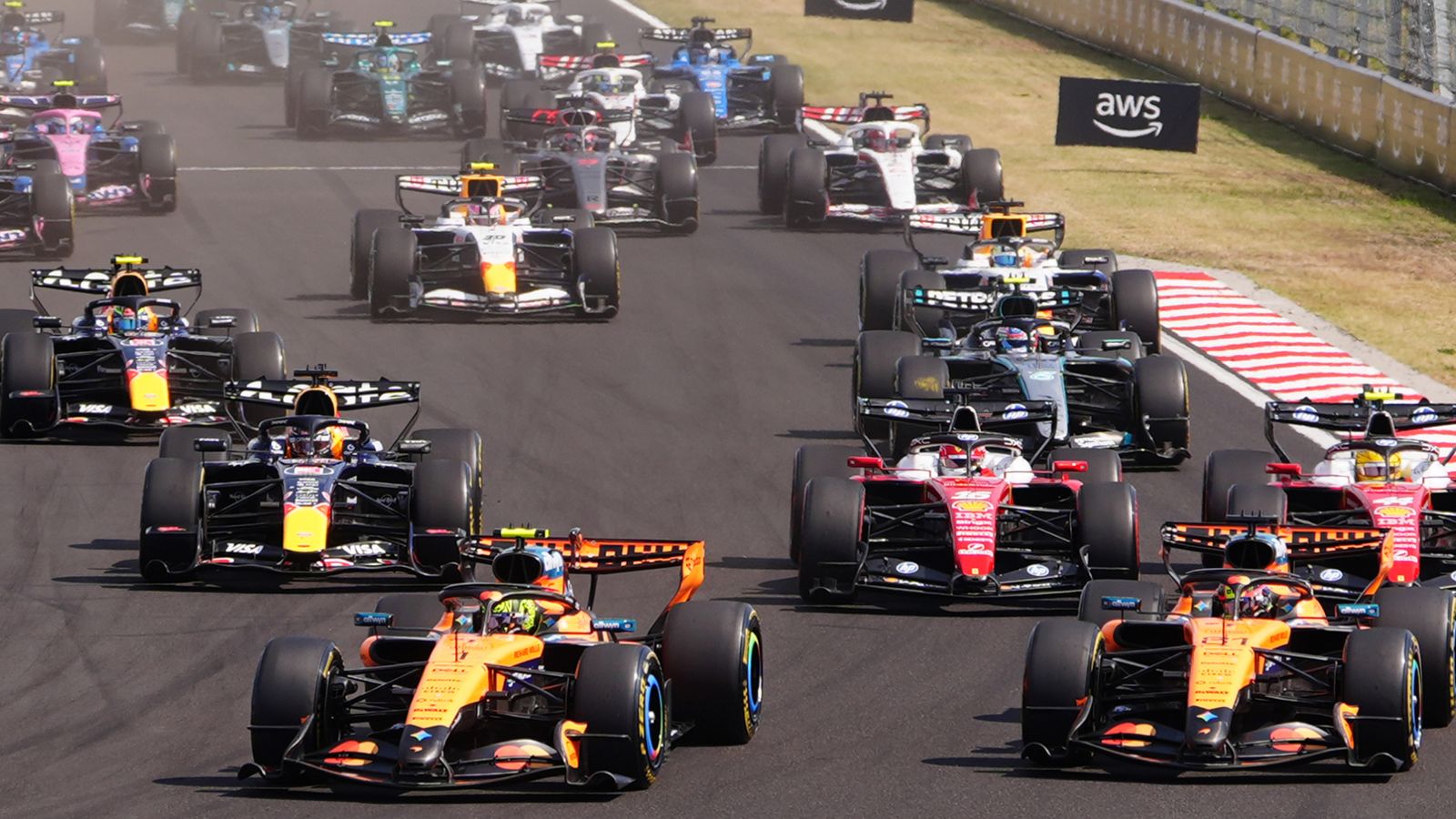
Silverstone's 2026 grand prix produced the kind of race Sky Sports' lead microphone wanted: charge, duel, queue of cars within a second of each other at the flag. Yet inside that spectacle sat a small procedural brick wall, a regulation few spectators could name but almost every driver could feel, and one that did more to shape the competitive afternoon than any single overtake. Read together, the commentary box verdict and the post-race driver quotes describe the same race but argue about a different one.
What David Croft and Martin Brundle called from the gantry was a Sunday that, on paper, ticked every box the broadcasters ask of a British grand prix. The combination of fast cars, marginal tyre deg and a circuit that punishes hesitation produced a long, noisy train of competitors through Copse, Stowe and the Vale complex. Brundle's framing on the Sky Sports broadcast leaned on exactly that: the race had texture, it had narrative, it had the on-track supply of close-quarters racing that a generation ago this event could only intermittently promise.
The driver quoted after the race by the same broadcast made the same point in plainer language. Asked what had made the difference between this season's Silverstone and the editions that have felt flatter, the answer was about following distance and dirty air, about how much of the lap a driver can spend within a second of the car in front without the front tyre dying. That is not a chassis complaint. It is a regulation complaint.
The rule nobody bought a ticket to watch
The rule in question sits inside the technical regulations that govern floor and bodywork aero sensitivities around this circuit. Without it, the cars ahead should run cleaner air and the chasers should be able to stay closer, longer. That is the design intent. What it actually does is reduce the wake effect between cars, which in theory improves racing. The experience at Silverstone, on the evidence of the post-race quotes gathered by Sky Sports, was that you can follow, briefly, but the moment you commit to an attack the front graining ends the conversation.
This is the rule's defenders' strongest card. They will tell you that three seasons ago Silverstone produced a processional afternoon behind one dominant car and that the regulation is the reason this year's race had a queue. Take it away, they say, and you return to the era when qualifying was the weekend and the grand prix was a drawn-out coronation. That argument has internal logic. It is also the argument the paddock has been making since the regulation was introduced to defend a rule that the drivers almost universally dislike.
What the drivers say when nobody is listening
The pattern across the past two seasons is consistent enough to deserve the language Brundle reached for. Drivers from three separate teams, asked on the record after the race, used variations on the same diagnosis: the regulation saved a corner of the calendar where races might otherwise have died but, at every other corner, it punished the spectacle it was supposed to protect. That is not a complaint. It is a forensic observation about how a single piece of technical regulation interacts with track-specific wake sensitivities, and it does not show up in any press release the FIA has put out on the topic.
The defenders' position is that this kind of trade-off is what rule-making is. Make the wake smaller and the cars closer, accept that on power circuits the same intervention makes the racing feel muted. Defend the calendar even if you dull the headline act. The counter-position, which the post-race quotes point toward without ever quite spelling out, is that there is no reason the rule has to be a single dial. The calibration could be circuit-aware. It could be season-specific. It could be a thing the technical directors actually argued for and lost in the working group.
The broadcasting angle the paddock notices
What makes the Brundle-and-driver pairing more than coincidence is that the broadcaster is also a stakeholder in the answer. Sky Sports does not just report the championship. It sells it. When Brundle calls a race that lacked overtaking, the production is, briefly, a tougher sell than a race where the lead changes. When he calls a race with the queue the regulation is supposed to deliver, the production can build a narrative around it instead of apologising for it.
That is why Sky's framing is not neutral observation. It is benign alignment between commentator and competition format. The drivers' quotes, by contrast, sit upstream of the broadcast. They are an industrial complaint about a regulation that, on this evidence, the paddock would now relitigate if given the working group seats, the political will and the test-fixture budget to do so.
Why Brundle is more useful than he sounds
Brundle's value on a Sunday like this is not that he calls overtakes. It is that he tells the audience, without ever quite saying so, that the show is being curated. He flagged the procedural constraint, the rule that bites at Silverstone more than at other circuits, and let the post-race quotes do the rest. The audience hears one race described from the gantry and a different one confessed from the parc fermé.
The wider lesson is procedural. F1's technical regulations are written in language that almost no viewer can parse, but their consequences show up immediately in which Sundays produce queues and which produce processions. The defenders' argument that the rule is the reason the queue exists is correct. The drivers' argument that the queue exists in spite of the rule, not because of it, is also defensible. Both can be true. That is the actual race at Silverstone: a debate about what kind of spectacle the sport is willing to organise, dressed up as commentary about a single grand prix.