Sky's bid for ITV's channels is a media-consolidation story — and a Polish one
Comcast's Sky is reportedly days from buying ITV's broadcast and streaming arm. British press treats it as a scheduling story. Polish creators on the losing side are calling it what it is.
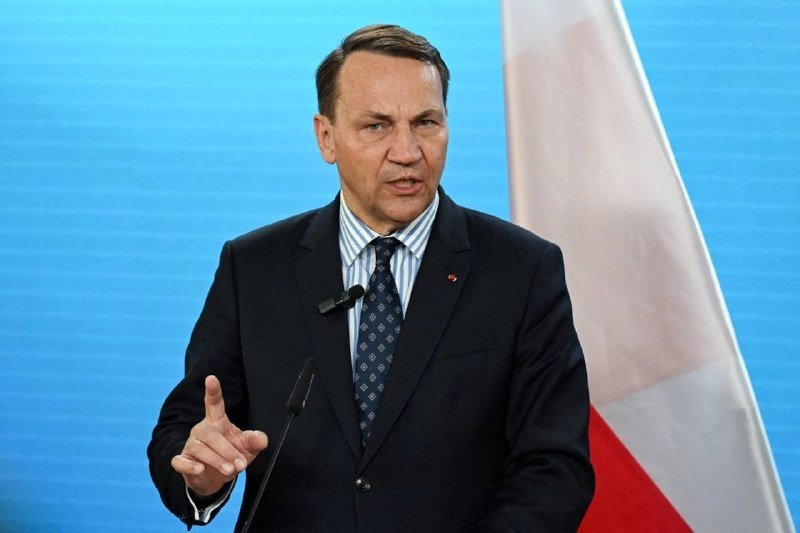
The story the British press is preparing to tell, as Sky's parent Comcast moves to acquire ITV's broadcast and streaming channels, is a story about your television. Which shows survive, which get cut, what the schedule looks like come autumn. That is a real story. It is also, on the evidence already on the timeline, not the most interesting one.
What is actually happening is the consolidation of the United Kingdom's last big commercial free-to-air broadcaster into the hands of a US-headquartered cable-and-streaming conglomerate, with predictable downstream effects on producers in smaller European Union markets who have spent the last decade building their catalogues around the British public-service-broadcaster ecosystem. The Polish reaction, which has been loud and is being treated by London correspondents as a curiosity, is in fact the structural tell.
A bid dressed up as a scheduling question
According to BBC News reporting published 2026-07-06 at 06:20 UTC, an announcement on Sky buying ITV's TV and streaming channels is expected imminently, with the framing pitched firmly at British consumers. The press treatment will be continuity — will Love Island survive, what happens to the regional newsrooms, who keeps the sports rights. These are not illegitimate questions. They are also not the question.
The question is what happens to the British public-service-broadcaster model — the lightly regulated, advertiser- and licence-fee-supported infrastructure that has, for decades, been a de facto commissioning engine for independent producers across the EU. ITV plc has been thinner and more indebted than the BBC for years; it is, in plain terms, a distressed asset. Distressed assets get bought cheaply by the largest balance sheets in the room. Comcast owns Sky, owns NBCUniversal, owns Peacock, owns a film studio, and is the largest cable operator in the United States. The negotiating asymmetry is the story before the press conference even happens.
The Polish counter-narrative, and why it is more honest than the British one
Polish creators and industry voices on X have, since the rumours firmed up, been blunt in a register the British press is choosing to read as melodrama. A widely circulated 2026-07-05 post from the account @sknerus_, attached to a video clip and captioned in English "Poland is still not ready for this," captured a sentiment running through Warsaw's independent production sector: that the deal is not a British domestic media story at all, but a Europe-wide one in which the country's commissioning leverage is being negotiated away in a transaction it has no seat at. A follow-up post from the same account the same day, paired with another video and the caption "What a bummer," struck a more resigned register — the read of an industry that has been here before and knows the script.
Polish independent producers have, for the better part of a decade, supplied ITV Studios' international formats, factual strands, and lower-cost drama. The economics were always weighted toward London, but the work was real and the catalogues grew. Consolidation under a US balance sheet does not obviously change the production geography in the short term. It does change the negotiating geography in the long term, because the counterparty is no longer a British commercial broadcaster with a domestic regulator to answer to, but a US media conglomerate whose primary disclosures are to Wall Street and whose primary regulatory interlocutor is in Washington, not Brussels.
The structural frame, in plain terms
What is being negotiated is not a channel. It is a corridor. The pattern is familiar from the previous decade's deals in European media: a US-headquartered operator acquires a regional broadcaster with deep local catalogues and EU-wide distribution, the European Commission clears the deal on competition grounds that turn on overlap rather than on cultural or sovereignty grounds, and within a few years the local commissioning budget has been optimised into a global one. The complaint from Warsaw, Berlin, and Madrid is the same complaint they raised in 2014, in 2018, and again in 2022: that the framework for evaluating these deals in Europe is designed to spot price effects in advertising markets, and is not designed to spot the slow attrition of a regional commissioning economy.
The counter-argument — and it is a real one — is that the British free-to-air model was already hollowing out before Comcast turned up. ITV's advertising base has been eroded by the same streaming migration eating every linear broadcaster in the West. Some version of consolidation is coming whether Sky buys the assets or a private-equity buyer does. The choice is not between the status quo and Comcast. It is between a distressed-asset sale to a US incumbent and a distressed-asset sale to a private-equity strip-and-flip. That is not a defence of the deal. It is a description of the constraint.
Stakes, and what remains unclear
If the trajectory holds, the winners are predictable: Comcast's content library, its advertising targeting stack, and its leverage in the next round of US sports-rights negotiations. The losers are also predictable: Polish, Czech, and Baltic producers who lose a commissioning counterparty that, whatever its faults, was a public-company regulated in London rather than a private subsidiary of a Delaware C-corp; the British regional newsrooms that survive on the thinnest of margins; and, more broadly, the idea that the European audio-visual sector can be governed by European competition law when the relevant counterparties are no longer European.
What remains genuinely uncertain, on the evidence currently in circulation, is the price. The British press has not published a number. The European Commission, which will be asked to clear the deal, has not opened a public file. The Polish government, which has standing to comment on cultural grounds under the EU's Audiovisual Media Services Directive, has not been quoted in the wire reporting reviewed here. The pattern of these transactions is that the political pushback comes late, comes from the smaller member states, and comes after the price is already set. The question is whether this time is any different.
This article cites BBC News reporting and Polish industry reaction on X; the wire has framed the deal as a British scheduling story. Monexus frames it as a European media-architecture story, in line with how the smaller EU markets are reading the timeline.
Wire provenance
This editorial synthesis draws on the following public wire/social posts:
- https://x.com/sknerus_/status/2072858841729921026
- https://x.com/sknerus_/status/2073693100837425152