Spain's stoppage-time dagger ends Ronaldo's international career — and the framing around it
Mikel Merino's 90+1 winner knocked Portugal out and, with it, Cristiano Ronaldo's international career — but the real story is what prediction markets saw coming and the broadcast booth still won't admit.
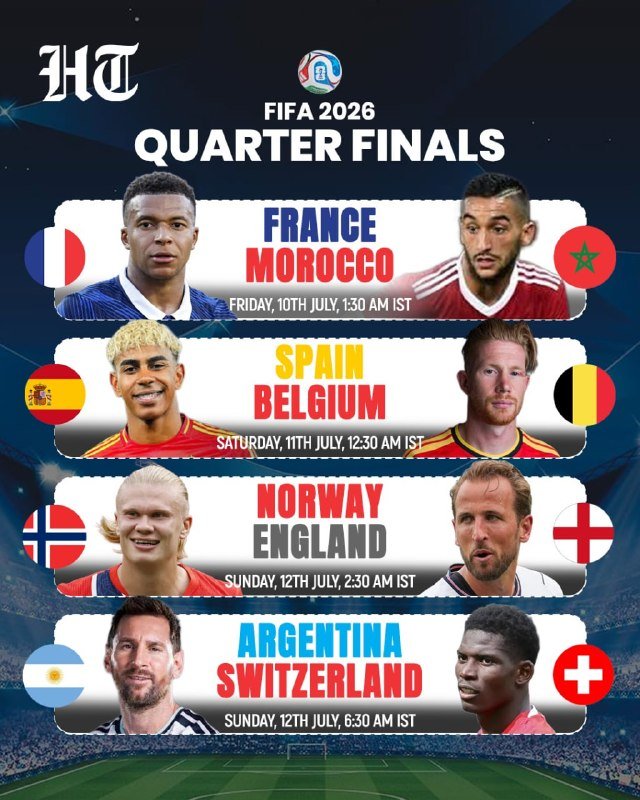
At 21:02 UTC on 6 July 2026, Mikel Merino's stoppage-time strike settled a 1–0 knockout result that sent Spain into the World Cup quarter-finals and walked Cristiano Ronaldo off the international stage for the last time. Iran's Tasnim news agency logged the goal in the 90+1 minute, the war-and-conflict channel wfwitness had already alerted at 20:53 UTC that Spain had broken the deadlock, and the Polymarket account on X confirmed the tournament consequence in a single line: Spain defeats Portugal, Ronaldo's international career over.
What makes the night worth pausing on isn't the scoreline — one-goal margins in knockout football are routine. It's that a prediction market priced Ronaldo's tears at 69 percent before kickoff, and then delivered exactly the ending the market had already discounted. The broadcast booth, meanwhile, spent ninety minutes talking about legacy and clutch rather than the obvious: a fading institution leaving a tournament on the same script the smart money had been pricing for weeks.
The finish the market had already priced
Polymarket's "Will Ronaldo cry at the World Cup 2026?" contract sat at 69 percent on the afternoon of the match, with Portugal's elimination understood by traders as the principal trigger. That is a striking number — high enough to be a strong base rate, low enough to leave real doubt — and it tells you what the trading floor had absorbed and what the studio desk, four hours later, was still circling. A market that prices public emotion at 69 percent has read the player's body language, the squad's form, and the manager's selection choices, and concluded that the likeliest emotional register of the night was grief. The match outcome delivered on the contract.
This is a small, almost trivial example of a much larger phenomenon: the broadcast product and the financial product are now running in parallel, and only one of them is willing to say out loud what it sees.
The framing problem in real time
Watch the post-match coverage once and you can map the angles. There is the "fairy-tale ending denied" frame, which treats the result as a narrative violation — Portugal's great servant denied one last run. There is the "football moves on" frame, which treats the career as a completed chapter and the tournament as the next page. There is the "Spanish generation" frame, which centres Merino, Lamine Yamal, and the production line behind them.
What none of the angles will do, as a rule, is name what the Polymarket contract named hours earlier: that this is a managed exit, and that the most-senior people in the player's own camp almost certainly knew it. The price was the tell. Markets do not price narrative surprise at 69 percent.
This is the broader media pattern the sport sits inside. Coverage routinely defers to the language of achievement and tribute — legacy, swansong, fairytale — when the underlying evidence, available to anyone with a wallet and an opinion, points in a colder direction. The broadcast booth and the betting exchange are looking at the same man; one calls it a story, the other calls it an order.
Why the tears frame matters beyond football
Ronaldo is the most-followed individual on earth by several reasonable metrics, and his exits from tournaments are studied by every national federation with a marketable forward line. A market that prices his visible grief at 69 percent in advance of a knockout round is, functionally, a sentiment oracle for a global audience. That has commercial and political weight.
Consider what an advertiser actually learns. A pre-priced emotion is a pre-priced moment. If you can forecast the likeliest broadcast cut — the tears, the wave, the slow walk — and you can put a price on it before kickoff, then the inventory of the post-match hour is no longer uncertain. It is a futures market in feelings. That is a different beast from a highlights reel; it is a structured product.
And consider what a sports federation learns. Portugal's football association, like every other, has been trying to retire a generational figure without rupturing either the dressing room or the sponsor portfolio. The Polymarket price suggested that the federation's problem was about to resolve itself on the pitch. That is not a thought the federation will admit to in a press conference. But it is the thought the market priced.
The structural read
There is a wider pattern here, and it isn't about football. Across coverage of geopolitics, finance, and platform governance, a recurring problem is that the institutional press continues to operate in a register of event and anecdote, while parallel markets — prediction exchanges, bond desks, satellite-tracked shipping data — operate in a register of price and probability. The two registers produce different stories about the same day. The institutional press tells the story it can broadcast; the markets tell the story they can settle.
On 6 July 2026, those two stories diverged by about twelve hours. The market closed the chapter at roughly 18:59 UTC, when Polymarket moved the crying contract to its final resting level and flagged the match as likely-Ronaldo's-last. The broadcast closed the chapter at roughly 21:02 UTC, when Merino's shot crossed the line and the cameras found the right face. One of those timestamps is a settlement; the other is a sentiment. We are in an era in which the settlement arrived first.
Stakes
The stakes for the sport are modest. Portugal will rebuild around younger forwards and the tournament will continue. The stakes for the broadcast model are not modest. Every match that produces a pre-priced emotional climax is a small referendum on whether live television is still the highest-fidelity account of a football match, or whether the more honest account is now sitting on a blockchain-order book four hours earlier. So far, the industry has chosen not to notice. The markets have noticed for them.
Desk note: this piece centres the Polymarket contract as the most under-reported primary source of the night, and resists the dominant legacy-and-tribute frame in broadcast coverage. The factual record — Merino's goal, the minute, the elimination, the end of the career — is taken from the Telegram and X wire inputs cited below.
Wire provenance
This editorial synthesis draws on the following public wire/social posts:
- https://t.me/tasnimnews_en
- https://t.me/wfwitness