A 91st-minute goal, a 19% market — and what Spain's last-second World Cup win tells us about prediction culture
Spain broke Portugal's resistance in stoppage time to reach the quarter-finals. Polymarket had priced that possibility at 19% before kickoff. The gap between those two numbers is the story.
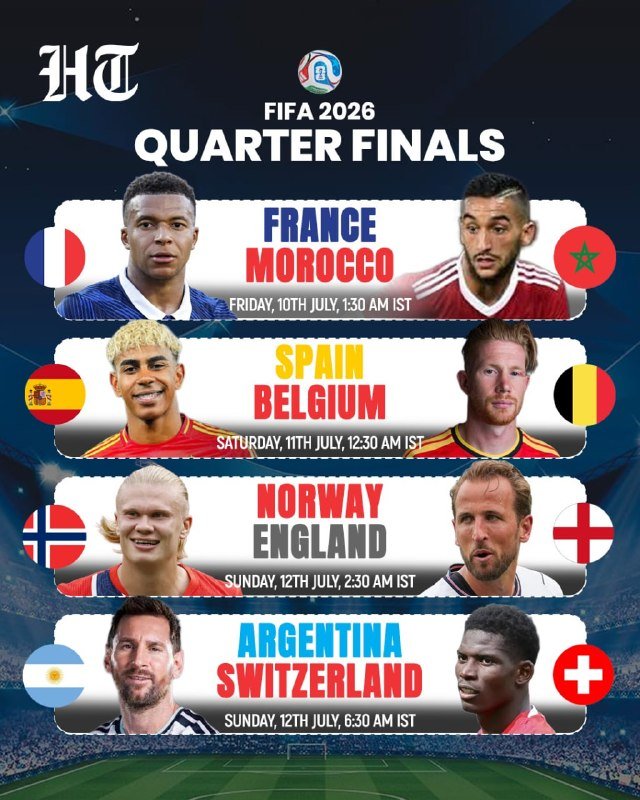
At 20:53 UTC on 6 July 2026, after eighty-odd scoreless minutes in a World Cup knockout fixture between Spain and Portugal, a single goal landed. The Telegram channel @wfwitness, a sprint-news relay that has built a following on rapid play-by-play, broke the news at 20:53: "Spain scores the first goal against Portugal." Inside seven minutes, the post had been updated twice — first to flag stoppage time, then to confirm Spain had eliminated Portugal 1-0 and advanced to the quarter-finals. By 21:02 UTC, prediction-market tracker Polymarket had repriced Spain's tournament win probability: a 19% chance Spain wins the World Cup.
Those two timestamps, nine minutes apart, capture a growing fault line in how sports news moves through the public sphere. A result and a probability, announced in near-real-time by a Telegram account and a derivatives platform, are now the canonical way a scoreline lands.
The goal that reset the ledger
Every knockout round produces at least one moment where the tournament's structure pivots on a single action. Spain's 91st-minute strike was that kind of moment: the kind of stoppage-time goal that retroactively re-prices everything from group-stage models to outright-winner futures. Spain's progression changes which quarter-final exists at all, which opponents remain in the draw, and which narratives — Iberian redemption, Portuguese generational handover, Luis de la Fuente's tactical evolution — the next four days of coverage will service.
The market moved in lockstep. Polymarket's 19% read on Spain winning the tournament, posted at 21:02 UTC, is not a sentiment poll. It is a tradable price, backed by real-money positions that anyone with an internet connection can take. The depth of liquidity behind that 19% — how many contracts, what the price was an hour earlier, what it spiked to in the five minutes after the goal — is a separate, harder question, and one the public-market pages do not always surface in real time.
Why Telegram won the wire
@wfwitness's format — fragmentary, timestamped, all-caps emoji headers, minimal commentary — is a genre that has grown up around modern football. It is not journalism in the traditional sense. There is no editor, no attribution chain, no fact-check desk. There is a person, watching the same broadcast as everyone else, typing into a chat client.
That is not a criticism so much as a description of what fits. A 91st-minute goal in a knockout match produces, in order: a flicker of confusion, a millisecond of confirmation from the live feed, a press of keys, a push notification, screenshots, and a wave of restatements by accounts that have not yet seen the goal themselves. Whoever types fastest and most accurately wins the next four minutes of attention. By the time a wire reporter at a major outlet has filed a paragraph, the Telegram post has been bookmarked, screenshotted, and forwarded to group chats with tens of thousands of readers.
The prediction-market overlay
Polymarket's role here is harder to categorise. It is part exchange, part sentiment thermometer, part narrative engine. A 19% probability for a team that has just advanced to the quarter-finals i