Sri Lanka's Negombo prison riot leaves at least 26 dead in worst jail violence in years
Two days of violence at a prison north of Colombo killed at least 26 people including seven guards and wounded more than 100, exposing chronic overcrowding and a recruitment crisis in Sri Lanka's correctional system.
At least 26 people, including seven prison guards, were killed and more than 100 others wounded across two days of violence at Negombo Prison, north of the Sri Lankan capital Colombo. The toll reported by BBC News on 2026-07-06 marks the deadliest prison unrest on the island in years and is forcing authorities to confront a system that diplomats and rights groups have been flagging for decades.
The riot exposed what an overstretched state had been trying to outrun: facilities built to hold roughly 5,000 inmates operating at multiples of that number, a guard corps hollowed out by recruitment freezes and salary disputes, and a drug-and-organised-crime economy inside the walls that profits when order collapses.
What happened at Negombo
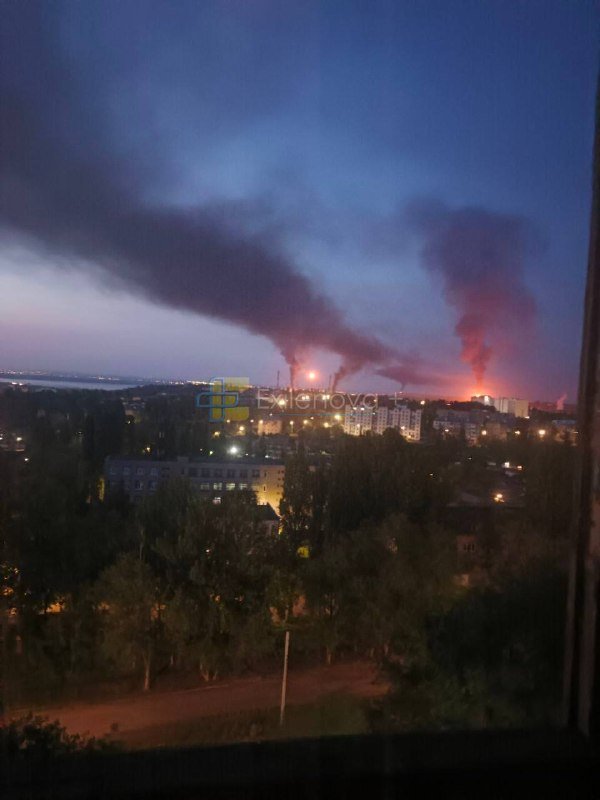
The unrest began on 2026-07-05 and ran into a second day, according to BBC News reporting logged at 14:19 UTC on 2026-07-06. Prison officials told the broadcaster the violence was the worst the country had seen in years. Footage aired by BBC World on the Telegram channel showed smoke rising above the facility as inmates clashed with guards, and the channel's subsequent alert logged the casualty range at 25 dead before rising to 26 once the seven guards were formally counted. Standard Kenya's Telegram coverage carried the higher figure and the explicit identification of seven prison officers among the dead, lending a second independent confirmation to the toll.
The mechanism, as described in the BBC's reporting, is consistent with a riot that begins as a grievance protest by inmates — over conditions, transfers or another internal trigger — and metastasises once weapons are taken from an under-strength guard contingent. Seven dead officers in a single incident is a body blow to a service that was already short-staffed, and it will redraw the internal-security politics of President Anura Kumara Dissanayake's government in the days ahead.
The structural condition underneath the headlines
Negombo is not an aberration. It is a pressure release of a chronic overload.
Sri Lanka's prison system has been operating well above its design capacity since at least the late 2010s, a product of the country's aggressive drug laws, a slow-moving judicial process that keeps remand populations swollen for years, and the collapse of post-2022 rehabilitation programmes after the foreign-exchange crisis that followed the country's sovereign default. International monitors have repeatedly flagged overcrowding and the limited availability of medical and mental-health care behind bars. Those structural complaints are not new; what is new is the frequency with which they are crossing the line from chronic grievance into acute violence.
The guard corps, meanwhile, has been hollowed out. Public-sector salary constraints imposed during the IMF programme era squeezed recruitment, while attrition — retirement, migration to Gulf states, lateral moves to private security — has outpaced hiring. A prison officer killed in a riot in 2026 is, in human-capital terms, more expensive than the same officer killed two decades ago: institutional memory is being dismantled in real time.
The counter-narrative: what the government will argue
The Dissanayake administration, elected on an anti-corruption and reform mandate, will likely attribute the violence to a combination of inmate criminality and the residue of the previous government's harsh-on-crime posture. It can credibly point out that judicial reform — the only durable fix — sits in parliament, not inside the prison walls, and that the country's well-documented organised-crime networks operating inside facilities will exploit any period of leniency.
A less flattering reading is also available, and it deserves airing: any government that lets a prison run at multiples of its design capacity while presiding over a recruitment freeze in the guard corps is choosing to defund its own enforcement capacity. Whether Negombo was a foreseeable failure or a routine strain that escalated is precisely the question that a credible post-incident inquiry — independent of the prison service itself — will need to settle.
What remains uncertain and what to watch next
The sources do not yet specify what triggered the first clash, how many of the dead are confirmed inmates versus staff, or whether weapons seized inside the facility have been recovered. The BBC alert ran 25 dead before the seven-guard toll was confirmed; Standard Kenya's channel carried 26. Until Sri Lanka's Department of Prisons publishes a formal breakdown, the count should be treated as live and revised.
The next 72 hours will tell whether this was an isolated event or the leading edge of a wider pattern. Watch for: a written statement from the Prisons Commissioner; any reference to a presidential inquiry under the Public Security Ordinance; and whether trade unions representing prison officers use the moment to demand the recruitment and pay review that has been deferred for years. A government that buries the inquiry will read this riot as a security problem to be managed. A government that owns it will read it as a governance problem that has finally become too loud to ignore.
Monexus framed Negombo as a structural overflow — capacity, recruitment, governance — and not simply a security lapse. The wire coverage logged with us emphasised the immediate toll; the harder question is why Sri Lanka's corrections system was allowed to drift to this point.
Wire provenance
This editorial synthesis draws on the following public wire/social posts:
- https://t.me/s/StandardKenya
- https://t.me/s/BBCWorldoffl
- https://t.me/s/BBCWorldoffl