Tehran's farewell and the framing problem
Crowds in Tehran turned out on 6 July 2026 for the funeral of Ayatollah Ali Khamenei. Western wires reported the turnout. The deeper question is who the next leader answers to — and whether the story survives translation.
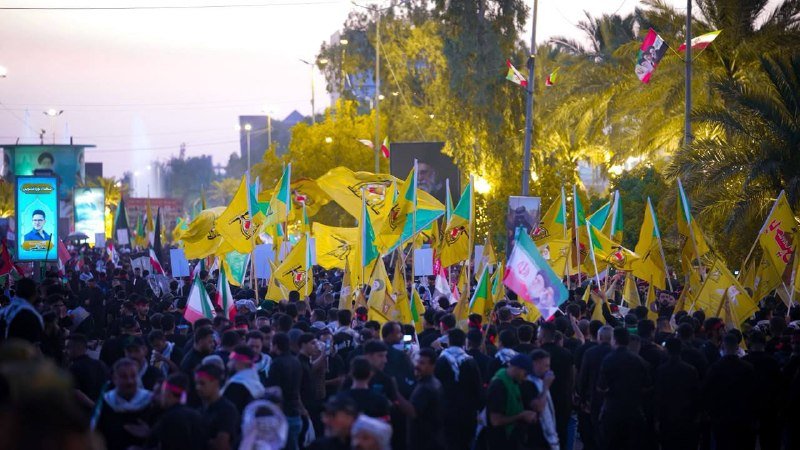
The procession began in central Tehran in the small hours of 6 July 2026. According to the Iranian state outlet Fars, mourners converged on the capital before dawn for the funeral of Supreme Leader Ayatollah Ali Khamenei, whose death the Islamic Republic announced earlier the same week. The English-language arm of Tasnim confirmed large attendance in the first hour of the ceremony; Al-Alam Arabic described "widespread popular participation" continuing through the morning. By 06:00 UTC, Telegram channels affiliated with his office were circulating footage framed around the rallying cry "Rise to God."
What the cameras captured is real. What the captions add to it is the real story.
The headline Western readers will see — and what it omits
Wire coverage in the United States and Europe, where it has run at all, has tended to compress the day's three signals into one: mourning crowds, political uncertainty, and an implicit question about succession. Each of those elements is defensible. None of them, on their own, tells a reader what is actually happening on the ground in Tehran, because none of them addresses the choreography. The funeral is not just a farewell. It is the first public act of the transition of power from Khamenei to whoever inherits the title of Supreme Leader, and Iranian state-aligned outlets have spent the past 24 hours broadcasting that very point.
The omission is instructive. In a country where the Supreme Leader is both head of state and commander of the ideological apparatus that holds the system together, the visual record of the funeral is also a visual record of the system's claim to continuity. To report the turnout without that frame is to inherit, by default, the framing of those who would prefer the system not to continue.
Read the Farsi coverage, not just the cables
Fars, Tasnim, Al-Alam and the channels tied to Khamenei's office are not neutral observers of this story — they are participants in it. But neither are they unanimous in their framing. The Telegram channel associated with Khamenei's office has emphasized his chosen epithets — "the martyr Imam," "Imam of the Oppressed" — in a way that is openly theological and openly political. Tasnim's English arm has tilted toward a register that Western readers will recognize: large attendance, public mourning, the orderly transfer of legitimacy. Fars has run the rawer emotional footage.
The through-line is consistent: whoever follows Khamenei arrives at a job whose popular mandate, whatever one thinks of it as a political model, is being staged publicly and at scale. The framing problem for Western readers is not that Iranian state media is misleading — it is behaving exactly as state media does in a moment of regime-defining ritual — but that most of the translation work is being done by wire services whose instinct, in this region, is to understate organized public life and overstate exceptional violence.
What "popular" actually means here
There is a counter-narrative worth surfacing with equal seriousness: turnout at state funerals in the Islamic Republic is shaped by more than grief. Civil servants, students and members of organized institutions are mobilized; participation can reflect civic duty, religious obligation, social pressure, or the calculation that absence is noted. That counter-narrative is well established in reporting on Iranian politics across the last two decades and is not a marginal view. It is the dominant skeptical reading inside Iranian civil society itself, and it deserves more column-inches than it gets in Western coverage that defaults to the opposite assumption.
The honest editorial move is to hold both. A million-person funeral in central Tehran is, at the same moment, a genuine expression of grief among millions and a choreographed ritual of regime legitimacy. It is not either-or. Anyone who has covered a papal funeral, a state funeral in a one-party state, or the public mourning that followed the death of a long-serving monarch knows that the two registers coexist. Treating them as mutually exclusive — and only one of them tends to get treated as a serious read in English-language coverage — is itself a form of framing.
Stakes: the next year, not the next news cycle
Two things follow over the next twelve months that this publication will be tracking.
First, the succession itself. The next Supreme Leader will be chosen by the Assembly of Experts under procedures that have never been stress-tested in public. Whatever institutional compromise emerges — a hereditary-style transition inside the office, a collective leadership, a more conventional clerical figure — will tell readers more about the Islamic Republic's medium-term trajectory than any single policy decision in the next quarter.
Second, the external lines that run through Tehran. Iran's relationships with China and Russia, its role in the so-called axis of resistance, its posture toward the United States and Gulf monarchies — all of these run through institutions that report to the Supreme Leader's office. A leadership transition does not, by itself, reset those relationships, but it changes the personality at the centre of them. Western and regional governments are already conducting that calculation. Coverage that treats the funeral as a closing ceremony rather than the opening of a transition will read, in retrospect, as having missed the story.
A note on what we do not yet know
Several things are still not knowable from the open record as of 06:00 UTC on 6 July 2026. The Iranian state has not, in the public sources available, named a date or a procedure for the Assembly of Experts to convene. Major wire services have not, in the English-language reporting surfaced here, published independent confirmation of the precise cause of death or the medical timeline. Crowd-size estimates are being reported by Iranian state outlets and have not been independently verified by an external source. Monexus will update each of these lines as primary sources become available; for now, they are gaps, not assumptions.
— Desk note: Monexus ran the Tehran funeral as a state-and-public story, not as a Western-hegemonic-transition story. The procession is the news. The translation is where the framing fights are happening.
Wire provenance
This editorial synthesis draws on the following public wire/social posts:
- https://t.me/farsna
- https://t.me/Khamenei_arabi
- https://t.me/JahanTasnim
- https://t.me/alalamarabic
- https://t.me/tasnimnews_en