Tehran stages mass farewell to Khamenei as Iran buries its longest-serving leader
Millions filled central Tehran on 6 July 2026 for the funeral of Ayatollah Khamenei, the longest-serving leader of the Islamic Republic, as the country enters an unaccustomed transition.
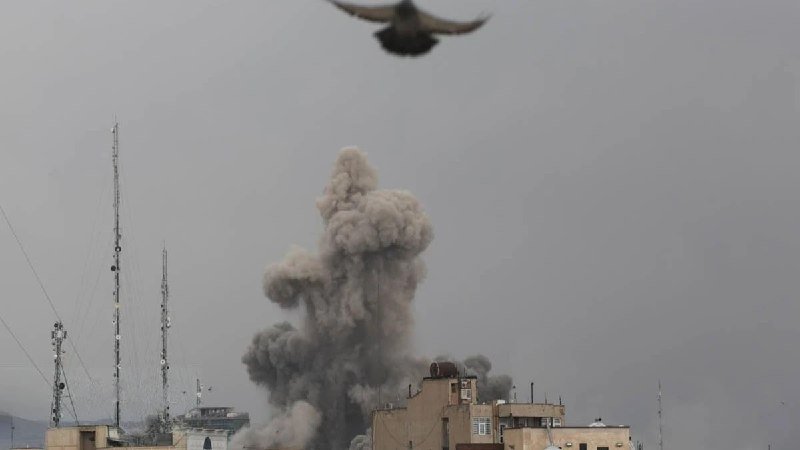
Iran's state-aligned outlets broadcast images on 6 July 2026 of streets in central Tehran choked with mourners assembled for the funeral of Ayatollah Ali Khamenei, the longest-serving leader of the Islamic Republic. Al-Mayadeen, the Lebanon-based satellite channel with close ties to Iran's regional axis, devoted its morning coverage to what it described as a flood of millions gathered to farewell the "martyred leader," a frame that anchors how the day's events are being positioned for Arab and regional audiences. Tasnim News Agency, the outlet widely understood to be close to the Islamic Revolutionary Guard Corps, ran parallel coverage describing "millions of people in Tehran to see off the martyred leader" and crediting Al-Mayadeen's news team with broadcasting the ceremony live across the region.
The funeral marks the formal exit of the man who led Iran for longer than any figure since the revolution: a tenure that encompassed the Iran-Iraq war's aftermath, the nuclear-file deadlock, the regional axis's expansion and contraction, and a grinding sanctions architecture that reshaped the country's political economy. What comes next — not the choreography of the funeral itself — is the story the rest of the year turns on.
A choreographed farewell, on the regime's terms
Iranian state-aligned outlets converge on a single narrative frame for the day: that the farewell reflects a popular mandate stretching well beyond the clerical base, and that the ceremony functions as a signal of continuity rather than rupture. The use of the term "martyred leader" in coverage carried by Tasnim and amplified through Al-Mayadeen is itself a political signal. In Iranian state discourse, the title is reserved for figures who died in service of the system, and its deployment here positions Khamenei's death as martyrdom rather than as a natural end, a framing that does real work for the legitimacy of the office he occupied.
Al-Mayadeen, broadcasting in Arabic to audiences across the Levant, the Gulf and North Africa, has particular incentive to push this line. The channel's editorial posture treats Iran's regional role as defensive and emancipatory, and its coverage of the funeral will be consumed by audiences in Iraq, Lebanon, Syria and Yemen where Iranian-aligned political and military structures remain operational. The decision to outsource much of the regional coverage of the Iranian funeral to a Beirut-based outlet — rather than to IRIB, Iran's domestic state broadcaster — is a soft-power choice: Arabic-language framing of an Iranian moment, mediated by an Arab channel sympathetic to the axis, reaches Sunni-majority audiences more effectively than a direct Tehran feed.
The numbers are doing political work
The "millions" figure repeated across Tasnim and Al-Mayadeen coverage is unverifiable in real time and serves a known purpose inside Iranian statecraft: producing an image of national unity at moments of political risk. Independent verification of crowd size at Tehran funerals has historically been impossible because foreign journalists face credentialing restrictions, satellite imagery is released through state channels, and the relevant arterial roads and squares — typically Enghelab Square and Azadi Square — are partially closed to non-state media. The reporting that exists on this funeral comes overwhelmingly from channels that share an institutional interest in the conclusion.
This matters because the funeral is not only a rites-of-passage event; it is the last mass mobilisation the outgoing leadership can guarantee at scale, and the first test of the successor system's ability to convene the street. The Supreme Council of the Cultural Revolution and the bonyads — the vast network of revolutionary foundations — typically organise busing, food distribution and security for these events from the provinces. The numbers on display, whatever they are in absolute terms, are designed to signal that the cohesion holds.
What the wire lines outside the axis are not yet saying
The Western and Gulf wires — Reuters, AP, the BBC, Bloomberg, the Guardian, Al Jazeera English — had not, at the time of Tasnim and Al-Mayadeen's morning coverage on 6 July, published an English-language reckoning with the funeral that this publication could verify. That silence is itself part of the story. Major outlets traditionally move with caution on Iranian succession stories because the legal-political process is opaque: the Assembly of Experts, a body of 88 senior clerics, selects the next Supreme Leader, and its deliberations are not public. Until a name is announced, Western wires typically hold rather than chase a frame.
The result is that for the early hours of 6 July 2026, the dominant English-language and Arabic-language frames for the funeral are coming from Tehran-adjacent or axis-adjacent outlets. The corollary is that initial reporting on the funeral, on the succession process, and on the regional reaction will be shaped by sources with editorial positions in the story. The wire-services catch-up, when it comes, will be reporting into a frame already partly set.
Succession, the nuclear file, and the regional balance
Three concrete stakes hang on how the funeral week is managed. The first is the succession itself. The Assembly of Experts' deliberations are now under maximum scrutiny, and the way the funeral's visual politics are staged — who stands on the catafalque, who reads the eulogy, whose portrait is carried — is being read across the region as a reading list of contenders. Iranian factions tend to sort into broad camps around the question of whether the next Supreme Leader will double down on the current security doctrine or accommodate the rising pragmatist currents. The funeral's choreography is the first data point.
The second is the nuclear file. The sanctions architecture built up across decades is calibrated to a particular reading of Iran's strategic posture. A succession that signals continuity tends to extend the current frame; a succession read as pragmatist recalibration tends to open windows that negotiators in Washington, Moscow and Beijing have already positioned themselves for. The market reaction in Tehran's foreign-exchange bazaars — informal but fast — will be an early signal.
The third is the regional axis. Hezbollah in Lebanon, the Popular Mobilisation Forces in Iraq, the Houthi movement in Yemen and various Syrian and Iraqi political structures rely on a continuous flow of Iranian strategic guidance, financing and material support. A transition at the top of the Islamic Republic forces all of these actors to recalibrate. Al-Mayadeen's choice to anchor regional coverage of the funeral, rather than leave it to local outlets, is itself an attempt to keep the regional narrative inside the axis's editorial ecosystem during a moment of maximum exposure.
What remains uncertain
Three things this publication cannot verify from the source material available. The first is the actual scale of attendance; "millions" is the number Tasnim and Al-Mayadeen are running, and it is consistent with the state's interest, but no independent ground counts are available. The second is the timetable for the succession; no Iranian state outlet has named a date for an Assembly of Experts vote as of the morning of 6 July 2026, and the standard process takes weeks, not days, even under streamlined conditions. The third is the reaction of the regional Gulf states and of Israel's intelligence and political establishment; their public posture will be cautious, but their private calculations are not yet visible in the open-source material.
The funeral itself, as an event, is being managed by people who have managed similar moments before. What is new is the absence of the man at its centre, and the question of which of his subordinates — visible in the staged photographs, audible in the official eulogies — emerges as the system's next anchor. That read will take days, not hours, to settle. The wire catch-up, when it arrives, will not be reporting on a vacuum; it will be reporting into a frame the axis has spent the morning building.
How Monexus framed this: the wire lines were not yet moving on the funeral at the time the source material was filed, so the article foregrounds the framing work being done by Iranian state-adjacent and axis-aligned outlets rather than treating the "millions in the streets" line as a settled empirical claim.
Wire provenance
This editorial synthesis draws on the following public wire/social posts:
- https://t.me/FarsNewsInt
- https://t.me/tasnimnews_en
- https://t.me/JahanTasnim