Tehran's streets become a stage: the funeral that doubles as a political message
Millions filled Imam Hussein Square in central Tehran in the early hours of Monday UTC for a funeral that Iranian state media openly framed as a political message, not a ritual.
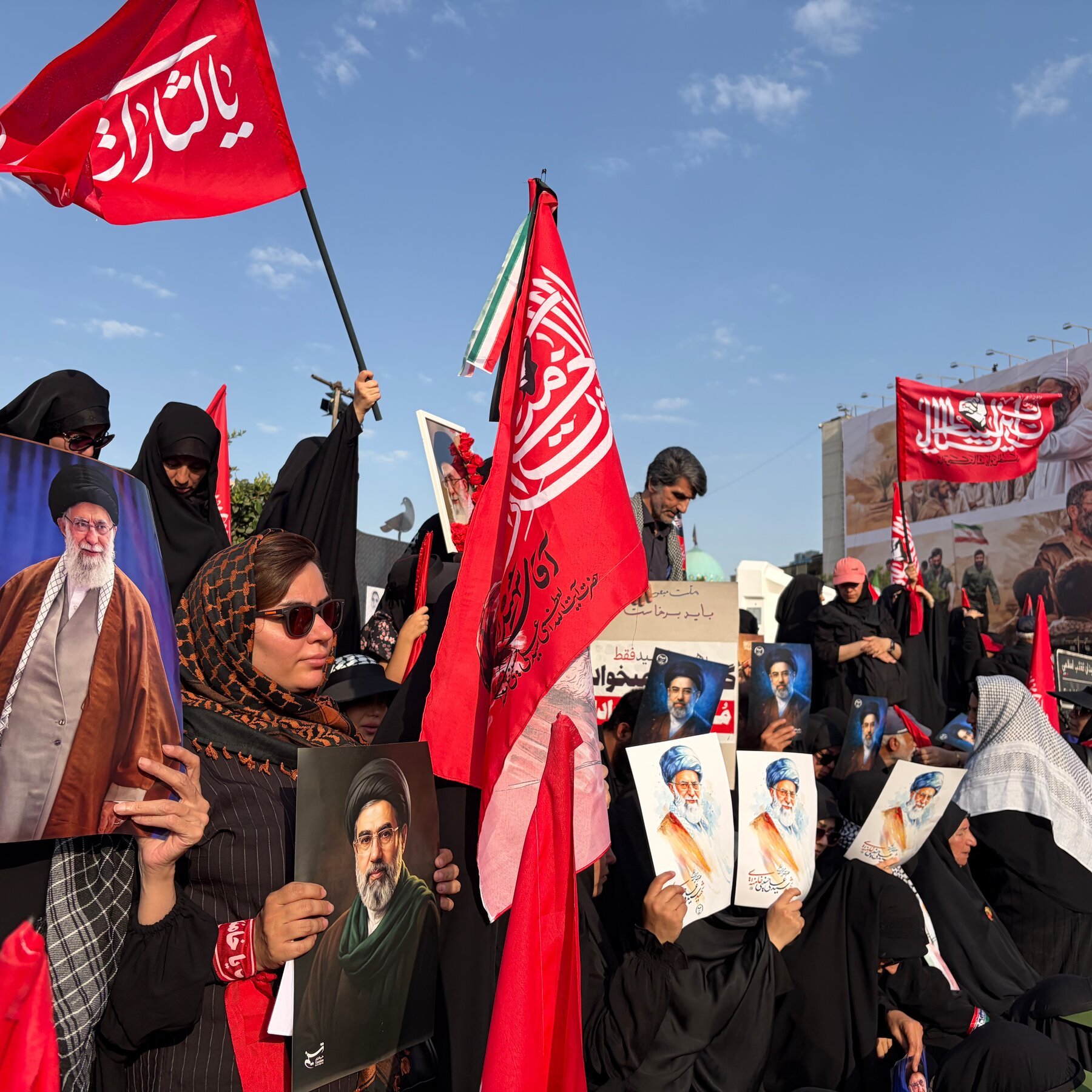
Millions of people poured into central Tehran in the hours before dawn on Monday, 6 July 2026, filling Imam Hussein Square and the surrounding streets for a funeral procession that Iranian state broadcasters did not try to pass off as routine mourning. Al Alam Arabic, the state-run Arabic-language channel linked to Iranian state television, broadcast footage from the square in the small hours and labelled the gathering "urgent" — a register Iranian state media reserves for events the regime wants the region to read as deliberate. The procession, the channel reported at 04:54 UTC, was carrying "the pure bodies of the martyrs" through the capital under a heavy crowd presence.
The framing was the story. Crowds at Iranian state funerals are common; a senior, openly political analysis attached to them is not. Hours earlier, at 04:24 UTC, the same channel quoted "analysts" — read here as the regime's preferred commentators — describing the popular turnout as "a clear political message" that "the blood of the martyr should not be wasted." That sentence, more than the procession itself, is the news. It is the Iranian state telling its rivals, its population and its allies what they are watching: a public square converted into a sanctioned act of policy communication.
What was actually on screen
At 03:07 UTC, Al Alam reported that "millions of people" had begun marching into Tehran to take part in the funeral ceremonies, with a follow-up broadcast at 03:16 UTC describing a "large popular presence" in Imam Hussein Square. The 02:55 UTC dispatch from Mehr News, the Iranian state-affiliated news agency, supplied the visual that anchors the coverage: mourners in the corners of the square "hugging their knees" with their shoulders "shaking slowly," accompanied by an address to a figure identified as "Sir" whose "longing of these people does not end for you."
These are carefully produced images. Mehr is the official wire of the Islamic Republic's domestic propaganda apparatus. The repeated framing of the dead as "martyrs" — a title, not a description — signals the regime is treating this as a death inside its own political grammar: combatants or officials whose killing carries an obligation of revenge or response. The choice to broadcast the four-corner stillness of the mourners rather than the moving procession is itself an editorial decision about who the intended viewer is meant to feel, and what they are meant to feel about.
The message the regime wants to send
Three points sit inside the official commentary and are worth naming plainly.
First, turnout is being treated as evidence. State media is not asking whether the funeral reflects sentiment; it is asserting that it does, and using the size of the crowd as a poll of national mood. By foregrounding the square's geometry — "in the corners of Imam Hussein Square" — Mehr invites the regional viewer to internalise the crowd as a verdict.
Second, the dead are being entered into a continuing political ledger. "The blood of the martyr should not be wasted" is the standard Iranian formulation for an obligation of response. It is not a line you attach to a natural death. It is a line that obliges the state to demonstrate, in due course, that the death was consequential — through retaliation, through policy escalation, or through renewed mobilisation.
Third, the framing is being aimed outward as well as inward. Al Alam is an Arabic-language outlet. Its audience is the Arab street and the Lebanese, Iraqi, Syrian and Yemeni audiences for whom Iranian funerals carry specific coded weight. A standard state funeral would have been broadcast on Press TV in English and IRIB's domestic channels. A funeral that Al Alam is promoting is meant to be read in Beirut and Sana'a and Baghdad as much as in Tehran.
What is not in the frame
The sources on the wire carry no casualty count, no confirmed name of the deceased, no official institutional affiliation, and no account of how the death occurred. They do not specify whether the figure at the centre of the funeral was a military commander, an intelligence official, a political figure or a scientist. They do not say whether the killing — which the framing of the funeral as a martyr procession heavily implies — took place inside Iran, on a regional battlefield, or in a strike associated with Israel or another external actor.
That absence is itself a feature of Iranian state media practice in this kind of moment. Tehran's broadcasters will sometimes pre-stage the crowd before naming the principal; the choreography tells the audience to expect a story, then the details arrive in tiers over hours or days. Western readers should treat the scale of the turnout as evidenced by the broadcasts themselves while treating the identity of the dead, the cause of death, and the policy consequences as items to be verified from independent reporting as it emerges.
Stakes
If the killed figure is, as the framing implies, a senior security or military official, the funeral is the opening act of a public decision cycle rather than its closing one. The next readings will come from Iranian official channels, from the regional armed groups with an editorial interest in the result, and from the governments whose posture will be tested. If no such identification emerges over the next forty-eight hours, the funeral is best read as a domestic consolidation event inside an ongoing political narrative rather than a discrete escalatory moment.
The honest summary is that Monexus can confirm the gathering and its official framing, but cannot, on these sources alone, name the principal, attribute the death, or forecast the response. The square itself is the fact. The rest is still being assembled.
Desk note: Monexus has carried the Iranian state framing in full — turnout, martyr language, political-message gloss — because that is what the wire contains and because the regime intends the framing to be the story. We have named what we cannot verify so the reader does not. Western wires are likely to identify the dead and the cause of death in the next 24-48 hours; we will update this piece when independent confirmation allows.
Wire provenance
This editorial synthesis draws on the following public wire/social posts:
- https://t.me/s/alalamarabic/199001
- https://t.me/s/alalamarabic/199000
- https://t.me/s/alalamarabic/198999
- https://t.me/s/alalamarabic/198998
- https://t.me/s/mehrnews/409000