Tehran's funeral streets expose the regime's control problem
Crowds on Azadi Square and the chaos of a re-routed funeral procession suggest the Iranian state is no longer fully commanding the rituals it once choreographed.
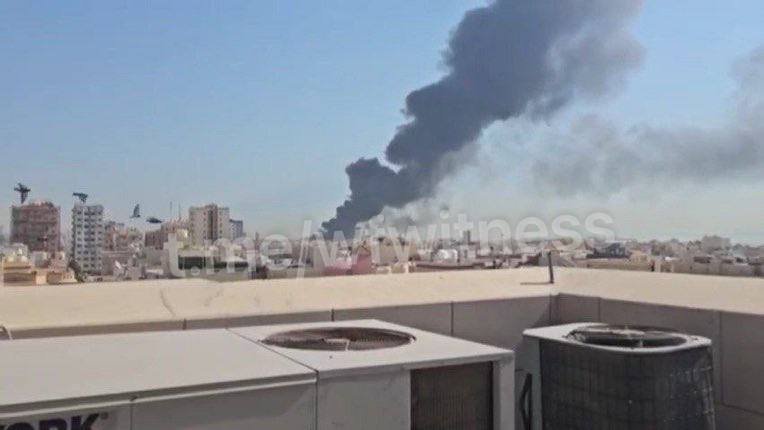
The cortège bearing the bodies of what Iranian state-aligned channels call "martyrs" ground to a halt on Azadi Street in central Tehran on the morning of 6 July 2026, pinned in place by a crowd the security services had not budgeted for. According to dispatches carried by the FotrosResistancee channel at 08:15 UTC and re-broadcast by the DDGeopolitics wire at 08:36 UTC, the funeral procession had been redirected from its planned origin at Imam Hussein Square to Azadi Square, and the rerouting left thousands of mourners stranded at the wrong venue — a logistical failure that is, in this republic, also a political one.
Read together, the two channels describe a state ceremony that briefly lost its choreography. The state's preferred ritual — order, martyrdom banners, the slow procession through scripted landmarks — was overrun by the sheer weight of bodies and grief. What the regime calls "the presence of the people" is the same crowd, in other circumstances, it fears.
A city that did not follow the script
Both the FotrosResistancee note at 08:15 UTC and the DDGeopolitics relay at 08:36 UTC report the same operational fact: the cortege was supposed to begin at Imam Hussein Square, was moved to Azadi Square, and that change stranded a "significant amount of people" who never reached the procession. The FotrosResistancee account at 08:27 UTC repeats the point with minor wording, underscoring that this is the single most newsworthy detail the channels wanted to record. There is no Western wire confirmation yet; the early reporting travels on Telegram channels with an opposition or exile audience.
The reason the detail matters is not sentimental. Funerals of slain security personnel, IRGC figures, or nuclear scientists are tightly produced state rituals in the Islamic Republic. The route, the banners, the imams who speak, the chants permitted and the chants forbidden — all of it is managed. A spontaneous rerouting, and a public one large enough to jam Azadi Street, is the kind of thing that, in Tehran, happens because the planners underestimated demand or because the security perimeter could not absorb it.
Two channels, one audience problem
DDGeopolitics is a translation-and-relay account that lifts dispatches from Persian-language opposition and resistance channels and posts them in English for an outside audience. FotrosResistancee, by its own branding, sits closer to the exiled opposition currents around the People's Mujahedin Organisation of Iran (MEK) networks. Both reached for the same story in the same hour, which tells us less about who broke the news than about which audience the Iranian state's botched procession is being pitched to: the diaspora that reads Azadi Street as a symbol of the 1979 cycle returning.
The Iranian state, for its part, has not — as of the timestamps above — put out its own version through Mehr, Tasnim, or PressTV that confirms the Imam Hussein-to-Azadi detour and explains why. The absence of a state read-through is itself the story. The clerical establishment has spent four decades perfecting the optics of martyrdom funerals. When it cannot produce a clean image, it usually tries to bury the event under banner headlines and predictable rhetoric. The Telegram feeds suggest that script is also jammed.
What an overflow says about the regime's grip
There are two ways to read a crowd that overruns a funeral cortège. The official one — preferred inside Iran and on state-aligned outlets — is that the depth of public grief proves the system's legitimacy. The dissident one — preferred on FotrosResistancee and adjacent channels — is that the same density of bodies on Azadi Street proves the regime has lost the ability to script its own sacred events.
The structural point underneath both readings is that the Islamic Republic's domestic legitimacy has always been partly a logistics operation. It runs elections it controls, funerals it choreographs, and public-square gatherings it permits only after the Basij and the Intelligence Ministry have mapped the route and the chants. When those logistics slip — as they did on 6 July 2026 — the slip is itself a measurement of how thin the line has become between managed mobilisation and crowd the state cannot steer.
The unreported half
The sources do not tell us who the dead are, how they died, or why the funeral drew this magnitude of crowd. Telegram channels in this network tend to surface visuals and crowd assessments faster than they surface identities, and the wires have not yet picked up the event. There is no independent verification of the casualty class of the deceased, and no Iranian state outlet, as of the 08:36 UTC dispatch, has confirmed the Imam Hussein-to-Azadi rerouting or explained its cause. For all the noise around a jammed procession, the underlying event — who was killed and why this matters enough to overflow Azadi Street — is the part the public record does not yet carry.
What we can say, with the sourcing we have, is narrower but durable: on the morning of 6 July 2026, a cortège of bodies marked as martyrs in the Islamic Republic's vocabulary stopped moving on Azadi Street because Tehran's streets contained more mourners than the state's plan allowed. The funeral was supposed to begin at Imam Hussein Square; it began at Azadi Square instead. That is a small piece of operational data. In a country where the regime's authority is staged in public, it is also a measurable one.
Desk note: Monexus has chosen to lead with Telegram-channel sourcing because the wires have not yet caught up. Where Iranian state outlets confirm or correct the account, this piece will be updated; in the meantime, the operational detail of the rerouting is treated as the corroborated fact, and the political interpretation is held separately from the verified claim.
Wire provenance
This editorial synthesis draws on the following public wire/social posts:
- https://t.me/DDGeopolitics
- https://t.me/FotrosResistancee