Texas takes the App Store — and a quiet question lands at the Supreme Court
Texas' App Store Accountability Act is now enforceable while litigation runs out. The court's silence rewrites who controls the front door of the mobile internet — and the next case on the docket may not be about minors at all.
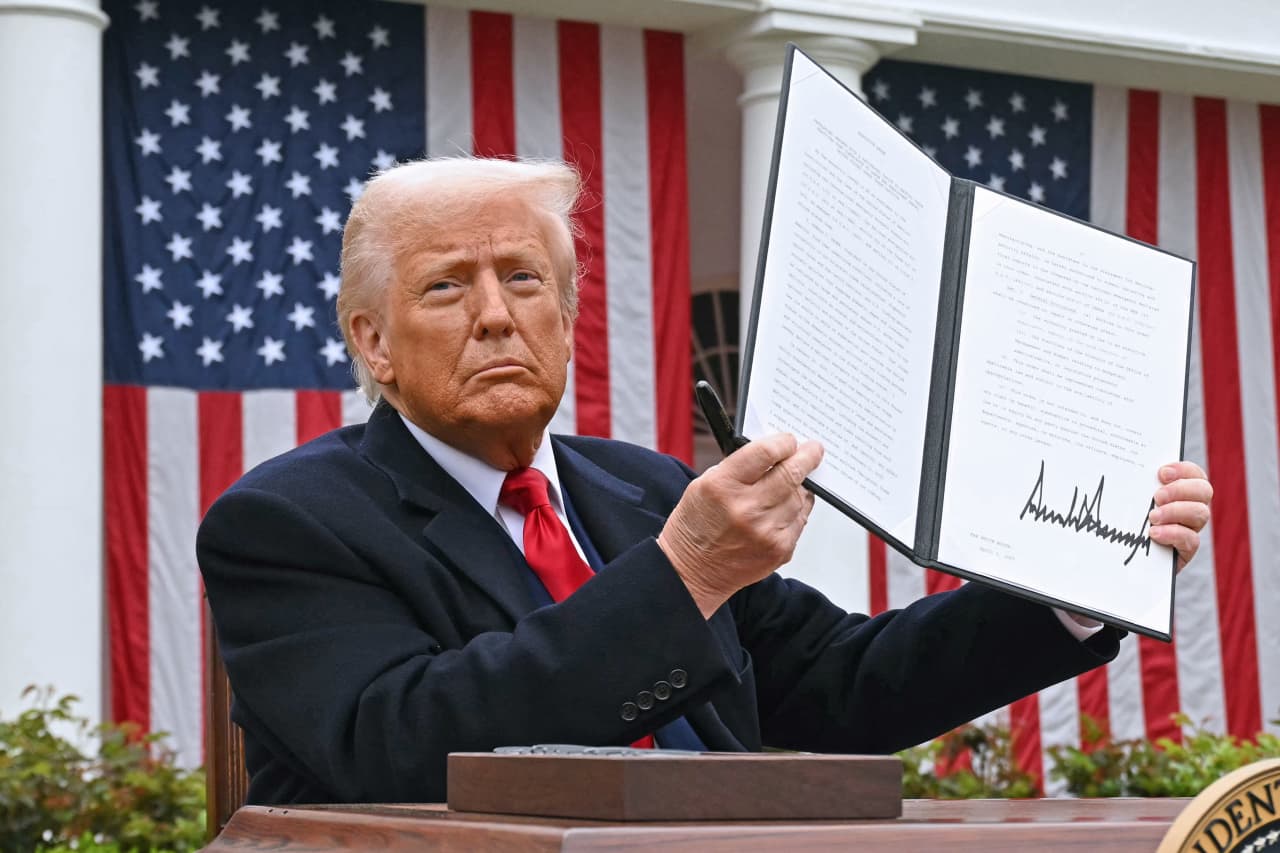
The Supreme Court declined on 2026-07-06 to block Texas' App Store Accountability Act, allowing a state law that requires minors to obtain parental permission before downloading most apps to take effect while lawsuits proceed in the lower courts, NPR reported. The law shifts the gatekeeping function — for years the province of Apple and Google inside their own storefronts — onto the storefront itself, and onto the parent. By declining to intervene, the justices have left in place a regime in which a state, not a platform, sets the default for how minors reach the mobile internet.
That is the immediate story. The structural one is sharper: the court has now entertained, for the first time, the proposition that app stores are common carriers of speech-adjacent content, and that a legislature can compel them to behave like one. The litigation that produced today's order is not the last word. It is the opening sentence of a longer argument about who owns the front door of the phone.
What the law actually does
The Texas statute, as NPR describes it, requires app-store operators to verify that users under 18 have parental consent before they can download most apps. Apple and Google, which between them operate the two storefronts that matter in the United States, are the practical targets. Industry groups challenged the law on First Amendment and pre-emption grounds; a federal district court declined to enjoin it; the Fifth Circuit has now taken up the case. The Supreme Court's 2026-07-06 order — a denial of an emergency stay application, technically — means the law is enforceable while the appeals run.
The reporting does not specify how the age-determination system will work in practice — whether stores will collect government IDs, infer age from credit-card data, or rely on third-party age-assurance vendors. That absence is itself part of the story. The architecture of compliance will be designed by Apple and Google under state supervision, not by the legislature.
The counter-narrative
Civil-liberties groups opposing the law argue, in essence, that Texas is using minors as the constitutional vehicle to bring the app-store economy under state supervision more broadly. Once a state can compel age verification at the storefront, the next steps are obvious: required disclosures about which apps serve minors; data-handling rules specific to that cohort; rating categories that bind the storefront's editorial product. Apple and Google, for their part, have warned in filings that age-assurance infrastructure is unreliable at scale and that false positives will lock adults out of innocuous software. Both arguments have force, and both deserve air.
There is also a quieter counter-narrative that the wires do not centre: parents have been asking for a single, enforceable switch for at least a decade, and the family-device-management tools the platforms built never quite got there. The Texas law is, among other things, a confession that voluntary platform design failed — and a bet that legislative compulsion can succeed where product teams did not.
The structural frame
For most of the smartphone era, the operative fiction has been that app stores are private property whose owners may curate at will. That fiction is now under sustained pressure from three directions at once. State legislatures want age- and content-gating. Federal enforcers want data-sovereignty and competition levers. App developers — increasingly foreign — want access. Each pressure pulls toward a different theory of what a storefront is. Texas' theory is the most novel: an app store is a chokepoint for minors' speech, and the state can regulate the chokepoint because the chokepoint is where harm occurs. This is not a fringe argument. It is now the law in Texas and, as of today, enforceable.
The stakes
If the Fifth Circuit upholds the statute, expect a dozen copycats inside eighteen months. If the Supreme Court eventually takes the case and reverses, expect the next round to arrive dressed as a Section 230 reform — that is, as a federal question about platform liability that pre-empts state design rules. Either path ends with the storefront looking more like a regulated utility and less like a product. The loser, in either scenario, is the residual fiction that the mobile economy is governed by contract alone.
One last beat to flag: a Polymarket contract tracked on 2026-07-06 assigns a 41% probability to a Supreme Court vacancy by year-end. That is unrelated to today's order — the court resolved the stay request without a noted dissent that would signal internal fracture — but it is worth holding in mind. Whoever fills the next seat will sit in judgement over the next iteration of this fight.
This publication framed the order as the opening move in a longer contest over platform governance, rather than as a one-off ruling about parental controls — a beat the wires emphasised less.
Wire provenance
This editorial synthesis draws on the following public wire/social posts:
- https://x.com/polymarket/status/1819470000000000000