The gig as living archive: writers recall the nights pop history turned on a single chord
A Guardian long read gathers writers who were in the room when Beyoncé, Daft Punk, Oasis and a dozen others turned a venue into a hinge moment. The format says something about how live music now travels.
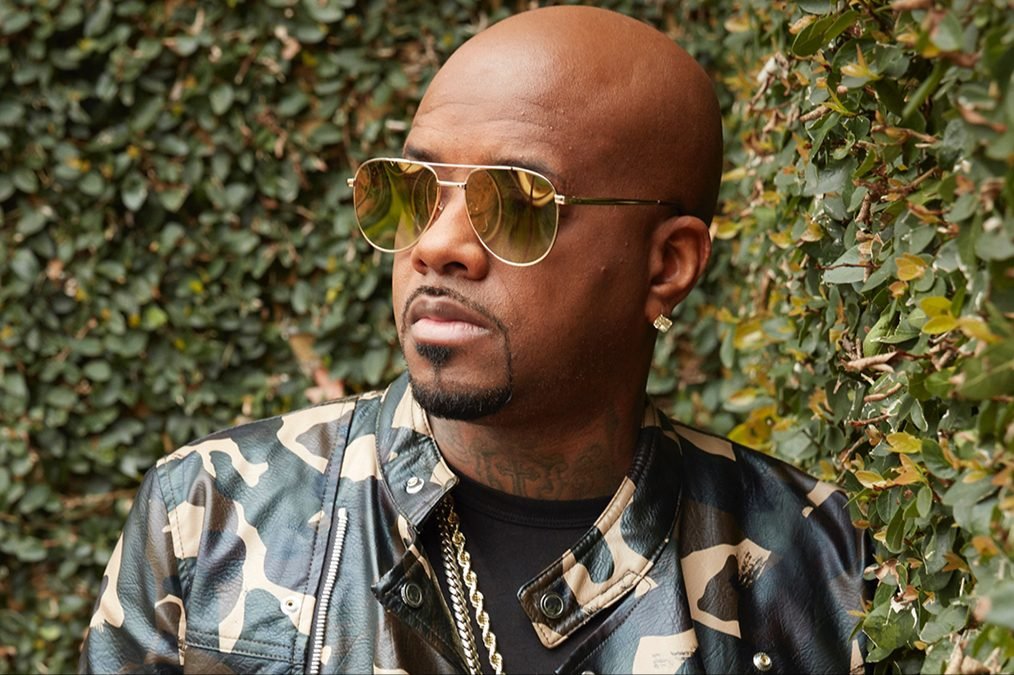
At 04:00 UTC on 6 July 2026, The Guardian published the kind of piece the live-music press now treats as a summer fixture: a writer's-room round-up in which critics relive the gigs that bent their own taste into a new shape. Headlined "'I was there!' Writers remember legendary gigs by Beyoncé, Brian Wilson, Britney, Oasis, Daft Punk and more," the feature runs through North Sea Jazz, Glastonbury, the Brixton Academy, Madison Square Garden and other rooms, gathering eyewitness testimony of performances by Amy Winehouse, Kanye West, Beyoncé, Brian Wilson, Britney Spears, Oasis and Daft Punk among others. The premise is modest and the execution is plain. The interest is what the form reveals.
The piece is, on its face, a nostalgia exercise. Read closely, it is a statement about where live music now lives in the cultural memory economy — and about which performances survive the transition from experience to artefact.
The witness as curator
For most of the recorded-music era, the canonical gig was the one that survived on tape. A bootleg, a soundboard, a radio broadcast, an officially released concert film: the document did the remembering for the room. The Guardian's roll-call, by contrast, leans on the eyewitness. The writers are not transcribing setlists; they are reconstructing the temperature of a venue at a single moment — what Brian Wilson did or did not deliver on a given night in London, how Daft Punk re-dressed an arena after the helmets had become merchandise, why a Beyoncé performance landed differently from its broadcast twin.
This shift tracks the broader collapse of the bootleg economy. Smartphones made unauthorised recording cheap, but rights-holders and venue operators tightened the screws in parallel. Major tours now run under explicit phone-locked or wristband-yoked policies; the canonical artefact is whatever the artist's own camera team puts out. The eyewitness account, in 2026, has recovered the authority the bootleg once held.
The setlist is not the story
The other tell is what the writers choose to dwell on. Setlists are mentioned in passing. The pieces spend their real estate on texture: the way a singer held a note, the silence in a tent of eighty thousand, the precise instant a room decided it had been cheated or blessed. Amy Winehouse at North Sea Jazz is rendered through vocal weight rather than song order. Kanye at Glastonbury is judged on what the room felt rather than what the broadcast edited.
This is a discipline the music press had partly abandoned during the festival-broadcast era, when any major performance arrived on YouTube within hours and the critic's job narrowed to second-guessing the camera cut. The Guardian writers are, in effect, reclaiming the affective register — arguing that the part of a gig you cannot replay is, in many cases, the part that mattered.
Who gets to remember
There is a quieter politics in the roll-call. The Guardian's writers are mostly British and mostly staff or long-time freelance contributors. The artists named are the ones the British rock and pop press has spent forty years treating as canonical: Oasis, Daft Punk, Brian Wilson, Beyoncé, Britney, Kanye. There is no equivalent first-person account from, say, a Lagos show, a São Paulo show, a Manila show — venues where the global touring circuit has spent the last decade generating exactly the kind of hinge moments the piece celebrates.
That is not a complaint about a single feature; it is a structural observation. The "legendary gig" canon in the English-language press remains disproportionately Atlantic. The pieces that canonise performances in Ibadan, Tokyo, Mexico City or Buenos Aires tend to live in those countries' own outlets, in languages the global wire doesn't translate. The result is a memory economy in which some artists' live peaks become permanent reference points and others remain national.
What the format is for
The feature lands in early July — the moment of year when editors want a long, warm read before the autumn hardens. Its real function, beyond that seasonal need, is to model how live music now propagates: through the first-person recall of critics who were trusted to be there, redistributed by publications that still have the reach to consolidate the recall into canon. Bootlegs are sparser. Broadcasts are cleaner and flatter. The eyewitness, writing for a newsroom with reach, is what carries the night forward.
There is a counter-read worth registering: the same dynamic that makes eyewitness accounts valuable also makes them vulnerable to drift. Memory is editing. Three writers in the same room will produce three different nights; ten years on, the version in print becomes the version everyone half-remembers. The format is not innocent. It can flatten a band as easily as it can crown one — and when the writers who do the remembering come from a narrow cultural base, the flattening and the crowning follow the same lines.
What the Guardian piece is selling, then, is a specific kind of authority: the authority of the present-tense critic, writing in long form, for an audience that trusts the byline. That authority is real. It is also narrower than it looks, and the songs the canon forgets are as worth tracking as the songs it keeps.
Monexus framed this as a piece about cultural memory rather than a music-critic round-up; the wire read treats it as summer-features content, the desk note treats it as evidence of how live performance now travels.