Trump's Iran "Deal-or-Finish" Frame Is a Negotiation Posture, Not a Doctrine
A single afternoon of remarks on Iran, Chicago, and a hot-mic aside amounts to a posture, not a doctrine — and the gap between the two is where the next escalation will be decided.
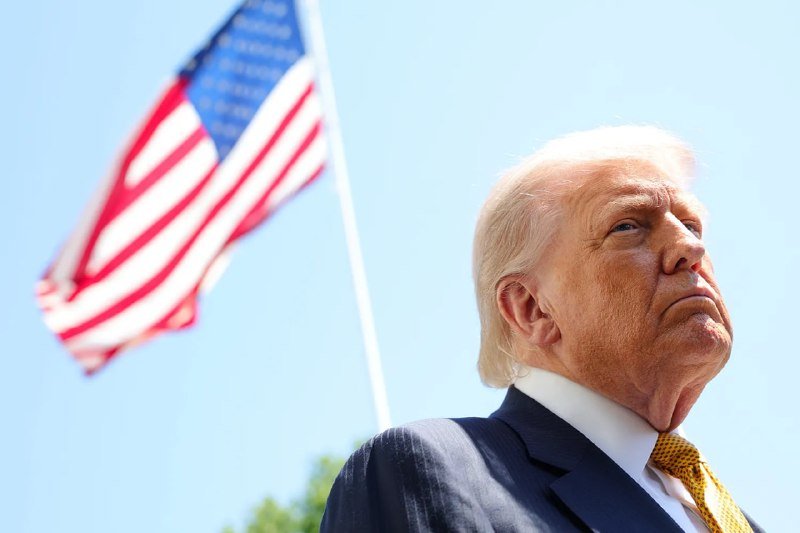
In a single afternoon on 6 July 2026, the US president laid down two related propositions. On Iran: "We're either going to make a deal, or we're going to finish the job… It won't be tough to finish the job. I'd rather make a deal." On Chicago: "I wish Chicago would call me… I would wipe out crime so fast. We would remove the hardcore criminals like I did in Washington DC." A separate hot-mic line — "Every question is a kill", returned to by Dell's Michael Dell with a "Dell-icopter" quip — completed the set. Read together, these are not a doctrine. They are a posture, and the distance between the two is where the next escalation will be decided.
The "deal-or-finish" formulation is a familiar American negotiating template: declare the alternative is on the table, then leave the door open. The structure tells you what the speech is for. It is meant to move the other side, not to commit the speaker. The risk is that markets, allies, and adversaries all price the rhetoric as if it were already policy — and that an off-ramp, when it arrives, reads as retreat rather than execution.
What the remarks actually commit to
Strip the posture away and the factual content is thin. The president says he is "not interested in regime change" in Tehran and "prefer[s] to close a deal." He frames the choice as binary. He does not name the counterparties, the sanctions architecture, the enrichment question, or the role of Gulf intermediaries. None of the public remarks itemise what "a deal" would cost Iran or what "finishing the job" would mean beyond the assertion that it would not be difficult. That is a deliberate omission. The whole point of the frame is to keep both options live.
The Chicago interjection is a different register — domestic law-and-order — but the rhetorical mechanism is identical. "I wish they would call me" is an invitation to a phone call that has not been requested. It is the same posture aimed at a different audience: the federalism question is bracketed, the local political risk is laid on Chicago's mayor, and the offer of intervention is held open without being executed.
The counter-read: leverage theatre
The charitable reading is that the president is buying time for a negotiated settlement under maximum pressure. Iran has been visibly weakened through 2025 and into 2026 — its currency, its regional proxy network, and its domestic legitimacy have all been degraded — and Tehran's public line has repeatedly emphasised a preference for diplomacy. Under that read, the "finish the job" line is theatre: it strengthens the US hand without committing it to the costs of a final military campaign that would likely draw in regional actors and disrupt energy markets.
The uncharitable reading is that this is escalation by accumulation. Each cycle of threats, followed by partial de-escalation, followed by renewed threats, narrows the off-ramp. Tehran must respond with ever-larger concessions to prove it is a serious negotiating partner, or else the Washington narrative hardens. Either way, the time horizon for diplomacy shrinks. The hot-mic aside — "Every question is a kill" — is consistent with that read. It treats the press conference as a venue for damage rather than for clarification.
Both readings can be true at once. The "deal-or-finish" frame is engineered precisely so that it can be read either way by the audience that matters most at any given moment.
Why the frame keeps getting used
American presidents of both parties have used this template for decades. It is attractive because it is cheap to deploy and expensive to ignore. A single sentence moves currency markets, oil benchmarks, and the political risk premium for every Gulf capital at the same time. The economic value of the implied threat — extracted without it ever being exercised — is enormous. The cost is borne by the country on the receiving end, which must hedge, reroute trade, and absorb capital flight even though nothing has actually happened.
There is also a domestic audience. The Chicago line and the Iran line are built from the same materials: an offer of decisive action, an antagonist framed as criminal or rogue, and a federal executive positioning itself as the only actor with the will to act. The packaging travels.
Stakes and what to watch
If a deal is genuinely on the table, the next marker is structural: a named counterparty, a venue, an agenda. None of those have appeared. Until they do, the "finish the job" line is the active policy and the "I'd rather make a deal" line is the option kept on the shelf. The hot-mic aside suggests the president is enjoying the posture more than the prospect of having to choose between the two branches of the binary. That is the variable worth watching — not the words, but whether, and when, the words harden into a specific action or are quietly walked back in a softer follow-up.
The market implications are easier to call than the diplomatic ones. Energy benchmarks and Gulf sovereign risk premia will continue to move on every line that survives the editing cycle. The diplomatic calendar — who visits whom, what gets leaked, what gets denied — will tell the real story. Until then, the frame is the policy.
Desk note: Monexus treats this as a posture story, not a doctrine story. The wire has largely reported the remarks as discrete items; this piece reads them as a single negotiating template applied across two audiences.