Trump casts Iran policy as a personal negotiation — and presses for the coverage he says it deserves
Speaking to reporters on 6 July 2026, Donald Trump described direct contact with Iran's new Supreme Leader, denied seeking regime change, and complained that his diplomacy was not getting the airtime he believes it merits.
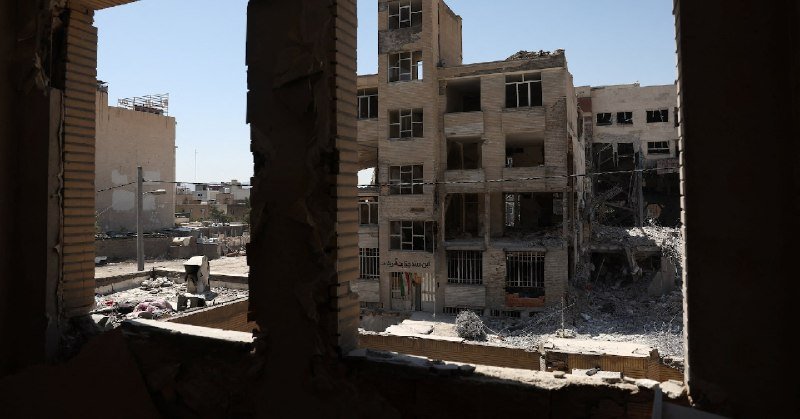
President Donald Trump told reporters on 6 July 2026 that the United States was "doing very well with Iran" — and that the diplomacy was simply not getting the airtime he believes it merits. The remarks, delivered during a multi-topic press availability that ranged from cryptocurrency to a FIFA disciplinary incident, frame the Iran file in unusually personal terms: a leader-to-leader relationship, conducted through the new Supreme Leader, in which the principal obstacle is presented not as a structural dispute over enrichment or missiles, but as a media one.
The pattern matters. Trump did not announce a deal, a sanctions package, or a military posture on 6 July. He described a process — one in which he is personally engaged, in which he claims the other side is "smart," and in which he insists the press is failing to register the progress. It is diplomacy-by-press-conference, with the press conference itself the deliverable.
What Trump said, and to whom
At roughly 13:36 UTC on 6 July 2026, the Telegram channel Clash Report posted a clip in which Trump told reporters: "We are doing very well with Iran. We are just not getting the kind of coverage that we should." The same availability produced a second Iran comment roughly an hour later: "The new Ayatollah is a smart guy, actually. But I don't know if he's a super genius like me" — relayed by Middle East Spectator at 14:14 UTC. By 14:22 UTC, the Telegram account Sprinter Press was carrying a longer formulation: "I'm not seeking a regime change in Iran, although a regime change in itself..." The line trails off in the transcript, but the operative portion is the opening denial.
Three observations follow. First, the phrasing — "the new Ayatollah" — confirms that Trump is framing his counterpart as Ayatollah Mojtaba Khamenei, who succeeded his father Ali Khamenei as Supreme Leader of Iran. The reference is not abstract: it names the institution. Second, the denial of regime-change intent is delivered with a notable pause ("although a regime change in itself..."), leaving the second clause unfinished in the public transcript. That pause is itself part of the message: a deliberate ambiguity about what a future settlement might or might not entail. Third, the comment about coverage is a request, made on camera, for more positive press — which is the press that, by definition, cannot satisfy the request without losing independence.
The press-conference as diplomatic instrument
The Iran remarks arrived inside a larger performance. At 14:31 UTC, the Disclose TV feed captured Trump describing himself as "a big crypto guy" — "I got involved in a little bit for politics, you know, because I realized that a lot of people love crypto." At 14:25 UTC, the same channel aired Trump describing a phone call with the FIFA president over a red card issued in a recent match, calling the referee "very suspect" and the decision "wasn't a foul, that wasn't even an infraction." Earlier, at 13:37 UTC, Trump told reporters that President Xi Jinping had told him, three weeks earlier, that "we have the greatest military anywhere in the world."
Each of these episodes is the same form: a presidential verdict on a discrete dispute (a referee's call, a cryptocurrency community, a Chinese military assessment, an Iranian negotiation) delivered without cabinet intermediaries, in language designed to travel. The Iran file is distinctive only in scale. A referee call does not bind U.S. foreign policy. A character sketch of the Supreme Leader, broadcast on cable and relayed through Telegram aggregators, is intended to.
The structural problem is the one Trump himself named. A negotiation that runs through press availability is a negotiation whose every micro-shift is also a media event. Tehran's reading of any single remark is filtered through what it tells the Iranian street, the IRGC, and the bazaar — three audiences with three different thresholds for what counts as either an opening or an insult. The U.S. side has fewer but harder constraints: financial markets, congressional notification requirements under existing statute, and the Israelis, Saudis, and Gulf partners who track any move with a laser.
Why the new Supreme Leader matters
The reference to "the new Ayatollah" is the load-bearing detail of the day. Ali Khamenei's death and succession — handled in Iran through the Assembly of Experts and the formal investiture process — produced Mojtaba Khamenei as Supreme Leader. The transition closed a long-running question about whether Iran would move toward a more institutional, less personality-driven leadership model, or whether it would reproduce the personalised style of his father. Trump's personal-channel framing — "a smart guy" — is consistent with a bet that the answer is the latter: that the file can be moved through direct rapport between two men, the way the first Trump administration moved files with Kim Jong-un and (briefly) with Kim's envoy.
That bet has a precedent and a limit. The precedent is the 2018–2019 back-channel with North Korea, which produced three leader-level summits and a frozen missile-test pause but no verifiable denuclearisation. The limit is structural: a personal relationship can lower the temperature of a crisis but cannot, by itself, resolve a technical disagreement about uranium enrichment, IAEA inspections, or the disposition of Iran's missile programme. Trump's framing implicitly assumes the relationship is the substance. Most of the history of nuclear diplomacy assumes the reverse.
The counter-narrative — what is not being said
There are at least three framings the 6 July press availability does not accommodate, and the gap is itself information.
First, the Israeli file. Israel has not, in any public statement carried in the wire feeds of 6 July, endorsed the personal-channel approach. Israeli strategic doctrine treats the Iranian programme as a security category of its own, and Israeli governments across the spectrum have historically regarded U.S.–Iran diplomacy as something to be managed rather than welcomed. If a deal emerges in the second half of 2026, it will have to be sold in Jerusalem and Riyadh as well as in Washington and Tehran. Trump's press-conference framing does not pre-sell any of those audiences.
Second, the Iranian domestic file. A U.S. president publicly complimenting the new Supreme Leader's intelligence, on the same day as a denial of regime change, is a frame Tehran's own propagandists can use — but it is also a frame that hardliners inside the Islamic Republic can use against any Iranian negotiator who appears to be deferring to a U.S. president. The personal-channel bet cuts both ways.
Third, the verification file. None of the 6 July material announces an inspected, verified freeze. It announces a tone. The history of Iran–U.S. diplomacy across four decades is largely a history of tones that did not survive contact with the centrifuge hall at Natanz or Fordow. Reporting on "doing very well" without a Joint Comprehensive Plan of Action–style architecture is reporting on atmospherics, not on substance.
Stakes — who wins, who loses
If the personal channel produces a verifiable deal in 2026, the upside is a sanctions-easing dividend for Iran, a lower risk of a kinetic exchange for the Gulf and Israel, and a domestic political win for Trump that he can carry into the autumn. If it produces atmospherics without verification, the upside is shorter — a few months of calmer oil markets and a propaganda victory — and the downside, in the event of an Israeli strike or an Iranian breakout, is sharper, because the diplomatic scaffolding will have been exposed as personal rather than institutional. The Middle East Spectator and Disclose TV feeds of 6 July are inputs into that bet. They are not, yet, an outcome.
What remains uncertain
The 6 July press availability does not specify whether the new Supreme Leader has responded publicly to Trump's characterisation, whether any back-channel meeting is scheduled before the U.N. General Assembly high-level week in September, or whether the IAEA's existing reporting on Iran's stockpile has shifted in the direction the diplomacy would require. The sources do not specify these things. They show a U.S. president describing a relationship, in his own voice, to a press corps he simultaneously accuses of under-reporting it.
Desk note: Monexus treats this as a press-conference-diplomacy story, not a deal story. The wire frames of 6 July carry atmospherics — tone, persona, complaint about coverage — rather than the technical milestones (enrichment percentage, stockpile tonnage, inspection access) that would convert tone into outcome. Where the press-conference frame assumes the personal channel is the substance, Monexus finds the historical record points the other way.
Wire provenance
This editorial synthesis draws on the following public wire/social posts:
- https://t.me/disclosetv
- https://t.me/Middle_East_Spectator
- https://t.me/Middle_East_Spectator
- https://t.me/sprinterpress
- https://t.me/ClashReport
- https://t.me/ClashReport
- https://t.me/disclosetv
- https://t.me/disclosetv