Trump's ultimatum to Tehran: deal by Friday or 'finish the job'
On 6 July 2026, Donald Trump gave Tehran a binary choice: a deal in Geneva this week, or a military campaign he says Washington will 'complete'. The Iranian street is bidding farewell to a fallen leader.
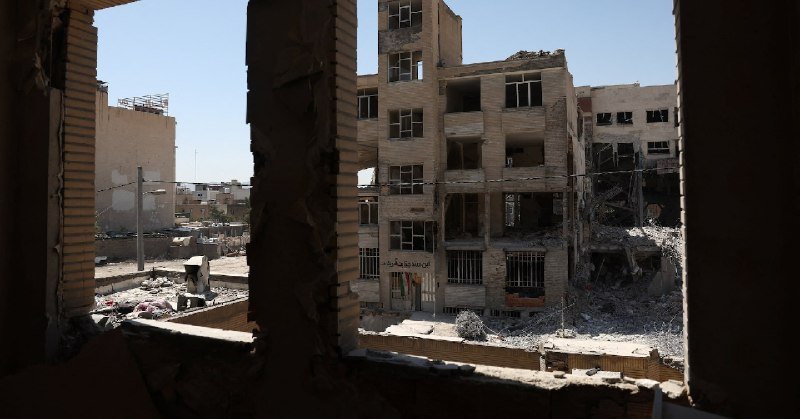
The United States has put a clock on its confrontation with the Islamic Republic. On 6 July 2026, Donald Trump told reporters that Washington and Tehran will either sign an agreement in Geneva this week or the US will "finish the job" — language that, in plain terms, means the military option stays on the table. The president repeated the formulation twice in the space of an hour, framing Iran's willingness to deal as a function of pressure rather than negotiation: "They want to make a deal so badly," he said. "They have to make the right deal" (Middle East Eye live blog, 15:17 UTC; Abu Ali Express on Telegram, 15:15 UTC).
What is being decided in Geneva this week is not the shape of Iran's domestic politics, but the price Tehran pays for relief from a US sanctions and coercion architecture that has been tightening for nearly a decade. The choice Trump is offering — capitulation or escalation — is the choice a hegemon offers when it has concluded that the cost of accepting a partial deal exceeds the cost of forcing a re-set.
A deal, or the alternative
The mechanics, as far as the public record permits, are narrow. According to Middle East Eye's live coverage, a US–Iran peace accord signing has been "set for Friday" in Geneva, with both sides publicly confirming the date. Trump, quoted by the same live feed and corroborated by the abualiexpress channel carrying his remarks, framed the deadline as binary: agreement, or the completion of unspecified military work that he insisted "will not be difficult" (Middle East Eye, 15:17 UTC; abualiexpress, 15:15 UTC).
That posture is consistent with the doctrine the administration has run since returning to office: maximalist opening demands, a public clock, and an insistence that any agreement reflect American terms rather than a negotiated midpoint. Iran's incentive structure is the mirror image. Tehran wants sanctions relief, the unfreezing of assets held abroad, and an end to the kind of punitive secondary measures that have hollowed out its export earnings. Whether those two preference sets can be reconciled in a single Friday document is the open question.
Trump's domestic political framing, delivered in the same media window, gives a hint of where the pressure points inside the US system will sit. A reporter's exchange captured by Clash Report quoted the president defining a social democrat as "a communist" — a line aimed at domestic audiences, but also a signal that the administration is comfortable using ideological vocabulary as a cudgel against political opponents while reserving a markedly transactional vocabulary for adversaries abroad (Clash Report on Telegram, 16:19 UTC). The contrast is itself analytical: at home, rhetoric; abroad, conditional offers.
The Iranian street, and what it is signalling
The other half of this story is playing out in Iran. On the same day Trump set his ultimatum, the IRIran_Military channel on Telegram — an account aligned with the Islamic Republic's security establishment — broadcast aerial footage of what it described as "an endless crowd" gathering to bid farewell to "their leader" (IRIran_Military, 15:40 UTC). The identity of the deceased leader is not specified in the source item, and Monexus has not independently confirmed it; what is verifiable from the post alone is the choreography of a state-organised mass mourning event being held at the exact diplomatic moment when the country is being asked to sign a deal under threat.
That is not a coincidence. Public mourning, in the political grammar of the Islamic Republic, is also a display of in-country cohesion under external pressure. Tehran's negotiating team in Geneva is bargaining with the knowledge that any document signed under explicit threat of force will have to be defended domestically as the product of strength rather than capitulation. The street footage matters because it tells the outside world what the Iranian side will need to be able to claim at home.
How much pressure is on the table
The scale of the lever Trump is wielding is harder to read from this thread than the rhetoric. The source items confirm only that Trump described the alternative to a deal as something that "will not be difficult to complete," and that he characterised Iran's economic state as bad — "they are not doing well at all" (Clash Report, 15:56 UTC). The sources do not specify what military option is being threatened, nor whether Friday's expected signing is a comprehensive nuclear agreement, an interim framework, or a political communiqué. Monexus cannot, from the available material, attribute specific dollar figures, troop movements, or strike packages to either side. That uncertainty is itself a fact about the moment: the leverage is being advertised; the specifics are not.
What can be said is that the framing has shifted since the last serious US–Iran negotiation round. Trump's first term collapsed the 2015 nuclear framework on the grounds that it was insufficient; the current administration has rejected incremental or "less for less" deals on the grounds that partial relief legitimises the existing programme. If the Friday document is a full-scope nuclear agreement with verifiable dismantlement, it is in tension with the public Iranian position of the past two years, which has insisted on the right to enrich. If it is a political statement of intent, it is in tension with Trump's stated preference for a binary outcome.
Stakes, and the wider pattern
If the deal is signed, the immediate winners are Iran's clerical leadership, which gets sanctions relief without regime change; Trump's domestic political brand, which gets a foreign-policy trophy; and the Gulf monarchies and Israel, which will read any verified freeze on enrichment as a strategic windfall. The immediate losers are the Iranian public, who have historically borne the cost of sanctions without seeing the dividends, and the non-proliferation architecture, which will be tested by whatever inspection regime accompanies the text. The losers over a longer horizon depend on the deal's robustness: a paper agreement that holds for a year and collapses has a different equilibrium than one that institutionalises verification.
If there is no deal and the alternative is activated, the calculus inverts. Iran's regional posture hardens; the IRGC's internal position strengthens relative to any civilian negotiating track; oil markets reprice; and the diplomatic space that European and Gulf intermediaries have been operating in closes. The pattern the ultimatum sits inside is not new — it is the standard script of coercive diplomacy — but the speed at which the script is being run in July 2026 is unusually compressed. Three weeks ago, the working assumption in most reporting was that negotiations were exploratory. As of 6 July, they are, by the standard the White House has set, decisive.
What remains genuinely uncertain is whether Trump's rhetoric is a negotiating posture calibrated to extract last-minute Iranian concessions in Geneva, or whether it is a genuine intent to escalate if the text is not signed on American terms. The source items do not let this publication adjudicate between the two readings. What they do let us say is that, as of 15:17 UTC on 6 July 2026, the world's two most consequential adversaries in the Middle East are treating the coming Friday as a terminus rather than a way station.
This publication notes that the wire coverage of this track is unusually thin on primary documents — most reporting traces back to presidential remarks on the tarmac and to Iranian state-aligned channels describing domestic optics. Where Reuters or the wires carry a confirmed text in the days ahead, Monexus will re-anchor this story to those primary sources.
Wire provenance
This editorial synthesis draws on the following public wire/social posts:
- https://www.middleeasteye.net/live/live-us-and-iran-confirm-peace-accord-signing-set-friday-geneva
- https://t.me/abualiexpress
- https://t.me/ClashReport
- https://t.me/ClashReport
- https://t.me/IRIran_Military