Trump's NATO Enforcement Tour: From Hague Pledge to Ankara Court
A year after extracting 5% of GDP defense pledges from allies at The Hague, President Trump lands in Ankara to enforce them — with Recep Tayyip Erdoğan as host, and a Turkish economy that has its own reasons to want the conversation to go well.
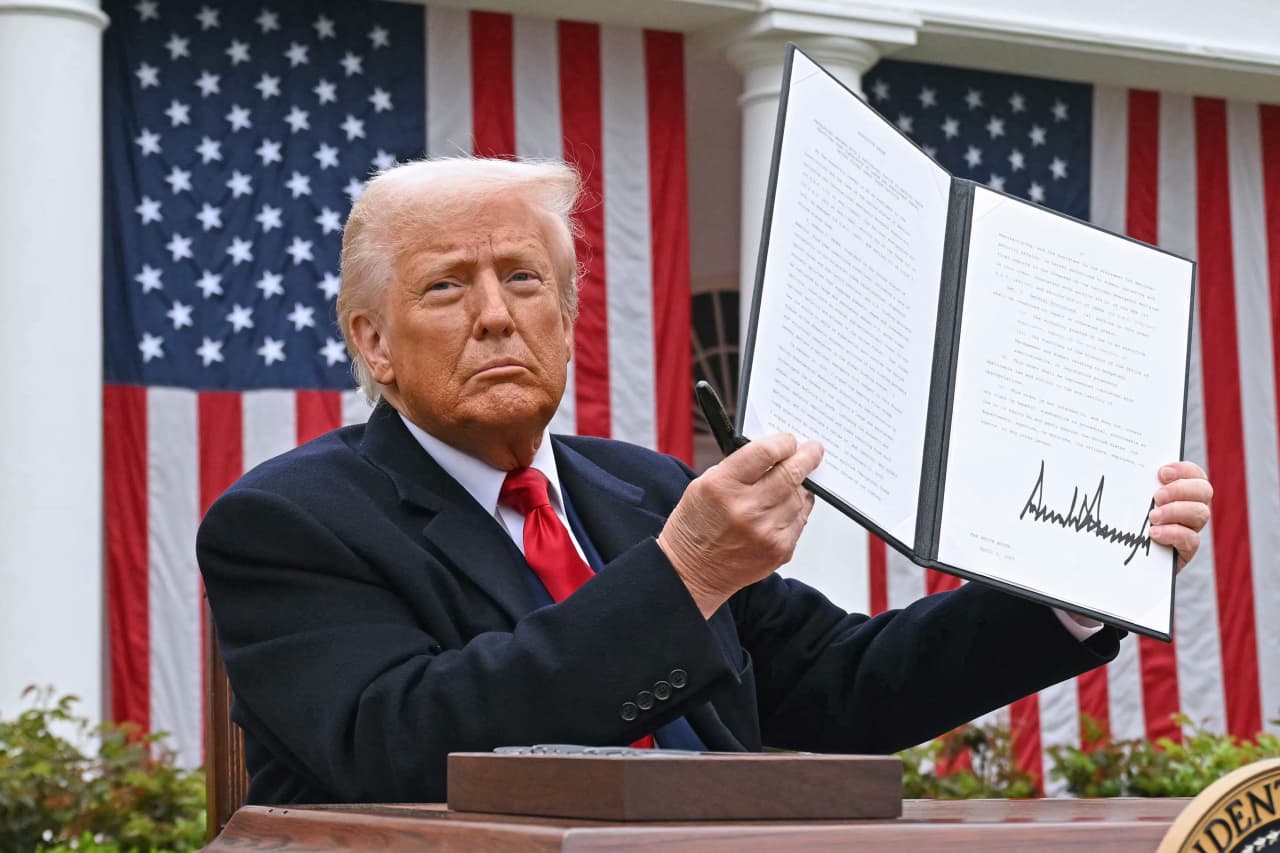
At The Hague last summer, President Donald Trump did something no American president in the post-Cold War era had managed: he walked 31 allied governments into a written commitment to lift defense outlays to 5% of gross domestic product within a decade. On Monday, he returns to the alliance's stage in Ankara to find out whether the paper moved any money. The 2026 NATO summit opens 7 July in the Turkish capital, hosted by President Recep Tayyip Erdoğan, with Trump arriving to translate last year's pledge into this year's ledger — a transition that has become the defining texture of his second-term alliance policy.
That mission is more fragile than the rhetoric suggests. Trump extracted the new headline target at the 2025 Hague summit, but the underlying arithmetic belongs to the allies. Several have already begun the climb. Others are exposed — the very countries whose geographic position made the commitment urgent in the first place. The Ankara meeting therefore has two audiences: the allied finance ministers who have to do the climbing, and the Turkish host whose standing inside the alliance depends on whether the climbing is fast enough to silence the doubters.
The pledge, and the perimeter around it
The 5% language was the headline, not the whole document. The Hague summit communiqué laid out a slower tier — what NATO documents call "core defense and related spending" — that the alliance has tracked for years, and a separate "defense-related" category that captures broader security outlays: infrastructure, civil resilience, and the contribution to allied missions outside NATO's traditional remit. Members are expected to show a credible trajectory to 5% across the two combined, not 5% drawn purely from one line.
That structure matters because it gives governments cover. A country whose core defense budget grows from 1.5% to 2% can take credit for "related" spending on cyber, on strategic rail, on aid to Ukraine, on the domestic intelligence bill. This is not trickery; much of the "related" category is genuine burden-sharing. But it does mean that the 5% bar is less a hard cliff than a flight of steps whose gradient each government chooses.
Enforcement, in Trump's framing, has a blunt instrument: tariffs and public pressure on laggards. Reports around the run-up to the summit note the threat profile he has built — public naming of low spenders, conditioning of bilateral trade on defense commitments, and a willingness to frame allied shortfalls as freeloading on American power projection. That posture has produced movement, including at the upper end of the league table, but it also produces a quiet resistance among allies who calculate that visible obedience is more dangerous than quiet delay.
The Erdoğan variable
Ankara is not a neutral venue. Turkey is the alliance's second-largest military by personnel, hosts a major land front with Russia and the Middle East, controls the Bosphorus, and has spent the last decade inside an uneasy bargain with NATO's other members — NATO airspace, NATO air-defence integration, joint exercises; alongside a defense industry in dialogue with Moscow and a foreign policy that has kept lines open to Tehran and Damascus.
Hosting the summit allows Erdoğan to be seen chairing the table, not sitting at it. It also lets Turkey argue, in the language of burden-sharing, that its position warrants credit. Ankara's official defense outlays are not in the 5% bracket; the broader "related" category is harder to benchmark. But the conversation Trump wants about credible trajectories is one in which Turkey has standing to claim trajectory credibly, not just to be lectured.
Reports circulated over the weekend about the framing of Trump's arrival — language about "honoring" Erdoğan and giving him "gifts" appeared in channels close to the Turkish presidency. That phrasing should be read as atmospherics, not reporting from a podium. The substantive question is whether Erdoğan uses the platform to position Turkey as the indispensable bridge between the alliance and the Middle East, or whether the optics of a warm Trump greeting set up friction with the European NATO members Erdoğan's own choices have often irritated.
What the money data already shows
European NATO members have moved. NATO's annual defense-spending reporting — the yardstick the alliance actually publishes — shows roughly two dozen members above the older 2% floor in 2026, and a small group above 3%. The cluster of countries already past 3% is largely the eastern and northern flank: Poland, the Baltic states, the Nordics, Greece. Western Europe's largest economies — Germany, France, Britain — sit closer to the 2% mark, with credible published road-maps to lift meaningfully over the rest of the decade.
The laggards in 2026 are not the European frontline. They are smaller and quieter members whose defense budgets reflect choices made before the Ukraine war reset the alliance's sense of urgency. Trump's enforcement has concentrated on them because they are the easiest targets, not because their budgets matter strategically. The structural shift — defense outlays rising in real terms across the alliance, with billions in committed new orders for air-defence, artillery, and long-range fires — is largely a European story. Trump takes credit for it; European finance ministers did the paperwork.
This complicates enforcement in Ankara. The allies who are doing the most have the least to be publicly shamed about. The allies whose compliance is most demanding are the ones whose spending matters least to deterrence. The pressure Trump brings to the summit will land on a perimeter of low-end spenders, and the rhetorical claim of victory will rest on a widening gap between ceiling and floor that the data already demonstrates.
The counter-narrative, said plainly
The counter-read, taken seriously, is this: the 5% commitment was a political concession to Trump in exchange for continued American presence in Europe, and is being delivered politically as a series of headline announcements accompanied by procurement promises that will take a decade to fulfil. Allied governments are unlikely to default on the aspiration, and likely to manage the slope toward it with carefully paced annual updates. The president's instinct to enforce with tariffs and public shaming can move the rhetoric; it cannot easily move the budgetary calendar. Treasury ministers in Paris, Berlin, and Rome have domestic fiscal constraints that Trump's antipathy does not dissolve.
A second counter-read, from outside the alliance, is that the 5% pledge accelerates a hollowing-out of European social spending on a horizon not the Trump administration's. If the targets are met, defense will consume a larger share of European GDP than at any point since the Cold War. The political-economy argument is that this is the price of deterrence in an era in which the United States has made clear — through its own rhetoric and its own domestic political volatility — that deterrence cannot be outsourced. Critics of the target object less to the underlying threat than to the public-finance implications of moving toward it on Washington's timeline.
A third counter-read is that Turkey is using the summit for its own reasons — to consolidate a regional role that bridges NATO, the Middle East, and a Russia-Ukraine diplomacy in which Ankara has been an active interlocutor. In that frame, Trump is a piece Erdoğan is moving, not the other way around.
Stakes, and what to watch in Ankara
The conference's internal politics will play out across three files in the next three days. The first is air defence, where the alliance is coordinating pooled procurement of systems and interceptors in a market that has consolidated around a small number of suppliers, all of whom expect to be invited to Ankara to sign. The second is Ukraine: the allies' posture toward long-range weapon use, the financial architecture for sustaining Kyiv, and the political management of any future negotiation. The third is Middle East theater: missile threats, basing rights, the disposition of Western forces east of the Mediterranean, and the question of how NATO frames the conflict in Iran and Lebanon without putting Article 5 territory formally at risk.
At the close of the summit, what will matter most is whether the 5% narrative survives intact or retreats toward 3% plus politically credible "related" spending. The former is a Trump win. The latter is the consensus an alliance of 32 governments can sustain without the transatlantic rupture both sides say they want to avoid. Watch the bilateral meetings that Trump will hold on the margins. They will tell you whether the pressure produced concessions or merely photo-ops.
What remains uncertain
The thin points in the reporting are familiar. It is unclear how the 5% timeline will be sequenced against national fiscal rules — Eurozone budget frameworks, EU stability and growth pact constraints, domestic debt-service burdens in high-debt economies. It is unclear which "related" categories will be standardised and verified, which is where the ceiling can slip. It is unclear how Washington's compliance pressure will translate into the alliance's formal review process, which has historically avoided public humiliation of individual members.
And the largest uncertainty is the obvious one: Trump himself. The president has built a transactional reading of NATO that has moved money. It has also produced outcomes — on the Hormuz transit dispute, on Korea, on the cadence of tariff interventions — that depend heavily on presidential mood. A summit that opens with a warm Ankara courtesy and closes with a tariff threat against a specific member would surprise no one and unsettle everyone. The European finance ministers arriving in Ankara are not just defending a budget line. They are modelling the alliance against the volatility of its senior partner.
That's the Ankara story in plain terms. Trump takes his receipts from The Hague to Turkey. Erdoğan hosts. The 5% ceiling stays in the communiqué, with steeper sloped roads and more category-shifting behind it than the headline suggests. The two witnesses will be Ukraine, where the money is being put to work, and the European fiscal ministries, where the bill is being written.
This piece was filed against the wire feeds available at 06:06 UTC on 6 July 2026. Where the source set thinned — particularly on Ankara-side claims about the framing of Trump's arrival — we have noted the thinned ground rather than padding the record.
Wire provenance
This editorial synthesis draws on the following public wire/social posts:
- https://t.me/englishabuali
- https://t.me/abualiexpress
- https://www.whitehouse.gov/briefing-room/statements-releases/2026/07/05/president-trump-travels-to-ankara-for-nato-summit/