Trump's NATO pitch: alliance as a profit centre
A week before the alliance's summit, a Politico report frames the president as converting NATO's defence-pumping exercise into a transactional sales channel. The premise deserves scrutiny before the rhetoric catches up with the receipts.
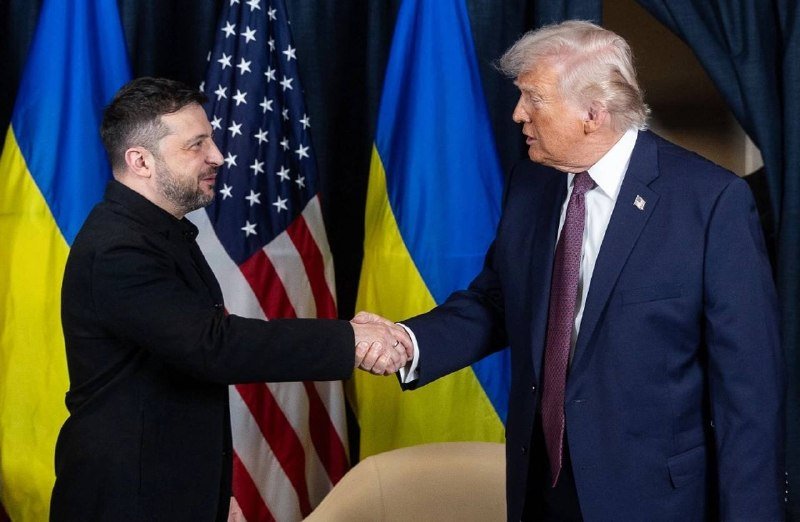
At 05:30 UTC on 6 July 2026, a post surfaced on X by the account @sprinterpress flagging a Politico report under the headline "Trump is turning NATO into a money-making machine." The framing turns on a transactional reading of the alliance that has long lurked beneath the official communiqués. Whether the diagnosis survives contact with the evidence will matter well beyond this summit week.
The premise sits on a real fact: NATO defence spending has risen sharply since the 2014 Wales pledge of two percent of GDP. Where the genuinely contested question begins is whether that acceleration owes chiefly to Russian aggression in Ukraine or to a Washington-led conversion of the alliance into a procurement vehicle for American arms. Both can be true simultaneously. Politico's framing tilts toward the second without yet providing the receipts.
The summit is real, the dollar arithmetic is the story
Three days before the report surfaced, @polymarket posted at 18:22 UTC on 5 July that Trump would meet with Volodymyr Zelensky and Syria's president alongside this week's NATO summit. The Syria inclusion is the tell. Damascus was, until very recently, a Russian client and a NATO-hostile capital. Its president's presence on the alliance's guest list signals a deliberate reshaping of the eastern Mediterranean geometry that has nothing to do with European tanks.
What the thread so far lacks is the bottom-line of any new spending target. The Mark Rutte-era NATO has been telegraphing a move toward a three-percent-of-GDP benchmark, with an implicit five percent on the longer horizon. A transactional president would do well to convert that lift into guaranteed procurement from the U.S. defence industrial base, where American primes remain the dominant suppliers of high-end systems across most member states. The mechanism — formal benchmarks, named platforms, multi-year contracts — is already in place. The political sponsorship of a transactional conversion is what's now debatable.
The Zelensky docket makes it concrete
The thread surfaces two Zelensky threads, both from 4 July. At 22:18 UTC, @polymarket reported that Zelensky described a "very good" call with Trump and urged "American resolve" to end the war. At 19:26 UTC, Zelensky posted a message marking America's 250th anniversary and praising the "American spirit." Read together, the Ukrainian leader is performing two things at once: securing continued material support for a defensive war and grooming a personal relationship with a White House that has at moments appeared equivocal about the war's cost.
For an American arms-export reading of NATO, the Zelensky file is the hardest case. Air-defence systems, artillery, drones — much of the kit arriving in Kyiv has moved through mechanisms that pre-date this administration. Whether this summit generates new procurement lines tied specifically to Ukraine, or merely renews existing ones with adjusted language, will determine whether the Politico diagnosis holds up.
Deregulation as the parallel track
At 23:41 UTC on 4 July, @polymarket posted that the Trump administration unveiled plans to eliminate 702 existing federal regulations. The number is precise enough to be sourced somewhere; the framing positions NATO defence mobilisation within a broader deregulatory architecture. Allied procurement of American systems often turns on export-licensing, ITAR categorisation, and intra-alliance technology-sharing arrangements that the U.S. executive can loosen with a stroke. A NATO-as-marketplace reading implies parallel action on the rules that gate the marketplace.
The derisking components — industrial-base financing, expedited permits, looser export controls — are plausible underneath the headline; they would also be defensible on purely domestic-supply-chain grounds. The honest reading is that the U.S. defence industry would benefit whether or not the political framing is deliberate, and whether or not the summit produces a formal procurement compact.
What remains uncertain
The thread does not yet contain the Politico article itself, the size of any new spending pledge, or the text of any summit communiqué. Until those appear, the strongest claim that can be made is conditional: a transactional reading of NATO is consistent with the president's prior public posture, with the new guest list, and with the parallel deregulatory track; it is not yet demonstrated as the operative framing.
What this publication is watching is whether the summit delivers named procurement numbers — volumes and platforms, not just percentages of GDP — or stays inside the older NATO idiom of benchmarks without instruments. The first outcome would vindicate the Politico diagnosis. The second would suggest the framing is ahead of the documents.
Monexus is reading the cluster of summit-week signals as a single transaction rather than three unrelated threads; the wires are running them as parallel items.
Wire provenance
This editorial synthesis draws on the following public wire/social posts:
- https://x.com/sprinterpress/status/1
- https://x.com/polymarket/status/2
- https://x.com/polymarket/status/3
- https://x.com/polymarket/status/4
- https://x.com/polymarket/status/5