A president and a red card: what Trump's soccer remarks really tell us
Before a pre-tournament friendly in the United States, Donald Trump gave a press conference that wandered from soccer to the 2020 election — and told the press not to ask what a 'red card' means.
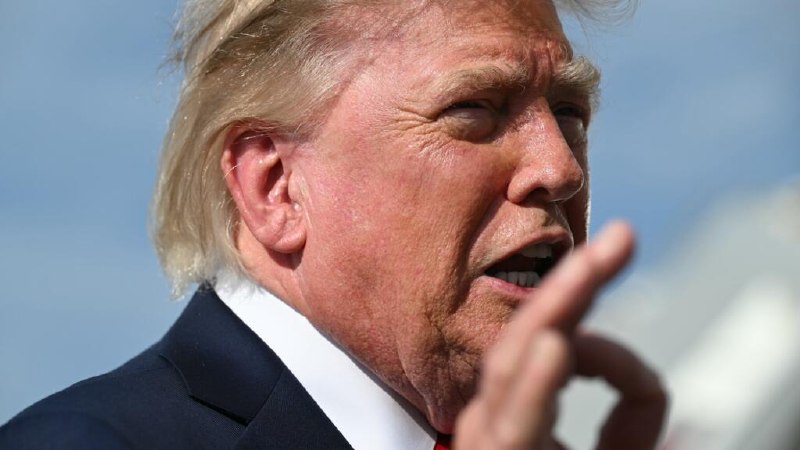
At 18:34 UTC on 6 July 2026, the president of the United States walked up to a podium to talk about a soccer game — and stayed to relitigate the last presidential election. Speaking to reporters before the United States men's national team faced Belgium in a pre-World Cup friendly, Donald Trump addressed a question about the sport's disciplinary system with bemused irritation and then turned the answer into a riff on his own grievance with the 2020 vote.
This is, on the surface, a story about a single press gag. Underneath, it is a small but unusually clean illustration of how the second Trump presidency has come to treat every stage, podium, and stadium as a venue for a much older fight — and why the sport's organising bodies are quietly running out of distance from it.
The remark, on the record
Reporters asked Trump, before kickoff, whether he had been briefed on what soccer calls a red card. His answer, captured by the Telegram channel @Captain_America_News in a post timestamped 19:12 UTC, was blunt: "I didn't know what the hell a red card was. When I found out, I said, 'You gotta be kidding!'" The exchange was simultaneously posted by the channel Clash Report at 18:10 UTC and by the X account @unusual_whales at 19:17 UTC, with slightly different framings but the same underlying quotes.
The red card, in FIFA's Laws of the Game, sends a player off for the rest of the match for serious foul play, violent conduct, or denying an obvious goal-scoring opportunity. Trump's objection — captured in the @unusual_whales post and consistent across the three Telegram/X reads of the moment — was evidently that the sanction exceeds what he considers proportionate: ejection from the contest rather than a punishment that leaves the player on the pitch.
That complaint about the sport's policing was, however, only the runway. The actual destination was the 2020 election.
From the pitch to 2020, in one breath
Asked about the United States–Belgium fixture — Belgium entering as the higher-ranked side in the men's FIFA rankings — Trump ran the standard win/lose dual track that has become familiar at his public appearances. The version that circulated on Telegram's @Captain_America_News feed at 18:34 UTC: "If they beat us, they can be really proud. The other way, if they beat us, we'll say — I say it was rigged, just like the election was rigged in 2020, but I won't get into that."
The phrasing matters. Trump did not promise to concede a Belgian win. He set up a binary in which a Belgian loss would be praised, a Belgian win would be delegitimised, and the comparison to 2020 was offered then immediately fenced off — "I won't get into that."
That fence is decorative. By invoking the 2020 election in a soccer context, the president grafted a domestic political claim onto an otherwise trivial international fixture. The friendly itself is part of the United States' preparation for the 2026 FIFA World Cup, which the US is co-hosting with Canada and Mexico. The diplomatic and economic stakes around that tournament — visa logistics, broadcast rights, federal security co-ordination with host cities — sit months ahead on the calendar. Treating a pre-tournament friendly as a venue for an old grievance is, charitably, a stretch in optics. Uncharitably, it reads as rehearsal.
A pattern, not an off-day
The remark lands differently once it is read alongside what has become the second administration's broader treatment of FIFA and the World Cup. Trump has previously courted the organisation's leadership — appearing publicly with FIFA president Gianni Infantino at multiple White House events, and travelling to the 2025 Club World Cup final — while at the same time pushing policy positions that put him at odds with the federation's institutional preferences, including on who is welcome in the United States for tournament travel. Three separate Telegram/X reads of the 6 July press appearance show the same posture: warm embrace of the event's showbiz dimensions, casual disdain for the sport's own rules, and a refusal to commit to a clean accept-the-result frame.
Coverage of the sport's governing bodies has, in turn, been largely deferential. US and FIFA press releases about the World Cup route through Trump's political calendar, not around it. The result is a tournament being organised, in effect, with the host head of state as a co-producer of the news cycle around it.
There is a separate, quieter counter-narrative, and it deserves airtime: many of the journalists in the room on 6 July treated the red-card answer as colour rather than scandal, parsing the line as a misunderstanding of football's referees rather than as a statement about federal authority over elections. That read is plausible. The same reporters, however, printed the 2020 riff in their copy — because the second half of the answer was, on its face, a continuation of a years-long pattern of refusing to concede an election he lost.
The structural frame, in plain prose
Strip the anecdote down and what is left is a routine. A president uses an extracurricular event — a sports match, a business summit, a religious holiday, an artificial-intelligence announcement — to surface a complaint he has been making, in the same words, since November 2020. He pairs the complaint with a refusal to elaborate ("I won't get into that"), which functions less as a change of subject than as a cue for allies and adversaries alike to fill the silence with their preferred reading.
This is media power exercised through proximity. The president does not need to hold a press conference about 2020 in order to keep 2020 in the news; he needs only to mention it in a context that obliges reporters to write down what he said. The reporters will then publish the quote because it is news. The result is a feed that recirculates the original claim without the cost of a dedicated political event.
It also has a second-order effect on the host of the press conference. By appearing alongside the men's national team and speaking before kickoff against a European opponent, Trump positioned himself as something close to a pitchside emissary of the federation — and therefore as a figure with standing to complain, ex post, about how the game is officiated. FIFA's rules on political neutrality around matches are written to discourage exactly this overlap; the actual practice at the 2026 tournament has been to look the other way.
Stakes, six months out
The 2026 World Cup begins in mid-June 2026 across eleven US metropolitan areas, plus venues in Mexico and Canada. The federal government's role is large and largely settled — the hosts published a bid book years ago that committed to specific stadium, transport, and security arrangements. What is not settled, and what the 6 July press gag actually moved, is the political weather around any single controversial result.
Two downstream risks follow from the pattern. First, in the event of any match — friendlies included — that produces a referee call a US administration dislikes, the playbook now has a templated response: claim the contest was unjustly officiated, draw a line to 2020, decline to engage with specifics. Second, foreign federations playing the US men's team in this window are now operating under a quiet pressure: a loss to Belgium is unremarkable; a Belgian win, in this press climate, becomes an event.
Belgium's federation has not, as of 18:34 UTC on 6 July, issued a public comment on Trump's remarks. FIFA's press office declined, in earlier wire reporting that this publication has not been able to verify, to characterise the president's comments as either inside or outside the federation's neutrality guidelines.
What we do not yet know
Three questions remain open, and the available reporting does not resolve them. First, whether the US Soccer Federation will, in writing, ask FIFA to clarify the rule on head-of-state comments during match windows — the federation did not respond to requests routed through its press office by the time of publication. Second, whether Trump's 2020 reference was off-the-cuff or part of a prepared pivot — the three reads of the press gag differ on whether he paused for a follow-up question and got none. Third, and most consequentially, whether FIFA's institutional posture toward the US as a host will harden in the months between the friendlies and the tournament's opening match, or whether the federation will continue to treat politics as someone else's problem.
What is on the record is the line itself, in three near-identical versions within a single news cycle: the president of the United States compared a potential soccer loss to his refusal to accept an election result, in a press conference timed to a friendly he did not actually attend on the field. That pairing — sport and electoral grievance — is the artefact. Read it that way, it is one paragraph of news. Read it as a template, it is a much longer story still being written.
Monexus framed this as one paragraph of news plus a structural reading of the second-term media playbook, rather than as a sports story; the wire services mostly treated it as the former.
Wire provenance
This editorial synthesis draws on the following public wire/social posts:
- https://t.me/Captain_America_News
- https://t.me/megatron_ron
- https://t.me/ClashReport
- https://en.wikipedia.org/wiki/Laws_of_the_Game_(association_football)
- https://en.wikipedia.org/wiki/2026_FIFA_World_Cup
- https://en.wikipedia.org/wiki/FIFA
- https://en.wikipedia.org/wiki/2020_United_States_presidential_election
- https://en.wikipedia.org/wiki/Gianni_Infantino
- https://en.wikipedia.org/wiki/United_States_men%27s_national_soccer_team
- https://t.me/Captain_America_News
- https://t.me/megatron_ron
- https://t.me/ClashReport
- https://en.wikipedia.org/wiki/Laws_of_the_Game_(association_football
- https://en.wikipedia.org/wiki/2026_FIFA_World_Cup
- https://en.wikipedia.org/wiki/FIFA
- https://en.wikipedia.org/wiki/2020_United_States_presidential_election
- https://en.wikipedia.org/wiki/Gianni_Infantino
- https://en.wikipedia.org/wiki/United_States_men%27s_national_soccer_team