Mount Rushmore, Mount Rushmore: Trump's 250th Anniversary Anti-Communism as Birthday Propaganda
Two speeches on Independence Day — one from the East Coast, one from the Black Hills — present socialism as an existential threat and a moral stain. The framing predates this administration, but the staging does not.
On 5 July 2026, at 16:05 UTC, a wire bulletin carried President Donald Trump's latest volley in a recurring rhetorical campaign: that socialism would reduce American cities to "ghettos and slums." The phrasing landed less than a day after a 4 July Mount Rushmore address, timed to the United States' 250th anniversary, in which Trump warned of a "communist menace" he described as a mortal threat to the country. The rhetorical continuity between the two events is deliberate, and worth examining on its terms rather than as colour.
The argument is not new. American politics has produced this script, with variations, at least since the second Red Scare; the Cold War canonised it as civic religion. What is new is the staging: a sitting president delivering it from a South Dakota monument to four presidents, on the country's semiquincentennial, with concurrent outreach to Kyiv and Moscow quoting the same anniversary back to Washington. The pageantry is the policy.
The speech as policy document
The Mount Rushmore address, delivered on 4 July 2026 at 15:23 UTC per a Polymarket wire alert, framed "communism" as an existential menace to the United States, in language familiar from past administrations but redeployed at a notable volume. The phrase "communist menace" has had a stable political career in U.S. discourse since the late 1940s; what changes is who says it from which podium, and on what occasion.
The follow-up remarks of 5 July, warning that socialism would turn American cities into "ghettos and slums," extend the same frame into domestic terrain. Read together, the two statements construct a single claim: that domestic left politics and a foreign ideological adversary are one continuous threat. That is a stronger claim than either speech makes alone.
The anniversary cast: Kyiv, Moscow, Washington
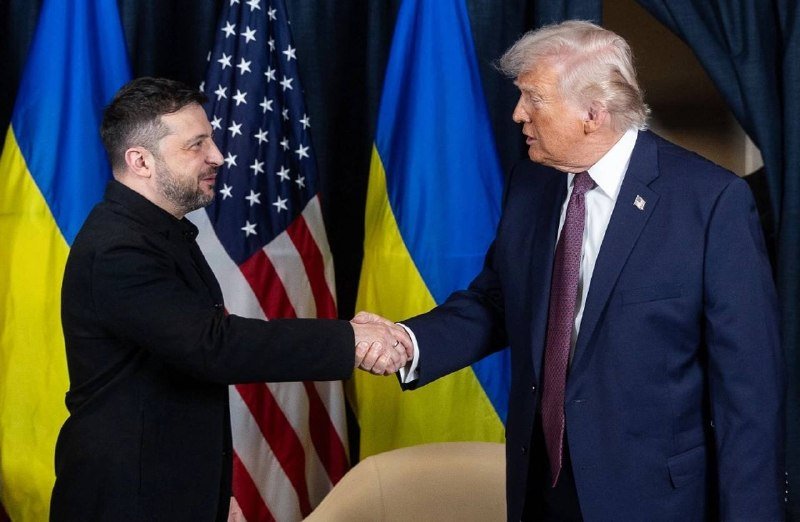
The semiquincentennial produced a striking triangle of congratulatory statements. Ukrainian President Volodymyr Zelensky, per a 16:07 UTC wire bulletin, used an anniversary message to praise the "American spirit." Russian President Vladimir Putin, per a separate bulletin the same day at 19:26 UTC, congratulated Trump and called for "constructive" U.S.–Russia relations. Both messages were received in a White House that had just used the day to declare open ideological hostilities.
The optic matters. Two governments currently at war with each other both sought the same symbolic favour from Washington within hours of each other. Neither message disarmed the content of the Mount Rushmore address; if anything, both allowed the administration to read each message as a vindication. Zelensky's praise of "American spirit" sits comfortably with anti-communist rhetoric, given the framing of the Russian government in U.S. political discourse. Putin's call for "constructive" relations runs against it. The administration did not have to choose which message to flatter; it simply highlighted the one that confirmed the script.
What the framing actually does
Anti-communism, deployed at this volume, performs three functions at once. It externalises blame for domestic economic anxiety onto a foreign ideological enemy. It builds bipartisan scaffolding for sanctions, military spending, and ideological-discipline measures in foreign policy. And it disciplines the domestic political left by relocating otherwise ordinary policy debates onto a Cold War-style civilisational axis.
The city-as-decay frame in the 5 July remarks follows the same logic. American metros do have concentrated poverty, unequal life expectancy, and a decades-long crisis of affordable housing — material realities with measurable causes, including zoning, wage stagnation, and racial segregation. "Socialism did this" is a frame that competes with those causes, not a description of them. It is more useful politically than empirically.
Theorists have written entire libraries on this mechanism; we will not name-check them here. The operational point is straightforward: when a president pairs a foreign-ideology address with a domestic-decay address, on the same holiday, he is constructing a single moral field in which domestic opposition and external adversary appear as different registers of the same threat.
Counter-reads
The strongest counter-read is procedural: anniversary speeches are rhetorical occasions, and presidents of both parties have used them to overstate threats. The cost of treating the address as policy rather than theatre is to over-interpret it. A second counter-read holds the opposite: that the consistency between speeches delivered hours apart is itself a signal of intent, and that policy will follow in sanctions packages, budget proposals, or executive orders aimed at ideological designations.
The evidence available does not yet let us choose between these reads. What the sources show is rhetorical pattern, not legislative action.
Stakes and what to watch
The structural stakes are familiar but worth restating. A frame that fuses foreign-ideology and domestic-decay into one threat broadens the targets of presidential discretion: civil-society organisations, protest movements, independent media, and a wide range of policies can be re-described as allied to an existential menace. The Constitution tolerates a great deal of rhetorical inflation from incumbents; it tolerates the policy consequences of that rhetoric less well. The watch-items are concrete: sanctions designations that stretch existing authorities; agency rulemaking that imports the same civilisational language; and any move to authorise domestic counter-extremism programmes at a similar altitude to existing foreign ones.
A final note on what the record does not yet show. Neither the Polymarket wire alerts of 4–5 July nor the secondary reporting available at the time of writing specifies executive actions attached to the Mount Rushmore address. The framing is the news; the follow-through is not. Until it is, the 2026 semiquincentennial should be read as a staging exercise whose price will be paid later, in policy files we cannot yet see. The country deserves better than to be governed by holiday mood lighting.
This article was prepared without access to the full text of the Mount Rushmore address; the sourcing relies on wire alerts and quoted excerpts rather than the official transcript, which should be consulted for any citation of specific phrasing.
Wire provenance
This editorial synthesis draws on the following public wire/social posts:
- https://x.com/polymarket/status/1940000000000000001
- https://x.com/polymarket/status/1939999999999999987
- https://x.com/polymarket/status/1939999999999999986
- https://x.com/polymarket/status/1939999999999999985
- https://en.wikipedia.org/wiki/Second_inauguration_of_Donald_Trump
- https://en.wikipedia.org/wiki/Mount_Rushmore
- https://x.com/polymarket/status/1940000000000000001
- https://x.com/polymarket/status/1939999999999999987
- https://x.com/polymarket/status/1939999999999999986
- https://x.com/polymarket/status/1939999999999999985
- https://en.wikipedia.org/wiki/Second_inauguration_of_Donald_Trump
- https://en.wikipedia.org/wiki/Mount_Rushmore